Sharon Osbourne’s Dent: What Leaves a Hollow After Surgery, and How a Surgeon Fills It

Sharon Osbourne on the red carpet in March 2026, deep red bob, black tuxedo jacket with a crystal flower brooch, facing the camera. Commentary by Frank Agullo, MD, FACS.

Sharon Osbourne, 74, on her family’s podcast this week, finger tracing a line from the corner of her nose to her chin. An indentation, she called it (People has the clip). Her account: the surgeon took a phone call and handed the work to a colleague. She did not name the surgeon or the operation. Neither will I, and I have not examined her.

Sharon Osbourne on the red carpet in March 2026, deep red bob, black tuxedo jacket with a crystal flower brooch, facing the camera. Commentary by Frank Agullo, MD, FACS.
Sharon Osbourne at the 34th Annual Elton John AIDS Foundation Academy Awards Viewing Party, West Hollywood, March 15, 2026. Photo: MLM IMAGES Los Angeles/Shutterstock, editorial use.

But I fix dents. Here is where they come from and what I do about them.

What a Dent Is

A hollow is one of three things: too much taken out, something pulling the skin in from underneath, or volume that left on its own. Each has a different fix.

Too much taken out, in my own operating room, is the thing I watch for constantly:

“Let’s take a look. We have to be careful, because we don’t want to overdo it and then you get irregularities. There’s no fat here, really. It’s really just muscle. That’s all the fat that you have on the other side. We want that amount of fat; that makes it nice and smooth. If I take any more out, then it’s going to look irregular.”

“I would try to get as much as we can without creating any irregularity.”

Something pulling from underneath:

“The thing with the dimples is that you can fill it in, but there’s a band that’s pulling on the skin and creating that dimple. So what we have to do is cut the band. And it pops out. And then we can put a little fat there. Otherwise, it comes right back.”

Fix One: Fat, Placed at the Same Time

Removing a small lump near the eye of a patient who had surgery elsewhere:

“I’ll have to see when I take it out that it doesn’t create a dent. If it does, I’ll put a little bit of fat at the same time to camouflage it.”

That is the habit. Anticipate the hollow and fill it before the patient ever sees it.

“I think fat grafting has been rising for many years. It’s an essential component of almost all facial procedures. I incorporate fat grafting into lower eyelid surgery, I incorporate it into all my facelifts, and I incorporate it in any facial procedure where the patient has lost a considerable amount of weight.”

Fix Two: Release, Then Fat

“The back, I would try to pop out a little bit with the cannula, so I would release the bands, and then I might put just a little bit of fat so those fibers don’t stick again.”

Cut what is pulling, fill what is missing, in that order. Fat into a tethered dent comes right back out.

What is pulling the skin in What I do
Too much fat removed Fat graft to the hollow, or donor fat (alloClae) when the patient has none to give
A scar band tethering skin to muscle Release the band, then a small fat graft so it does not re-stick
Volume lost with weight or age Fat graft; filler as a short-term bridge
Tissue repositioned unevenly in a lift Revision, after the swelling has fully settled

“We’ve been using alloClae very often. I’m one of the early adopters, and actually one of the first 20 surgeons who was invited to start using alloClae, more than a year ago. The most common places we’re using it are in the breast, in liposuction contour irregularities, and in the buttock, especially for projection or to fill in the hip dips.”

Why Not Just Filler

“Filler cannot really give us a natural feel. When properly done it can give us a natural look, but it’s often overdone. It can also not give us a long lasting result, and this is where fat has its benefits. Now, the main factor that disappoints people with fat injections is that the amount of retention is really unpredictable.”

Filler is a bridge. Fat is the repair. Both have a catch; the long version is in my fat vs filler read.

Fix Three: Revision, and Who Will Do It

“Some patients do come in unhappy with their results and are looking for a revision surgery. This is not possible in the early stages, and patients are usually told to wait until healing has been achieved, which can vary depending on the procedure from three months to a year. For their own particular reasons, many surgeons do not perform revision surgeries on other doctors’ patients. At Southwest Plastic Surgery, I believe that we are here to help patients, and we do perform revision surgeries on other surgeons’ patients, as long as we believe that the results can be improved and that the patient’s expectations are appropriate.”

Osbourne says she is done with procedures. Fair. For the patient who is not, the dent is usually fixable. How I take on patients who had surgery elsewhere is its own post.

Why Choose Dr. Agullo

Double board-certified, by the American Board of Plastic Surgery and the American Board of Surgery. Mayo Clinic plastic surgery fellowship. Clinical Associate Professor of Plastic Surgery at Texas Tech University Health Sciences Center. Castle Connolly Top Doctor for 13 consecutive years. Fat grafting is part of every facelift he performs.

Ready to Talk?

Show me the dent. I will tell you which of the three it is. (915) 590-7900, text 1-866-814-0038, or book at agulloplasticsurgery.com/appointments. #StayBeautiful

@RealDrWorldWide on Instagram, TikTok, and Snapchat, @Agullo on X, or @AgulloPlasticSurgery on Facebook.

Salma Hayek, the “Surgical Scars” Reel, and What a Facelift Scar Actually Looks Like

Salma Hayek on the red carpet in September 2025, long dark hair in a high half ponytail, drop diamond earrings, photographed at a three-quarter angle. Commentary by Frank Agullo, MD, FACS.

Allure, last year. Salma Hayek: no plastic surgery, no filler. Hair pulled back, ear out, see for yourself.

Salma Hayek on the red carpet in September 2025, long dark hair in a high half ponytail, drop diamond earrings, photographed at a three-quarter angle. Commentary by Frank Agullo, MD, FACS.
Salma Hayek at the Kering Foundation Caring for Women Dinner in New York, September 11, 2025. Photo: lev radin/Shutterstock, editorial use.

This week, a reel. A doctor, her photos side by side, a finger on “surgical scars.” Millions of views.

I have not examined her. Neither has he. What I can show you is my own incision map.

Where the Scar Goes

“In your case, you do have a lot of loose skin. So we would put a scar here. It would go here behind the tragus. And then it would continue behind the ear. Really, once the scar is healed, you really can’t see it.”

“The scar’s gonna be here, so they’re gonna be behind the hair, so you’re not gonna see those. But you are gonna have one scar here, and then it’s gonna go behind the ear, and hug in the hairline. So everything hides really, really well. I can’t do it without any scars in front of the ear. I’m afraid, because we do have to lift significantly, you’re gonna have these wrinkles here if I don’t take out your skin.”

Behind the tragus. Around the lobe. Into the hairline. That is the map.

“Those hide really well, and they’re very hard to see afterwards.”

The Facelift With No Scar in Front of the Ear

“So the ponytail, I make the incision here and here. And I’m still able to pull here, and I’m able to pull here, but without putting a scar in front of the ear. So that’s really nice.”

“So we do the ponytail endoscopic. There’s no scar in front of the ear. And you get the same result, but no scar.”

“The differentiator is how much excess skin there is. If there’s substantial excess skin, then we do a deep plane open facelift with an incision in front of the ear. If there’s not a lot of excess skin, we can get away with doing everything through the incisions behind the hairline. Nevertheless, a full facelift is always going to have the endoscopic portion of the forehead and brows.”

No scar in front of the ear proves nothing. The facelift you cannot see explains.

By the ear in a photo What it can be
A fine line in front of the ear A well-placed facelift scar, a skin crease, the tragus shadow, or compression from a camera angle
Nothing in front of the ear No surgery, a ponytail lift through the hairline, or a scar tucked behind the tragus
A notch or pulled earlobe A lift closed under tension, usually an older technique
Hair over the ear A hairstyle

How I Actually Read a Face

“A facelift will change the position of the tissues, and what we’re seeing on her is a change in the volume or amount of tissue.”

Position, volume, skin. Not shadows by an ear. Same method as Kristen Wiig yesterday and Kris Jenner before that.

Why ‘No Surgery’ Can Be True

“I don’t think this is surgical. It is quite clear that she’s had surgery in the past, but not in this recent transition.”

Different actress, same lesson. A denial is not proof. A reel is not an exam.

The incision map, drawn out, is on agulloplasticsurgery.com. The no-incision version is on the Southwest Plastic Surgery post.

Why Choose Dr. Agullo

Double board-certified, by the American Board of Plastic Surgery and the American Board of Surgery. Mayo Clinic plastic surgery fellowship. Clinical Associate Professor of Plastic Surgery at Texas Tech University Health Sciences Center. Castle Connolly Top Doctor for 13 consecutive years. Ponytail Academy courses in Pittsburgh and Santa Monica.

Ready to Talk?

Pull your hair back. I will show you where the scar would go, and where it would not. (915) 590-7900, text 1-866-814-0038, or book at agulloplasticsurgery.com/appointments. #StayBeautiful

@RealDrWorldWide on Instagram, TikTok, and Snapchat, @Agullo on X, or @AgulloPlasticSurgery on Facebook.

Kristen Wiig and the Photos That Went Viral: A Surgeon Reads the Face, Not the Comments

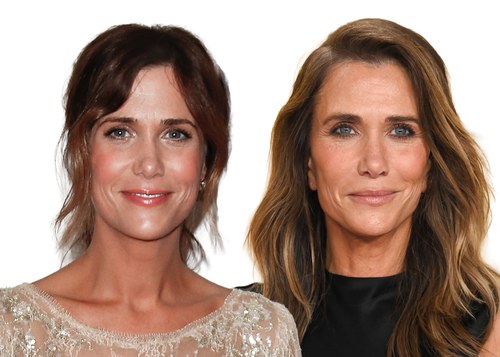
Side by side photos of Kristen Wiig, in 2013 on the left with auburn hair pinned up, and in 2026 on the right with long highlighted brown hair. Commentary by Frank Agullo, MD, FACS.

Paris, the Chanel show, a new dark hair color, and a side by side of 2012 against 2026. The Daily Beast collected the comments: unrecognizable, I miss her face, facelift or whatever she did. No surgeon was asked.

Side by side photos of Kristen Wiig, in 2013 on the left with auburn hair pinned up, and in 2026 on the right with long highlighted brown hair. Commentary by Frank Agullo, MD, FACS.
Left: Kristen Wiig at the premiere of The Secret Life of Walter Mitty, New York Film Festival, October 5, 2013 (Debby Wong/Shutterstock). Right: at the 32nd Annual Screen Actors Guild Awards, Los Angeles, March 1, 2026 (MLM IMAGES Los Angeles/Shutterstock). Editorial use.

So here is one. I have never examined Kristen Wiig. What follows is my opinion from photographs, the same exercise I do in every consult before I touch anything, and it is not a diagnosis. I compared her photos from March of this year against the latest.

Start With the Skin

“Looking at the photos from a few months ago compared to the latest, I think the major changes are mostly in the skin quality. In her photos in March, she appears to have a lot of sun damage and hyperpigmentation, fine lines and wrinkles in the forehead, crow’s feet, even the glabella, and small lines and wrinkles in the laugh lines. Three months ago, she had good jaw definition.”

Skin first. That is where the difference lives.

What Did Not Move

“If you compare the two time frames and look at the brows, they sit in the same position. They have not been lifted. The excess upper eyelid skin remains. The volume of the cheeks is still in the same place, and the jawline is still sharp.”

A facelift moves things. These did not move.

Weight Is a Facial Procedure

“If you look at other photos around the March timeline, it almost seems like she had lost too much weight, and that may have helped make her appear older. In the latest photos, it seems like she gained some of that weight back, which of course fills the face and makes it look younger. Of course, this can also be achieved with fillers.”

I wrote about this in the face after weight loss and again with Adriana Lima. A few pounds back is the cheapest filler there is.

What I Think Was Done

“I do think she has lip fillers and has probably undergone facial skin tightening with radiofrequency and skin resurfacing with laser. Botox has probably helped to soften those fine lines and wrinkles in the forehead and around the eyes, but you can still see the same types of wrinkles when she smiles, in the smile lines.”

Probably. From photographs. Office work, not an operating room.

The Neck Argues Against a Neck Lift

“You can see that she has platysmal banding, that is, the two lines in the neck that look separated, so that goes against her having a neck lift, because this is usually repaired at the same time.”

Two bands, still there. A surgeon who did a neck lift would have sewn them together.

The Hands

“I think the most shocking thing in her most recent photos is that if you look at her hands, they really give away her true age and are definitely a mismatch with the way her face looks.”

What commenters saw What the photographs show
A facelift Brows, eyelids, cheek volume and jawline in the same place
A new face New skin quality, likely resurfacing, tightening and Botox
Someone else A little weight back, and lip filler
A neck lift Two platysmal bands, untouched

Read the face, not the comments. The comments saw surgery. The photographs show skin, weight and a needle. I could be wrong; that is what an exam is for.

The surgical version of this read, with what a facelift actually changes, is on agulloplasticsurgery.com. The office-treatment version, resurfacing and tightening and the injectables, is on the Southwest Plastic Surgery post.

Why Choose Dr. Agullo

Double board-certified, by the American Board of Plastic Surgery and the American Board of Surgery. Mayo Clinic plastic surgery fellowship. Clinical Associate Professor of Plastic Surgery at Texas Tech University Health Sciences Center. Castle Connolly Top Doctor for 13 consecutive years.

Ready to Talk?

Bring your own side by side. I will tell you what moved and what did not. (915) 590-7900, text 1-866-814-0038, or book at agulloplasticsurgery.com/appointments. #StayBeautiful

@RealDrWorldWide on Instagram, TikTok, and Snapchat, @Agullo on X, or @AgulloPlasticSurgery on Facebook.

“You Look Tired” Is Now a Surgical Request. Two Thirds of Facial Plastic Surgeons Hear It

Black and white photograph of a woman in a long satin evening gown seated at a dark dressing table, seen from a three-quarter angle from behind, her reflection in the mirror out of focus. Illustrative image, not a patient. Commentary by Frank Agullo, MD, FACS.

Nobody asks me for a new face.

They sit down, and before I have asked a single question, they tell me what their sister said at dinner. Or their boss. Or the barista. You look tired. They slept nine hours.

The American Academy of Facial Plastic and Reconstructive Surgery has now counted that conversation. In its annual member survey, reported by Alison Werner in Plastic Surgery Practice on September 24, 66 percent of facial plastic surgeons report more patients asking for eyelid procedures to look less tired. Blepharoplasty is still a top-three facial operation with rhinoplasty and facelift. More of the people asking are men.

The Request Has Changed

The association’s president, Anthony Brissett, describes patients who want to look refreshed, not transformed. In my words:

“I think the most common reason patients come in is because people are telling them that they look tired, when they’re actually feeling just fine and feel like they have energy. A lot of them feel younger than their actual age, but the eyelids are not helping them send this message out.”

“I think patients are becoming a lot more willing to undergo facial procedures, including facelifts, because the results now are actually natural and do not change their overall appearance. So they still have a self identity after these procedures and they’re recognizable; they’re just looking ten to fifteen years younger.”

So Has the Operation

The survey piece describes a shift from routinely cutting out skin, muscle and fat to deciding what to keep, what to reposition, what to restore, and what to remove. Aging around the eyes is three-dimensional: skin, muscle, fat, brow, cheek, midface and bone.

I have been operating that way for a long time, and I explain it the same way to every patient with bags.

“Many think it is just a blepharoplasty, but I use the blepharoplasty approach to remove the fat bags, I use fat injections into the tear trough, and I use Morpheus8 microneedling with radiofrequency to tighten the skin. Sometimes I even use AccuTite to tighten the skin, avoiding an incision that can give you a visible scar, or even an ectropion.”

“I incorporate fat grafting into lower eyelid surgery, I incorporate it into all my facelifts, and I incorporate it in any facial procedure where the patient has lost a considerable amount of weight.”

Restore means fat, not filler.

“Fillers over time have started to come out of favor, as we are now noticing that the filler really never dissolves. The results can last about a year, but the filler does not dissolve, it just disperses. I have seen cases where it blocks the lymphatic drainage, and patients start having bags under the eyes, which are worse in the mornings, or they have discoloration or lumpiness.”

And restore has a limit.

“Fat is one of the procedures we perform when treating the periorbital area, and just adding volume to the tear trough can hide the under-eye bags for a while. But as they keep progressing, it comes to a point where adding volume is not going to help, and we actually need to remove those herniated fat pads.”

When the Lid Is Really the Brow

“A hooded upper eyelid is when the fold extends laterally underneath the brow and the lateral eye, and usually needs an extended incision from the blepharoplasty. A lot of times the hooding is due to the brow being low and the excess skin folding in the lateral lid. We can perform a brow lift with brow shaping through two small incisions behind the hairline on either side. This technique also reduces the amount of upper eyelid skin, and thus the upper eyelid skin resection is much shorter, and the scar therefore is shorter and doesn’t extend laterally. This also removes the heavy look from the eye and gives us a nice reshaping of the brow, usually up and lateral, which looks more youthful. It’s usually combined with some fat grafting above the orbital rim as well.”

“There are three objective findings that will let us know whether a brow lift or temporal lift is indicated. The first is that the patient is usually forcefully raising their brows, and you can see the wrinkles in the lateral forehead as the patient raises the brows so they can see better. The second finding is if the brow sits right on top of the orbital rim, that is the bone right above the eye. In females, the brow should be one or two centimeters above the rim. If it’s right on the rim, then it means there is ptosis, and it can be improved with a brow lift, brow reshaping, or temporal lift. The last test is actually moving the brow with our finger up and out. If the lateral eye hooding resolves, then a brow shaping or endoscopic lift is indicated.”

Upper or Lower

“Upper eyelids versus lower eyelids. Most patients come in for one or the other, but they may actually benefit from working on both. I think the lower eyelids are a lot more common, with people complaining about their lower eyelid bags, and these are maybe slightly younger patients. The older patients are definitely concerned about their upper eyelids, the hooding, and even the visual impairment it’s causing.”

“It seems to be the first part of the face that patients notice as they age, especially the upper eyelid skin, which can hang and even rest on the eyelashes, giving the patient the impression of being tired and even making makeup hard to put on.”

The Men

“Number three is eyelid surgery. I see it more and more frequently, especially the upper eyelids, but oftentimes upper and lower eyelids and the tear trough deformity.”

“When we do facelifts, we do not like to raise the brow as much. In men, it should pretty much line up with the superior orbital rim.”

“Upper blepharoplasty in men is shorter than in women, and I usually don’t chase the lateral hooding unless the patient specifically asks for it. The reason is that most men don’t use makeup, and hiding that lateral extension can be difficult. If there is lateral hooding in men, I strongly advise an endoscopic brow lift and brow shaping to raise the brow and address the lateral eye hooding. This keeps the incision short, so that when the patient opens his eyes, the scar hides in the natural eyelid fold.”

“In lower blepharoplasty, I almost never excise the excess skin. I perform the incision transconjunctival, which means through the inside of the eyelid, so there is no visible scar. The skin tightening is achieved with laser, Morpheus8, or AccuTite, and I almost always graft fat and nanofat into the tear trough and above the orbital rim.”

“Recovery for men is usually seven to ten days, but many return to work sooner, as there is really no pain after eyelid surgery; it’s mostly just the bruising and swelling. We do coach men on how to use makeup to hide bruising if it’s still present when they want to return to work, and we also recommend thick-rimmed eyeglasses to hide the area around the eyes during recovery. Elixir MD LED therapy helps with reducing recovery time.”

Rested, not transformed. For a man, that sentence is the whole consultation.

Why Choose Dr. Agullo

Double board-certified, by the American Board of Plastic Surgery and the American Board of Surgery. Mayo Clinic plastic surgery fellowship. Clinical Associate Professor of Plastic Surgery at Texas Tech University Health Sciences Center. Castle Connolly Top Doctor for 13 consecutive years. The full version of this post is on agulloplasticsurgery.com.

Ready to Talk?

Nine hours of sleep and still “you look tired.” That is not a sleep problem.

Call the office at (915) 590-7900, text us at 1-866-814-0038, or book a consultation at agulloplasticsurgery.com/appointments. #StayBeautiful

@RealDrWorldWide on Instagram, TikTok, and Snapchat, @Agullo on X, or @AgulloPlasticSurgery on Facebook.

I Called Fillers a Tax. The World Just Stopped Paying It

Black and white close portrait of four women of different backgrounds and ages, bare natural skin, lit by a single hard light. Illustrative image, not patients. Frank Agullo, MD, FACS.

The International Society of Aesthetic Plastic Surgery counted 4,737,957 hyaluronic acid filler treatments worldwide in 2025. That is 25.2 percent fewer than the year before, and fewer than in 2021. Poly-L-lactic acid fell 33.7 percent. Calcium hydroxyapatite fell 25.7. Fat grafting to the face held at 944,410.

I think we have seen that facial fillers have been quite overdone, and patients are really getting away from looking overfilled and want to look more natural. We have seen that these hyaluronic acid fillers may not dissolve completely, and they do tend to migrate. It seems like they create some kind of inflammatory response in some patients, creating nodules or inflammation.

What I Have Been Doing All Year

Fillers over time have started to come out of favor, as we are now noticing that the filler really never dissolves. The results can last about a year, but the filler does not dissolve, it just disperses. I have seen cases where it blocks the lymphatic drainage, and patients start having bags under the eyes, which are worse in the mornings, or they have discoloration or lumpiness. Sometimes they can also get inflamed. So I have dissolved a lot of under-eye fillers in order to improve all these complications, and that is why I am more inclined to use fat rather than hyaluronic acid fillers.

Why Fat

I think fat grafting has been rising for many years. It’s an essential component of almost all facial procedures. I incorporate fat grafting into lower eyelid surgery, I incorporate it into all my facelifts, and I incorporate it in any facial procedure where the patient has lost a considerable amount of weight.

We have been using the patient’s own fat, because we have the benefit of using however much volume we really need, as the number of fat CCs does not increase the cost of the procedure, and the patient’s own fat is free. This gives a very natural, soft result, which is of course long lasting. For some patients that don’t want as much downtime, we’ve been using Lipoderma, which is a donor fat graft that gives us very similar results to the patient’s own fat grafting.

The Catch, Because There Is One

Now, the main factor that disappoints people with fat injections is that the amount of retention is really unpredictable. Even though we know the patient is going to keep fifty to eighty percent of the volume, that percentage is quite unpredictable, so we are always overfilling. Patients that lose fifty percent of the volume we inject are sometimes disappointed, and we have to go back and inject more fat.

The good thing is that whatever does stay is going to be quite permanent.

The table, the Botox line and the hand numbers are in the full post on the Agullo Plastic Surgery site.

Why Me

Double board-certified, Mayo Clinic trained, Clinical Associate Professor of Plastic Surgery at Texas Tech, Castle Connolly Top Doctor 2014 through 2026. Fat in almost every facial operation I do, and a lot of other people’s filler dissolved this year.

Ready to Talk?

Call (915) 590-7900, text 1-866-814-0038, or book online. #StayBeautiful

Find me at @RealDrWorldWide on Instagram, TikTok, and Snapchat, @Agullo on X, or @AgulloPlasticSurgery on Facebook.

Mother or Daughter? The Facelift That Is Almost Ten Years Old

Black and white composite portrait joining half of a mother's face and half of her daughter's face down the midline, both with long wavy hair. The mother had a facelift with Frank Agullo, MD, FACS almost ten years earlier. Shared with permission.

Mother or daughter?

“Mom is 23 years older than her daughter, and I performed her facelift almost 10 years ago!”

I posted the two halves on Instagram this morning and asked one question. Left or right?

“A great facelift isn’t about looking different. It’s about looking like a younger version of yourself, even years later!”

Not Pulled. Moved.

“It’s still a deep plane facelift, so I am pulling the deeper structures. We’re not pulling on the skin, that’s what gives that pulled look.”

A pulled face would give the game away in a second. A moved one does not.

“It’s still going to be you. It’s going to be completely you, just a younger version. I’m sure if you look at your older photos, your cheeks were up a little bit higher, you didn’t have this fullness here, and your brows were probably up a little bit higher too. So it is just setting the clock back.”

Ten Years On

“It lasts about seven to ten years.” Then the clock runs again, from the new starting line.

“You’re 52, and we go back ten years. So you’re going to look like you’re 40. And then you’re going to start over. So you keep aging, and then in about ten years we would do a touch up, and we bring you back ten years. So you’re still 40. So in your sixties, you’re going to look 40.”

“We kind of lock in the younger age, and then ten years go by, and we do a touch-up, and we get you back to that. It’s a good idea, because if we do it when you’re seventy years old, we can only make you look sixty.”

Lock in your younger self.

Guess

Left or right? Answer on the post. The full version, with how long a deep plane lift lasts and why patients now do it earlier, is on agulloplasticsurgery.com.

Why Choose Dr. Agullo

Double board-certified, by the American Board of Plastic Surgery and the American Board of Surgery. Mayo Clinic plastic surgery fellowship. Clinical Associate Professor of Plastic Surgery at Texas Tech University Health Sciences Center. Castle Connolly Top Doctor for 13 consecutive years.

Ready to Talk?

Twenty-three years apart. You still have to guess.

Call the office at (915) 590-7900, text us at 1-866-814-0038, or book a consultation at agulloplasticsurgery.com/appointments. #StayBeautiful

@RealDrWorldWide on Instagram, TikTok, and Snapchat, @Agullo on X, or @AgulloPlasticSurgery on Facebook.

The Most Performed Operation on Earth Is on Your Eyelids

Black and white close portrait of four people of different backgrounds, three women and a man, eyes open and lit by a single hard light. Illustrative image, not patients. Frank Agullo, MD, FACS.

Eyelid surgery is the most performed aesthetic operation in the world. The International Society of Aesthetic Plastic Surgery counted 2,457,677 of them in 2025, up 16.2 percent in a year and 69.9 percent since 2021. It beat liposuction. One in five patients was a man.

The first thing anybody looks at when they see somebody is their eyes. I think that’s what gives us an overall feeling about the patient, and it is the first thing that we will form an opinion on. So a lot of patients are self aware of these features, and they come in to get them resolved.

“You Look Tired”

I think the most common reason patients come in is because people are telling them that they look tired, when they’re actually feeling just fine and feel like they have energy. A lot of them feel younger than their actual age, but the eyelids are not helping them send this message out. They look in the mirror and they look at photos, and they can identify the areas that they don’t like. Sometimes they can’t really identify exactly which procedures they need, and of course that’s why we’re there, to help them come up with the best plan possible.

Why the Syringe Lost

The same survey has filler down 25 percent in a year. Under the eyes I saw that coming.

Fillers over time have started to come out of favor, as we are now noticing that the filler really never dissolves. The results can last about a year, but the filler does not dissolve, it just disperses. I have seen cases where it blocks the lymphatic drainage, and patients start having bags under the eyes, which are worse in the mornings, or they have discoloration or lumpiness. Sometimes they can also get inflamed. So I have dissolved a lot of under-eye fillers in order to improve all these complications, and that is why I am more inclined to use fat rather than hyaluronic acid fillers.

Just adding volume to the tear trough can hide the under-eye bags for a while. But as they keep progressing, it comes to a point where adding volume is not going to help, and we actually need to remove those herniated fat pads.

Why It Keeps Winning

The procedures to fix these complaints are usually short, can be performed under local anesthesia or even IV sedation, and have short recovery times. Patients can return to work fast and they heal fast as well, so they see an overall transformation and are quite happy with the results. This is of course noticed by people around them very quickly, and that’s how word of mouth spreads, and this procedure keeps becoming one of the most common that we perform.

Some patients actually return to work earlier and use thick-rimmed glasses to kind of hide the surgical aspect.

The upper-versus-lower question, the brow lift numbers and the older patient are in the full post on the Agullo Plastic Surgery site.

Why Me

Double board-certified, Mayo Clinic trained, Clinical Associate Professor of Plastic Surgery at Texas Tech, Castle Connolly Top Doctor 2014 through 2026. Eyelids are one of the operations I do most, and the one patients thank me for fastest.

Ready to Talk?

Call (915) 590-7900, text 1-866-814-0038, or book online. #StayBeautiful

Find me at @RealDrWorldWide on Instagram, TikTok, and Snapchat, @Agullo on X, or @AgulloPlasticSurgery on Facebook.

He Broke It With a Baseball: A Septorhinoplasty Consult, Nearly Verbatim

Black and white editorial photograph for septorhinoplasty commentary by Dr. Frank Agullo, MD, FACS.

He had never had surgery. He exercised four times a week. He was not on any medication. The only thing wrong with him was a nose that had been crooked since a baseball hit it when he was a kid.

I am publishing this consult nearly as it happened, identifiers removed, because the questions men ask about their nose almost never get answered out loud.

Him: I broke it when I was young. It was a baseball. But ever since that, I’ve had complications and I know I have trauma inside. You can tell it’s kind of deviated. So I wanted to get that corrected. But if I’m going to do that, I might as well get the exterior as well.

Me: “Do you have problems breathing?”

Him: Yes. I get congestion right away. But I’ve lived like this for a long time, so it’s kind of normal for me. I do notice that I get congested a lot if I start doing exercise.

Me: “And what would you want to change about the way it looks?”

Him: Pretty much, I want to straighten it out. And I noticed that the tip is a little bit down. And I know the bridge here is kind of low. I don’t like that look, it’s too low for me.

He had already been to someone else

Him: I had an appointment with somebody else. The way they wanted to make my nose was too small for my face.

He had gone home, downloaded an app, and made his own version.

Him: I actually liked it more.

He was right. I said it out loud: “It doesn’t balance.”

What I found on exam

Me: “Your nasal base is a little bit wide. So we do bring these bones in, and that helps me straighten everything out. So they probably healed a little bit off. I’m going to look inside just to check your septum too.”

Me: “Your nose looks really irritated. I feel like you have a lot of allergies. And then your septum is going this way. So there’s a lot less space on this right side, and the left side is very open.”

Me: “So we’ll straighten that out. The breathing should improve, but it’s not going to change the congestion when it gets congested or there are allergies. Really, we can’t do much about that, but we can make it structurally more open.”

The tip, and why it barely moves

Him: Doctor, I don’t want my nostrils to be too…

Me: “No, we’re just going up a little bit, so really we shouldn’t change the nostrils at all.”

Me: “It’s just the tip a little bit, because on men we still like a right angle here. We don’t want to make it bigger than that, that’s more feminine.”

Him: So by lifting it, it won’t make it more round or anything?

Me: “No, it’s just going to rotate it up a tiny bit. We’re talking about like two millimeters.”

Him: And the tip of the nose, is it going to be kind of rounded?

Me: “Do you want to change that?”

Him: No.

So we left it.

Where the cartilage comes from

Me: “For this, I have to put in cartilage to fill that in, so it’s permanent and you don’t have to be adding anything else later. So first I’ll use the cartilage that’s in your septum. If it’s not enough, then we do have donor cartilage that we can use. It’s irradiated, doesn’t have any cells, but it saves me and you from having to get any from your ear or your rib, which can be more painful. So this makes it a lot easier, because the rib hurts a lot. And the ear can be uncomfortable too, and sometimes it can make it look funny too.”

The turbinates question

Him: Inside we have the ones that filter the air, the turbinates. Are those going to be reduced?

Me: “So they don’t look big, but on this right side, usually when your septum is deviated, the open side gets bigger, but in your case it’s not that big. So if anything, when I’m in there, if I see that they’re a little bit big, what I do is I fracture them and that makes them shrink a little bit. But I don’t think you need to get mucosa removed or anything like that.”

The scar

Him: The incision right here, am I going to have a visible scar?

Me: “You’re going to have a scar, but it’s going to be very hard to see. Usually it heals in a way that nobody sees it, and you’ll have to look at it in a mirror like this to see it.”

Recovery, in his words and mine

Me: “So it’s an open rhinoplasty. We’ll get everything centered, and the surgery takes about two, two and a half hours. It’s general anesthesia, you go home the same day. I do have to put splints on the outside and on the inside, so it might be a little stuffy for about seven days, then we’ll remove everything. At that point, your breathing should be better.”

Me: “You’ll see the changes in the nose, but it’s still going to be a little swollen. So it’s probably going to take a couple of weeks to start looking better and better. And then about six weeks, we’re pretty close to what it’s going to look like, but the nose itself takes about a whole year for it to keep getting better and better.”

Me: “But the good thing is that there’s no pain after surgery, so it’s a relatively easy recovery. We do have to wait about six weeks before going back to exercise. And going back to normal activity, you’ll feel fine after about three days. It’s just a matter of whether you want people seeing you with the splint or not.”

Me: “If you get any bruising, sometimes you get bruising, I would say only twenty percent of our patients get any bruising underneath the eyes, it can take two weeks to go away, and you can always put a little makeup on if you want to hide it.”

The last thing I told him

Me: “In the beginning, it may look a little extra. Because some of that gets reabsorbed, so we have to plan on it, on how it’s going to come down a little bit.”

He asked me to follow his own simulation during the surgery. I told him I would save it and reference it in the OR. That is not a concession. A patient who can show me what he wants has already done half of my planning for me.

My exam note from that afternoon: sunken and relaxed dorsum, deviation to the left with a subtle deviation to the right, previous trauma, slight downward tip rotation. Plan: rotate the tip up about two millimeters, shave the hump, add a graft for the radix, straighten the nose.

The takeaway

An old broken nose is a structural problem before it is a cosmetic one. The septum and the outside are the same operation. The tip on a man moves two millimeters, not ten. And the version of your nose that looks right is almost never the smallest one on offer.

I am a double board-certified plastic surgeon, certified by both the American Board of Plastic Surgery and the American Board of Surgery, a Mayo Clinic fellowship alum, and I teach plastic surgery as a Clinical Associate Professor at Texas Tech University Health Sciences Center.

Ready to Talk?

If you have been breathing through one side of your nose since middle school, you do not have to keep doing it. Call the office at (915) 590-7900, text us at 1-866-814-0038, or book a consultation at drworldwide.com.

#StayBeautiful

@RealDrWorldWide on Instagram, TikTok, and Snapchat, @Agullo on X, or @AgulloPlasticSurgery on Facebook.

I Have a Hair Transplant: What FUE Actually Looks Like From the Other Side of the Chair

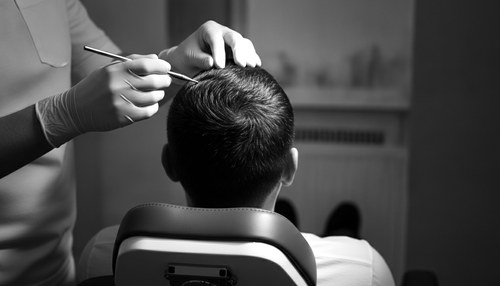
Black and white editorial photograph for FUE hair transplant commentary by Dr. Frank Agullo, MD, FACS.

Hair consultations are different from the rest of my practice. Nobody walks in with a wish photo of a celebrity. They bring a photo of themselves, from a few years ago, and they want that hairline back without anyone knowing.

A patient came in recently, 37, never had any treatment before. He brought a picture of his own face. I am publishing the exchange nearly as it happened, identifiers removed, because these are the same questions I get every time.

My exam note from that day: bilateral temporal recession points with loss of hairline definition. Plan would be to graft these two areas with as many follicles as possible. 2,500 to 3,000 follicles and may need a repeat procedure.

Me: “Okay, so I do see that you have the temporal recession areas on both sides, and the front is also thinning out a little bit. And I got your wish picture, which creates a very tight straight hairline. So there is a lot of area we have to fill in to create that. But it is definitely doable. It looks like you have good donor hair.

“So there’s two ways of doing it. Are you familiar with the strip and the FUE?”

Him: No, I kind of read it a little bit. Any recommendation of which one would be better?

Me: “Sure. I see that on the back you like to wear it short.”

Him: Yeah, usually from the sides it can’t be that long. Usually I had it like kind of a high fade.

Strip Versus FUE

Me: “Right. So when people wear the hair short on the back, that’s where we get the hair from. So those are the follicles that we use to fill in the front. So one way to take them from the back is doing the FUE, which is the one by one, the neograft. We take them one by one, it heals in, and you don’t see any scars. The other one is doing a strip where I actually cut like a sliver of hair follicles or scalp, but it does leave a scar. So if you wear your hair short, you would see that long scar.

“So in your case, probably the best is gonna be the FUE, which is the one by one, so you don’t have any scars, and we transfer those from the back and we put them in the front one by one, so it looks very natural. I have a hair transplant, so it really looks very natural, and of course, you can do everything normal afterwards, so you can do sports, swimming, you can dye your hair, everything’s back to normal.”

Him: For the haircut you gotta be like a little bit meticulous with that area?

Me: “No, after everything’s healed, everything’s back to normal. There’s zero special care.”

Follicle Count and the Day Itself

Me: “The main thing here is filling in that area. It’s a pretty big area. With the FUE, we can do maximum twenty-five hundred, sometimes twenty-eight hundred follicles. The procedure takes about six to eight hours. We give you a little bit of sedation through an IV so you’ll be comfortable, you’ll sleep through most of it. And then you need about a week for everything to heal and set in.

“After a week, you’re back to normal. You can do normal activity, exercise, running, jumping, swimming, everything back to normal. For this procedure, we do have to shave the hair down all the way to be able to get the hairs one by one. We could spare the top, we could do just the sides if you want to keep the top, or we do the whole thing, whichever is better for you.”

Why Your Hair Type Matters

Me: “So the idea is obviously to fill in as much as we can and get the tightest hairline possible. It is possible you may need another treatment later to make it even fuller, more dense. I think with the first treatment we can get pretty close to what you want, but we may need to add density later. Your hair is good because it’s coarse and it’s a little bit curly, so that covers a lot more than fine hair. So I think we’re gonna get a really nice result for you.”

Timing Around Travel

Him: Does it matter whether I do it before or after?

Me: “No, it really doesn’t matter, it just depends on your timing. You gotta keep in mind your haircut, but the hair grows really quick so you really just need a week where you’re here, and that’s all you need, whether it’s before or after, whichever works better for you, and my coordinator can help you find the right dates.”

The Timeline Nobody Wants to Hear

Me: “Yeah, we can do it after, no problem, as well. There’s no rush. Remember the hair does take four to six months to start growing. So at six months we’re only like fifty percent of the results. At a full year, year and a half is when we have a hundred percent of all the hairs are growing. The graft take is very high, usually ninety-nine percent. We do use PRP, which means we draw a little bit of your blood and get the platelets, and we inject that into the area so that the hairs grow faster with the growth factors, and we get that really high take.”

Him: I was actually completely bald, so for me, it made a huge difference to have hair again.

Me: “Exactly. Psychologically, it really gives you more self-esteem and you feel better. So it is a procedure I highly recommend. There’s really no pain afterwards, it’s easy recovery. You may get a little swollen around your eyes for two or three days but it is, I think, one of the ones where everybody’s happy.”

The takeaway

FUE if you wear your hair short, because there is no line to hide. Twenty-five hundred to twenty-eight hundred follicles in one session, six to eight hours under IV sedation, one week local. Then wait. Four to six months before anything grows, fifty percent at six months, the full result at a year to a year and a half. That last part is the whole job of the consult.

I am a double board-certified plastic surgeon, a Mayo Clinic fellowship alum, and I teach plastic surgery as a Clinical Associate Professor at Texas Tech University Health Sciences Center.

Ready to Talk?

If your hairline has been bothering you and you want a straight answer about what FUE can and cannot do, let’s talk. Call the office at (915) 590-7900, text us at 1-866-814-0038, or book a consultation at drworldwide.com.

#StayBeautiful

@RealDrWorldWide on Instagram, TikTok, and Snapchat, @Agullo on X, or @AgulloPlasticSurgery on Facebook.

The Glow Is Real: What Skin Boosters Can and Cannot Do

Black and white close-up of a gloved injector's hands treating a patient's cheek with a fine needle. Skin booster editorial by Dr. Frank Agullo, MD, FACS.

Patients ask me about Jalupro several times a week because they see it on social media.

Injectables and skin quality treatments are a large portion of my practice. Yes, I do skin boosters, biostimulators, and fillers. I also train people to inject.

So understand that I am not arguing against the category. I sell the category. Forbes asked me about Jalupro in July, and this is the longer version of what I sent them.

What the Category Genuinely Does

Chasing volume versus treating skin quality is a real change in aesthetics, and I see it every day. Whether Jalupro itself is a new era is a different question. It is HA plus amino acids, and studies that look at Jalupro alone are typically small and often industry funded.

When I inject skin boosters, I notice the skin improves in hydration and texture as well as increases light reflection. This is a real result.

Light reflection. Not lift, not volume, not tightening.

Where the Promises Outrun the Evidence

But it is a subtle one, and much of the marketing promises things that have never been evidenced by any clinical studies.

You may also want to know it is not approved by the FDA as an injectable here in the USA, which is why most of its following is in the UK and Europe.

Skin boosters like Jalupro treat skin quality instead of shape, and that is genuinely new for an injectable. The results are real but modest, better hydration and texture for a few months at a time. When someone on social media promises a lifted face from a skin booster, that is marketing, not medicine.

What to Expect, and What Not To

The one misconception I fix most often is how a skin booster operates versus a filler, or whether one can skip a surgical procedure altogether.

Skin boosters will not lift anything up. They cannot return volume where none exists anymore. They cannot tighten sagging skin at all meaningfully. Results vary between different people. They last temporarily, and they do not necessarily guarantee an effect after one treatment.

If your jawline has dropped and your midface has fallen, that is a facelift, or it is acceptance.

What a Course Actually Costs You

It is doubtful that someone with significant laxity, major deep folds, or a great deal of volume loss will notice anything enough to shell out the kind of money this procedure requires. A course usually means 2 to 4 sessions plus maintenance, so the total spend adds up quickly for a subtle result.

The length of time before you need maintenance is similar across the injectable options, with most lasting roughly 3 to 6 months.

What I Rank Highest

At this moment in time, Profhilo, polynucleotides, and microneedling occupy the same skin quality column and add nothing in terms of volume. Profhilo is the more commonly known of the HA boosters, and has worked similarly to Jalupro in my personal experience. In the US, the FDA approved option in this family is SkinVive by Juvederm, and that is what we offer at our med spa.

I am, however, encouraged by the early data that has emerged on polynucleotides. These show particular promise for the area surrounding the eyes.

Microneedling has the longest track record and the most independent evidence, especially when combined with radiofrequency. Microneedling combined with growth factors, PRP or PDGF, shows the most promise with a true change at the microscopic level.

The least fashionable option has the best evidence.

When I Say Wait

I do not treat patients who are pregnant or breastfeeding with Jalupro or any skin booster. Unfortunately, there is no safety data available for use in this patient demographic. In patients suffering from active skin infections or those who poorly control autoimmune diseases, I suggest caution with Jalupro or similar skin boosters.

Why You Can Trust the Answer

I am board certified in plastic surgery. I practice in El Paso, Texas, and I am also a Clinical Associate Professor of Plastic Surgery in the Texas Tech University Health Sciences Center Paul L. Foster School of Medicine. I trained at the Mayo Clinic and I have been a Castle Connolly Top Doctor for thirteen consecutive years.

I would rather lose a booster sale than have a patient work out six months from now that hydration was never going to lift her face.

Ready to Talk?

Bring the screenshot to your consultation. If what you saw will not work on your skin, I will say so. Call (915) 590-7900, text 1-866-814-0038, or book online. #StayBeautiful

@RealDrWorldWide on Instagram, TikTok, and Snapchat, @Agullo on X, or @AgulloPlasticSurgery on Facebook.


Companion reads: what The Medspa actually offers at swplasticsurgery.com, and where skin quality sits next to surgery on agulloplasticsurgery.com.