DR. WORLDWIDE GETS SOCIAL


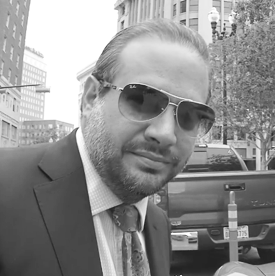



DR. WORLDWIDE GET TO KNOW HIM
Frank Agullo, MD, FACS — known globally as Dr. WorldWide — is a double board-certified plastic surgeon in El Paso, Texas. He is a Clinical Associate Professor of Plastic Surgery at Texas Tech University Health Sciences Center and Affiliate Professor at the University of Texas at El Paso. Specializing in preservation-based aesthetic surgery and the Deep Plane Facelift, he has been named a Castle Connolly Top Doctor for thirteen consecutive years and has a global social following of over 3.5 million across Instagram, TikTok, and Snapchat. He is the founder of Southwest Plastic Surgery and Plastic Surgery Studios.
Meet Dr.WWDR. WORLDWIDE GET TO KNOW HIM
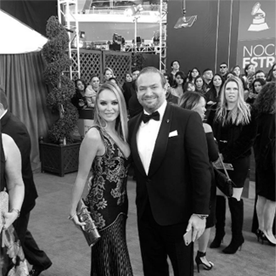
Frank Agullo, MD, FACS is the plastic surgeon the world watches. Known globally as Dr. WorldWide, he has built one of the largest followings of any surgeon on the planet (over 3.5 million on Instagram @RealDrWorldWide) by pulling back the curtain on plastic surgery and showing what extraordinary results actually look like. Celebrities, influencers, and patients from across the United States and around the world make the trip to El Paso, Texas, because when you have seen the work up close, there is nowhere else to go. More than 80% of his patients travel from outside El Paso. The practice handles every detail of their journey.
Dr. Agullo is double board-certified, Mayo Clinic fellowship-trained, and a Clinical Associate Professor of Plastic Surgery at Texas Tech University Health Sciences Center. But credentials only tell part of the story. What sets him apart is a philosophy built on preservation: enhancing, restoring, and elevating what is already there rather than changing who you are. Not cookie cutter. Every plan is molded around the individual patient's desires, their anatomy, their life.
That philosophy drives every decision in the operating room. His Motiva Preserve breast augmentations deliver results that feel as natural as they look. His deep plane and endoscopic deep plane facelifts turn back time without announcing themselves. His Supercharged BBL has been refined, published, and presented on international stages. And his ability to combine face and body procedures in a single operative session is a capability few surgeons in the world can offer safely at his level.
The same philosophy applies outside the OR. Forget synthetic fillers. Dr. Agullo restores volume with regenerative grafts including Alloclae, Lipoderma, exosomes, and platelet-derived growth factors. Recovery is treated as part of the result: lymphatic massages, scar management, and Elixir MD LED light therapy ensure that what happens after surgery is as intentional as what happens during it.
Castle Connolly Top Doctor for eleven consecutive years. Texas Super Doctors Hall of Fame. Best Plastic Surgeon in El Paso for thirteen consecutive years. Aesthetic Everything Top Plastic Surgeon 2026. Founding Vice President and President of the World Association of Gluteal Surgeons, where he helped write the global safety standards for gluteal surgery.
The results are daily. The standard is uncompromising. The philosophy is simple: #MakeItHappen. #HappyIsBeautiful. #StayBeautiful.
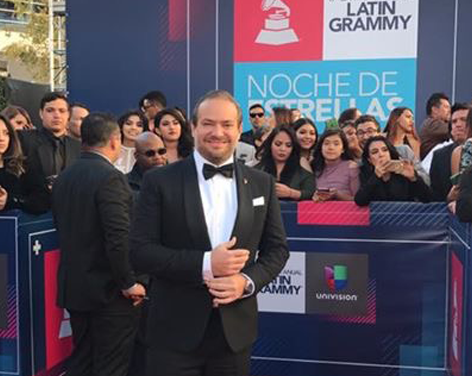
#PlasticSurgeryIsMyPassion






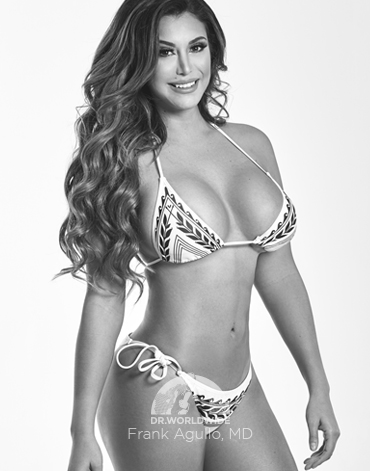
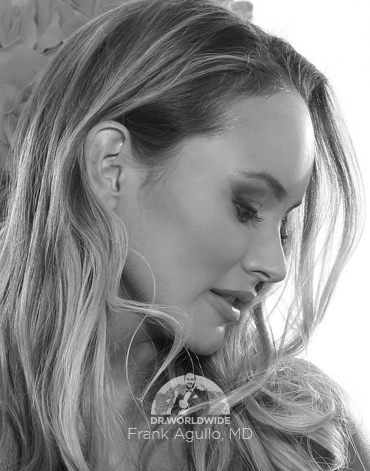
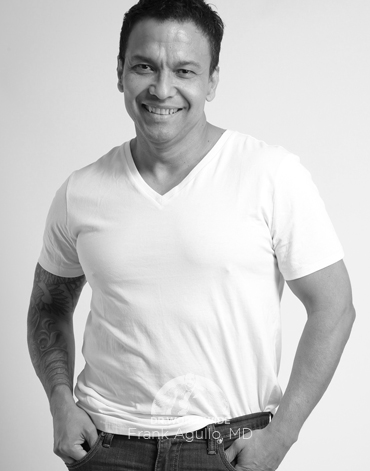
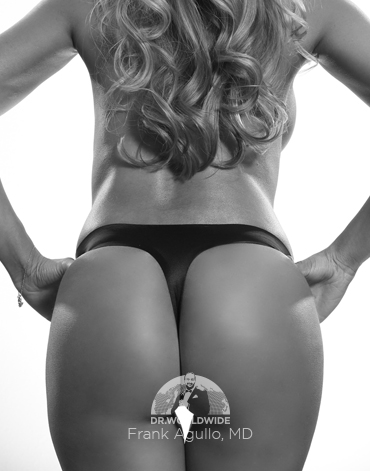
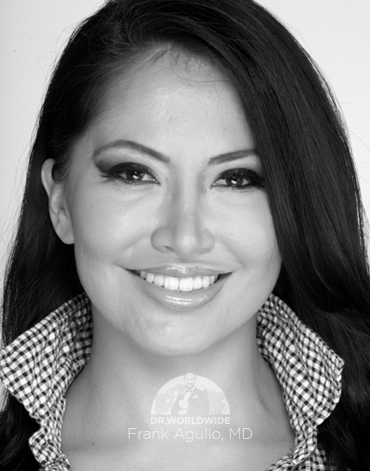
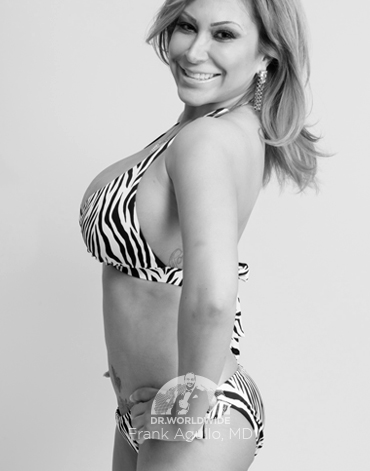
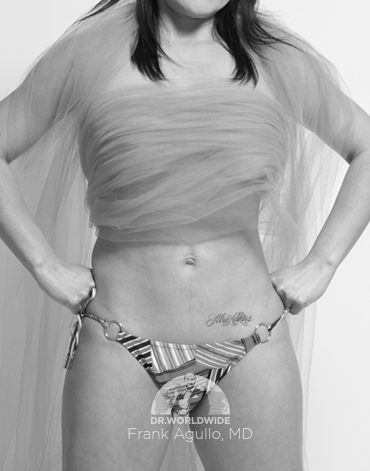
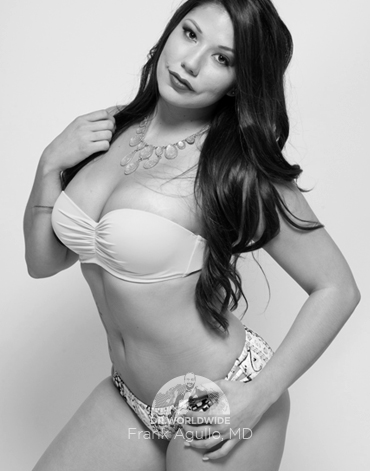
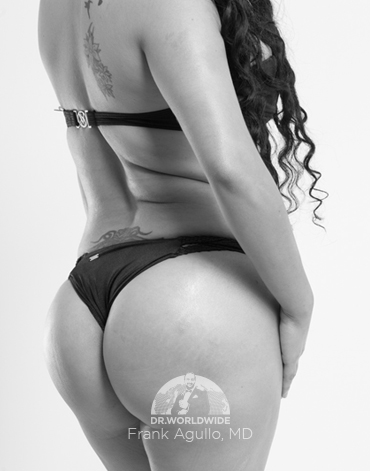
GLAMOUR SHOTS
Plastic Surgery is a very personal choice and a unique experience for every individual who chooses to undergo a change, be it a discreet or major surgery. The one thing in common for my patients though is that they experience an inner transformation which ultimately shines through as confidence in themselves. Confident is Beautiful!
BLOG

- Posted on: October 26th 2026
- Category: Brazilian Butt Lift, Commentary, Patient Safety
Jennifer Arias, 29, flew from New York to Miami for liposuction and a BBL and died the same day of fat emboli in both lungs. The same week, Katherine Ryan told a talk show she might get one anyway, “because it is the deadliest surgery you can get.” Both are right about the name. Here is why the BBL earned it, what changed in the operating room, why I still do it, and who should still say no.
BLOG
- Posted on: October 26th 2026
- Category: Brazilian Butt Lift, Commentary, Patient Safety
Jennifer Arias was 29. She flew from New York to Miami in August for liposuction and a BBL, texted her sister at 4:18 in the morning that she was going in, and died that day of fat emboli in both lungs. Her mother had begged her to cancel: “Be a mother first, and a woman second. If something happens to you, what will become of your daughter?” The medical examiner called it an accident. The sheriff’s homicide bureau has an open case. NBC6 counts at least five other deaths at the same clinic since 2018. Where Is The Buzz reported it Friday.
Two days earlier, on a British talk show, Katherine Ryan said she might get one too. “So I might do that, but only mildly, because it is the deadliest surgery you can get.” Then: “So, I might not do it because I might die, but worth it if I don’t.” LADbible ran it under the NHS line that the BBL has the highest death rate of any cosmetic operation.
They are both right about the name. Here is how it earned it, and why I still do the operation.
How It Earned the Name
“By visualizing exactly where we’re at, we’re avoiding intramuscular or deeper injections, which can cause fat embolism, a very severe complication. There have been no cases of fat embolus when fat has only been injected in the subcutaneous fat. The only cases of fat embolism have all had intramuscular fat injections. That’s the importance of the ultrasound. It makes the procedure safer by knowing exactly where you’re at at all times.”
Fat in the muscle finds a vein. A vein carries it to the lungs. That is the whole mechanism, and it is why every BBL embolism had one thing in common. Jennifer Arias’s cause of death, bilateral pulmonary fat emboli, is that sentence in a medical examiner’s handwriting.
What Changed
“Even before 2024, I had already adopted many of the recommendations made beforehand and after by the plastic surgery societies. We continued using blunt tips with cannulas larger than 4 millimeters. We avoided injections into the muscle. We used ultrasound to visualize the location of the tip of the cannula while injecting, making sure not to perform any intramuscular injections. I always use an upward-angled cannula, and the patient is positioned in a jackknife type position.”
“The ultrasound shows us exactly where the tip of the cannula is while we’re injecting fat into the buttock. Ideally, the cannula should be injecting fat into the deep fat layer above the muscle. We inject some fat in the superficial fat layer for shaping, but the bulk of the volume is injected in that deep compartment.”
“I think the biggest achievement of WAGS while I was Vice President and President was educating patients and surgeons, both members and non-members, about safety. Also incorporating ultrasound into the BBL procedure, and creating a course and a certification for using ultrasound for Brazilian butt lifts.”
The name is from the years before the probe. The operation Katherine Ryan is joking about and the one I do in El Paso are not the same operation.
Why Miami Keeps Making the News
“In general, medicine is less expensive outside of the United States. The cost of the OR and anesthesia is lower, and salaries for staff and supplies are lower. But in my experience, the very good surgeons from abroad, and I know many of them, charge very close to top surgeons in the United States. So when you see a really low fee, it is probably a surgeon that is not as busy as they would like, and they have to lower prices to attract patients.”
“I would also add that sometimes these kinds of prices are actually offered right here in the United States, often in clinics that do very high volumes. These are very common in Florida, for example. A lot of times, we are not sure who is performing the procedure, whether it is a board-certified plastic surgeon or a physician from another specialty. And often the recovery and follow-up are cut down, as these surgeons only come in to perform the procedure, and then the clinic is the one that continues the follow-up.”
The clinic in the Arias story told reporters the doctors who operate there are independent contractors. Read that sentence twice before you book a flight. The rest of the price conversation is in BBL cost in Texas.
Britain Moved the Same Week
Filler pushed into the buttock, the so-called liquid BBL, is coming off the British high street. On October 21 the government there said only qualified medics may inject filler anywhere other than the face, with fines for anyone else, after Alice Webb, 33, a mother of five, died in 2024 following a liquid BBL at a salon in Gloucester (ITV News). Different substance, same lesson. Nobody could see where the needle was.
The Question That Would Have Saved Her
“The most important thing is whether the surgeon is using ultrasound or not. No matter the experience level of the surgeon, there’s always a risk that you can misjudge and be in the wrong plane, and this is completely avoidable with direct visualization.”
One question. If the answer is no, or a shrug, leave.
Who Should Still Say No
“That’s especially true of male patients, who have a very thin fat layer, and also massive weight loss patients, who have a very thin fat layer, so they’re at higher risk for intramuscular injections.”
“I am always an advocate for patients to continue their weight loss journey to get to a healthier weight and BMI to decrease complications.”
“If I know a patient is smoking, I will refuse to do most procedures, but especially any facelift or neck lift, any breast lift or breast reduction, and tummy tucks. All these procedures rely on flaps and capillary blood flow.”
| Say no, or not yet | Why |
|---|---|
| Thin fat layer, men, massive weight loss | Nowhere safe to put it; the probe helps, it does not create fat |
| BMI over 35 | The BMI read |
| Still losing on a GLP-1 | Weight stable first, three months |
| Nicotine in any form | Not on my table |
| A cheap quote and a flight | See the section above |
“There is a tendency toward the more natural look, so there has been a decrease in the number of BBLs nationally. But at the same time, a lot of patients are turning to fat transfer or donor grafts like alloClae instead. In the Southwest, there’s still a demand for the bigger hips and greater projection.”
Katherine Ryan wants it “only mildly.” Good. That is the version worth having, with a probe on the skin and a board-certified surgeon holding the cannula. The surgical version of this post, with the protocol, is on agulloplasticsurgery.com; the checklist version is on the Southwest Plastic Surgery post. BBL after buttock implants is the other way to projection.
Why Choose Dr. Agullo
Dr. Agullo is certified by the American Board of Plastic Surgery and the American Board of Surgery, completed his plastic surgery fellowship at the Mayo Clinic, and serves as Clinical Associate Professor of Plastic Surgery at Texas Tech University Health Sciences Center. He has been a Castle Connolly Top Doctor for thirteen consecutive years, 2014 through 2026. He served as Vice President and President of the World Association of Gluteal Surgeons and was among the first plastic surgeons certified by WAGS in ultrasound-guided fat transfer to the buttock.
Ready to Talk?
Before you book a BBL anywhere, ask one question: is there an ultrasound in the room? If you want to hear mine answered, come in.
Call (915) 590-7900, text 1-866-814-0038, or book online at agulloplasticsurgery.com. #StayBeautiful
Find me at @RealDrWorldWide on Instagram, TikTok, and Snapchat, @Agullo on X, or @AgulloPlasticSurgery on Facebook.

- Posted on: October 26th 2026
- Category: Body Contouring, Commentary
She had already had a BBL. She wanted the pop that fat did not give her. What I told her about implants, sizing, sitting, and scars, nearly as I said it.
BLOG
- Posted on: October 26th 2026
- Category: Body Contouring, Commentary
A 33 year old patient came in who had already had liposuction and fat transfer to the buttock a few years ago with another surgeon. She has a tummy tuck scheduled elsewhere. What she wanted from me was projection, the part fat is worst at. I am publishing the exchange nearly as it happened, identifiers removed, because the questions she asked are the questions everyone asks about buttock implants.
The visit
Me: “I got your pictures, those are very helpful, and I looked at your history. Have you had any problems with anesthesia before? And you’re 5’3 and you weigh 185?”
Her: Yes, which I will be losing a little bit more weight because I do have a surgery coming up in November for a tummy tuck. So I know my shape is gonna change a little bit, because they’re gonna try to even out my hips and stuff.
Me: “And you’re interested in the buttock implants? So you’re a great candidate. The implants, what they’re gonna do the most, they’re gonna give you a little bit of hip, but not really much. It’s mostly gonna be more projection. It rounds it out and makes it a little bit tighter. The incisions are gonna be in here, so in the nude, standing, you don’t see anything.”
Me: “In terms of the size that I can put in, it’s really gonna depend on how wide your muscle is once I get in there. I try to maximize depending on each person’s muscle size. I think we can get close to your wish pictures. We’re probably gonna be able to start with a 450 or 550 type implant, which is gonna give you a lot of volume and a lot of projection. If I have room for more, I can put a bigger one. I’ll have the whole range. Sometimes what we do, we start with whatever fits now, and then later on we can always switch to a bigger one for more projection.”
Me: “So when they do your tummy tuck, they’re gonna do a little bit of fat grafting to your hips?”
Her: They are, they’re gonna do kind of a BBL too, but honestly, I don’t think that they can really do much with the fat that I already have. So that’s kind of why I wanna do this.
Me: “I did notice that, for example, here you have a little bit of a dip, they can put a little bit of fat here. And then also in this transition from here to here, they could add some. And it’s completely safe. Once you have implants, there’s really no worries with the implant, because the implant is gonna be solid, so you really can’t puncture it or break it or anything like that. These implants should last a lifetime. We only change them if there’s a problem or if you want a size change, but otherwise you don’t have to worry about them.”
The asymmetry question
Her: I think my right buttock is smaller than my other one, so I’m hoping that they can kind of fix that.
Me: “I think the best way to fix that is with a little lipo and fat grafting. For the implants themselves, it’s better to put the same size on both, because we’re only really putting the projection. I do see that this one’s a little narrower here, a little dip.”
Me: “Later on, once you’re done with everything, if you still need a little more volume, there is something called allograft, which is a donor fat that we can inject even in the office. You don’t have to go under general anesthesia, and it can fill in that area just to give you a little bit more symmetry.”
The recovery question
Me: “The surgery is a little bit like a tummy tuck, but on the buttock, because we are working in the muscle. So you will be sore for a couple of weeks. It’s kind of like breast implants, but in the buttock, where the buttock’s always moving. So it does take a little while to get used to them. Usually it takes like a full six months for you to forget that they’re there, kind of like the breast implants. You’ll have some pains that come and go, but in the end it’ll become part of your body.”
Me: “For this surgery, we want you to be here at least for six days just to make sure you’re healing well and the scar’s healing well. The thing we worry the most about is if the scar opens up, then the implant can get contaminated and we would have to remove it. But I can tell you in the last hundred that I’ve done, we’ve had zero, so I don’t wanna worry about it.”
Her: You think it takes about six months to fully heal?
Me: “It’s gonna look great right away, but the pains that come and go is what you’ll be feeling for about six months. Of course, it’s most intense in the beginning and then it keeps getting better and better. I think in about four to six weeks you’re back to exercise and everything back to normal.”
Her: How long until you can fully sit on it?
Me: “Because we’re not doing any fat grafting, you can sit on it right away. But we’ll give you a cushion where you sit on your thighs, because it’ll be a little bit uncomfortable, but there’s really no problems with that.”
Her: As far as out of town patients, do you suggest a hotel?
Me: “Most patients stay within two blocks from here, and then my nurse will visit. So you could have this before your tummy tuck if you wanted to, or I would say at least three months after the tummy tuck. Three months before or three months after.”
The dimples
Her: My buttock is very square. It’s cute for what it is, but I want to maximize.
Me: “I did notice that you have a few dimples. I think it may get better with the implants, but if you wanted to treat those at the same time, we do have something called Aveli. Essentially, what you have is a fiber that’s pulling and making that dimple. So I go in and break that fiber, and it also helps so it pops out more, so you get a little more projection.”
Her: Is that added on top of the cost?
Me: “Yeah, it is additional, but it can be done at the same time. I’m gonna have my coordinator call you, and she can show you with or without.”
My exam note that day: rather full buttocks, the left buttock might be a little larger, a hip dip on the right side and a dip in the transition zone from the buttock to the thigh, some satellite dimples on the buttock.
What I tell everyone about implants versus fat
To another patient the same month who was weighing the two: “Implants I really recommend if what you’re looking for is more projection. It does give us better projection than fat. But even when I put in implants, I still put a little bit of fat around it to give it shape. With the implant we can really tell how much you’re going to get in projection, because it will pop. Fat is a little bit squishier, so it doesn’t pop as much.”
And on why I put them inside the muscle: “I do put them inside the muscle so that they don’t drop afterwards.”
That is the whole subject. The implant gives the projection, the fat shapes the edges, and the scar has to heal. Get those three right and the result does not shrink when you lose five pounds.
I am a double board-certified plastic surgeon, a Mayo Clinic fellowship alum, and I teach plastic surgery as a Clinical Associate Professor at Texas Tech University Health Sciences Center.
Call the office at (915) 590-7900, text us at 1-866-814-0038, or book a consultation at drworldwide.com.
#StayBeautiful