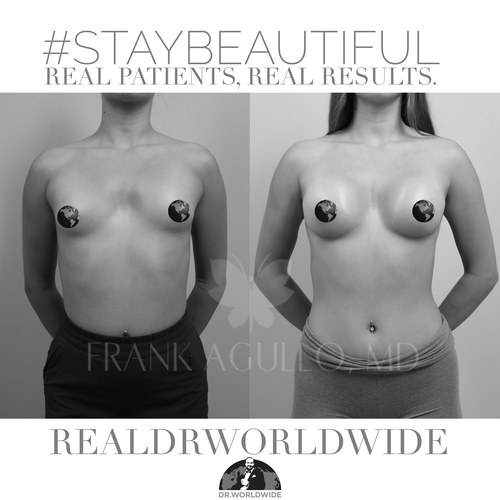
Trends hit my field like 12 months after they came to the runway. This one came early.
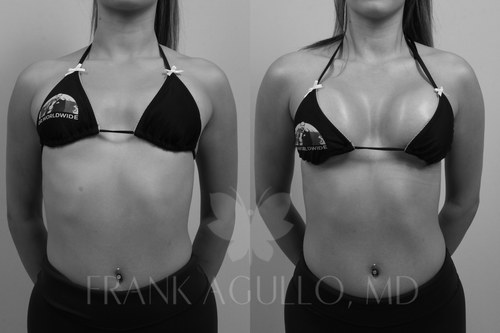
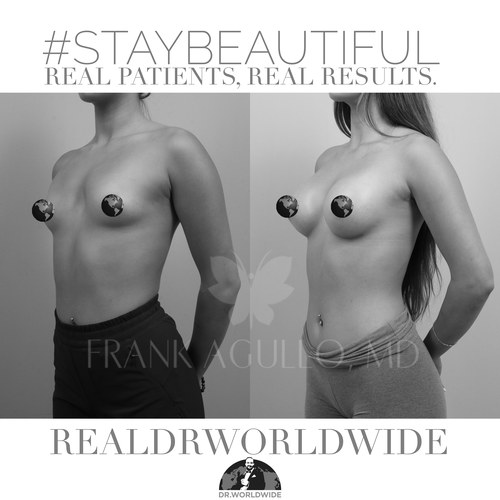
Patients started picking up a description I had never put into their mouths, the phrase “ballerina breasts.” They were “working breasts,” they had a nice shape to them. Smaller. Lighter. The size the breast would be on its own. Not flat. Not androgynous. Just quiet.
Let me be precise about the numbers, because the internet is not. In my practice, approximately half of my patients still desire the largest sizes and they are getting amazing outcomes. The other half has moved, and moved decisively.
The Cup Size Secret
The single math lesson that informs how every size conversation I have ever been in ever unfolds is that 150-200cc implants equate to one full cup size.
The patient arrives saying some version of “a small implant will not change my appearance much.” Then, on the 3D simulation of their own body, I show what 150 cc of change does and ask for comments. You can hear crickets. Even that little volume dramatically impacts projection and cleavage. 150 cc is not a minor change.
I often turn to Motiva Ergonomix when addressing these situations. It mimics the movement and contour of breast tissue: It is rounder while flat and takes a teardrop shape when standing, which appears more natural in motion for its size.
Getting More From Less
Placement of the implant is key: Traditionally placed, it leads to a standard augmentation with a size difference that makes sense relative to the individual’s natural breast size. Under ligaments using the Motiva Preserve approach, it causes the ligaments to support the implant and not cause a “hang” or “unnatural feeling” because nerves, vessels and breast tissue are all left alone; a size is chosen that yields a breast size higher than what might be expected just from the cc count itself.
When I place implants the traditional way, I often add a DuraSorb or GalaFLEX mesh that essentially acts like an internal push-up bra. That placement is secure and lowers the risk of capsular contracture and migration. With Preserve, the breast’s own ligaments achieve this same purpose, for free.
I cover the full surgical walkthrough, along with the downsizing pathways, in the complete smaller implants guide on the practice side.
The Downsizing Wave
These ladies are more interesting because they are not fresh to cosmetic surgery. They are 50- and 60-something women who chose large implants decades ago and now feel they are simply too big to wear.
It is serious surgery with real planning involved. If you plan on dropping only one cup size, you might be fine just taking out the old implant and inserting the new, smaller one. If you are dropping larger sizes, the skin will likely be too saggy and would have to be worked with. This usually takes a shape similar to a “donut lift” or an “anchor lift.” Finally, the now empty space/pocket from the old larger implant needs to be pulled tighter, closed up with some mesh to keep the new, smaller implant from moving out of place or shifting. Skipping it is what turns a downsize into a future revision.
What It Costs to Go Small
That smaller size does not result in a smaller bill, and I would prefer to say so plainly rather than mislead anybody. It is still the same surgery and the same amount of carefulness in that surgery. I went over all the details and costs in my breast augmentation cost read.
Going small might buy some time, as there is much less weight pulling your breasts down as you age and maybe a result that never needs a lift at all. It will also, as many patients say, be much more comfortable to get around.
My Honest Take
Two major waves of breast augmentation fashion have rolled through my professional life. The choice of size should be the patient’s, not the surgeon’s dictation. The physician’s role is to inform the patient of realistic tissue constraints, outline available alternatives via a 3D visual model and then allow them to hold implant samples in their own bra to estimate weight before they go under the knife.
Ballerinas are not even close to a downgrade. If done right with the right type of implant and support, they are honestly some of the most detailed cases that I can do. One recent example is in the 315 cc Motiva Preserve case study.
Ready to Talk?
Bring your version of “natural” and we will find out together what it looks like on you.
Call (915) 590-7900, text 1-866-814-0038, or book online at agulloplasticsurgery.com/appointments. #StayBeautiful
@RealDrWorldWide on Instagram, TikTok, and Snapchat, @Agullo on X, or @AgulloPlasticSurgery on Facebook.
Cross-links
- Full surgical guide on agulloplasticsurgery.com: “Smaller Breast Implants in El Paso: The Ballerina Breast Trend, Downsizing, and the Preservation Approach” (canonical)
- Consultation-experience version on swplasticsurgery.com: “Trying On Your New Size: How Southwest Plastic Surgery Plans a Smaller Breast Augmentation” (link once live)