The Many Uses of Botox: A Surgeon’s Tour From the Well-Established to the Experimental

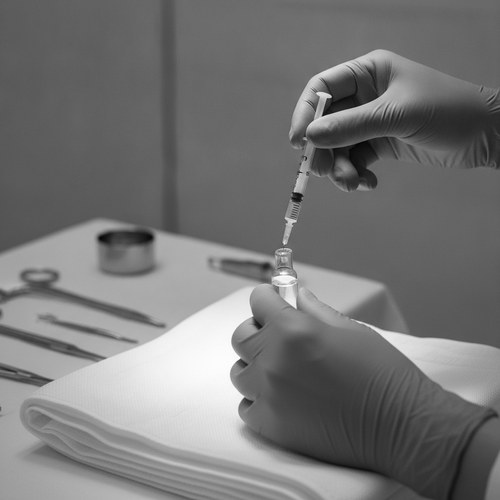
Black and white editorial close-up of a fine syringe held in gloved hands in soft side light. The many uses of botulinum toxin, by Dr. Frank Agullo, MD, FACS.

Before we talk about the different uses of Botox, which is a very exciting topic, it’s important to understand how botulinum toxin works. In essence, it inhibits the release of acetylcholine, which is the chemical signal that nerves send to the tissue on the other side. In the traditional use of botulinum toxin for the prevention of wrinkles, the nerves are sending acetylcholine to the muscles to contract the muscle, and the botulinum toxin is preventing that release so that the muscle doesn’t contract and create a wrinkle. In the same fashion, it can work on other targets, like sweat glands.

Once you understand that one mechanism, the whole long list of uses makes sense. So here is the tour, from the well-established to the experimental.

Excessive Sweating

Botulinum toxin can be used for excessive sweating, in medical terms, hyperhidrosis. This is what a fitness audience tends to care the most about. The FDA has actually approved botulinum toxin for excessive underarm sweating. In this case, the toxin is injected into the skin every half an inch to cover the area of the sweat glands that produce the sweat. A single underarm treatment usually lasts anywhere between four to six months, and it does have to be repeated.

Off-label, we can use it in the same fashion for sweaty palms, the soles of the feet, a sweaty scalp, and even the forehead. It doesn’t change how much you’re going to sweat in other places that aren’t treated, but it is very effective. I’ve had patients whose excessive sweating is disabling, and for them these treatments are life-changing.

Chronic Migraine and Headaches

The FDA has approved the treatment of chronic migraines and headaches with botulinum toxin for more than fifteen years now. There is a very specific protocol, and it consists of about thirty injection points in the forehead, scalp, and neck. This is considered a preventative treatment, which means it prevents the onset of new headaches. It would not cure an active headache at the time of injection.

I’ve had a lot of patients who just routinely get botulinum toxin for cosmetic reasons, to prevent wrinkles in the forehead, crow’s feet, and glabella, and they tell me that they’ve had fewer headaches since they started using the botulinum toxin.

Jaw Clenching, Tics, and Symmetry

Botulinum toxin is also used for jaw clenching and teeth grinding. It’s injected into the masseter muscle, which decreases the strength of the bite. As a side effect, it can be used to slim a heavy jawline by decreasing the size of the masseter muscle, creating that shadow effect that a lot of women aspire to.

It can also be used for spasms or continuous nervous tics around the eyes, to soften them. We use it often in patients with facial nerve palsy to create more symmetry between the non-paralyzed and paralyzed sides. It can be used in neck muscle spasms and even in overactive bladders.

The Less Traditional Uses

Less traditional uses of Botox include TrapTox, which is injected into the trapezius muscle, and sometimes it’s called the Barbie. It reduces the mass of the trapezius muscle, which creates a more slender neck, and a longer, more slender neck. Some people use it for comfort in this area, as they feel they carry significant stress in their shoulders, and this can help alleviate that.

We use it around the mouth to correct gummy smiles. We inject it into the muscles that elevate the upper lip excessively, and it reduces the gum show, or gingival show, when smiling. Another area where it’s injected into muscles to decrease their mass is the calf muscles, which is very common in the Asian population. It can also be used to treat the pebbly chin, or orange peel appearance of the chin. Relaxing the mentalis muscle smooths this area of skin.

The Skin Itself

There are applications where we do microdroplets of botulinum toxin over the skin. These are very superficial injections, and overall they decrease oil production and smooth out the skin over time. It’s something we’ve noticed just in treating patients aesthetically for the prevention of frown lines and wrinkles, that the area where the Botox is injected, the skin quality improves over time and looks younger. It is also used for rosacea flushing, where microdroplets are injected into the skin to decrease facial flushing and redness, which is considered off-label. It pairs naturally with skin-quality work like microneedling.

The Experimental Frontier

Depression is actually being studied at the moment, but some studies already suggest that relaxing the glabellar frown muscles influences emotional feedback mechanisms and pathways in a way that improves depression. It’s not FDA-approved for depression, but it remains an active area of research.

There is a nonstandard indication where botulinum toxin can be injected into the clitoris, which relaxes the capillaries and promotes engorgement during sexual stimulation, which can increase sensitivity. In the same manner, it can be injected around the vagina to prevent vaginismus, sexual pain, and pelvic floor spasms. And some physicians actually use it in places you would never imagine, like the vocal cords, the salivary glands to decrease saliva production, the pelvic floor for problems in women, and the hands for circulation disorders.

One of the side effects of injecting into areas for decreased sweat production is that there’s also a decrease in body odor production, since the smell is produced by the same glands that produce the excessive sweat.

The Credential Behind the Opinion

Double board-certified by the American Board of Plastic Surgery and the American Board of Surgery, American College of Surgeons Fellow, Mayo Clinic plastic surgery fellowship, Clinical Associate Professor of Plastic Surgery at Texas Tech University Health Sciences Center Paul L. Foster School of Medicine, and Castle Connolly Top Doctor for thirteen consecutive years. The reason I keep a long mental map of these uses is that the same molecule, in the right hands and the right plane, solves a surprising range of problems.

Ready to Talk?

If a use on this list speaks to something you have lived with, the conversation is worth having.

For the patient-facing clinical guide, see the companion post on agulloplasticsurgery.com. For the MedSpa toxin menu at the practice, see the version on swplasticsurgery.com.

Call (915) 590-7900, text 1-866-814-0038, or book online at agulloplasticsurgery.com. #StayBeautiful.

@RealDrWorldWide on Instagram, TikTok, and Snapchat, @Agullo on X, or @AgulloPlasticSurgery on Facebook.

When the Implant Rides High and Hard: A Surgeon’s Take on Revision and Capsular Contracture

Black and white study of a woman's torso in soft light, hand resting near the collarbone. Breast implant revision commentary by Dr. Frank Agullo, MD, FACS.

A large part of my week is not first-time augmentation. It is revision.

Women come in years after surgery done somewhere else, and they describe the same handful of things. One breast riding high. A firmness that crept in. A sense that the implant has wandered off where it should be. Or simply, it has been ten years and they want a change.

These are not vanity complaints. They are mechanical problems with mechanical fixes, and they deserve a straight answer rather than a shrug.

What That High, Hard Lump Usually Is

When the description is one side that sits high and feels firm, almost like a lump, it is usually a capsular contracture.

Here is what is happening. Whenever we place an implant, the body forms a capsule of scar tissue around it. That is normal and even helpful, because it keeps the implant in place. But sometimes that capsule, driven by inflammation or an old low-grade infection, tightens and hardens around the implant. It squeezes the implant up and in, and the breast goes firm.

If it hurts, the contracture is more severe. No pain is actually a good sign. And it surprises people that this can show up long after the original surgery, sometimes many years later, but it does.

How I Actually Fix It

The repair is more than swapping the implant. I go in, remove the hardened capsule, take out the old implant, and place a new one.

When I do that and switch the patient to a Motiva implant, the risk of contracture recurring drops below one percent. The nano-surface on these implants provokes a much lower inflammatory response, which is the whole reason the recurrence rate falls so far.

To lower it further, I will often place a mesh, an internal bra layer of support, over the area. With that combination, recurrence approaches zero. And if you want to change size while we are in there, we usually can, through the same incision.

Revision Decisions at a Glance

What You Notice What It Often Means The Usual Move
One side high and firm Capsular contracture Remove capsule, exchange implant, often add mesh
Implants past ten years Older-generation wear Exchange to Motiva, reassess size and position
New, fast asymmetry over weeks Worth imaging Ultrasound or MRI, then a plan
Several prior surgeries Disturbed tissue planes Careful planning, honest expectations

“Should I Just Swap Old Implants?”

If you are at the ten-year mark with older-generation implants, an exchange is reasonable, and it is a good moment to reassess size and position at the same time. I often move patients from an older implant to a Motiva, which lasts much longer and carries far less contracture risk.

“I Have Had Several Surgeries Already. Is It Too Late?”

No. I see patients whose first operation was decades ago with several since. More history does not mean nothing can be done. It means I plan carefully and stay honest with you about what is realistic. Revision is harder than a first augmentation because the tissue planes are already disturbed, which is exactly why it should be planned, not rushed.

Why the Implant Surface Is the Whole Story

When patients ask why a Motiva exchange drops the recurrence rate so far, I bring it back to one thing: the surface. The Motiva implants I use have a nano-surface called SmoothSilk, which produces the lowest inflammatory response of any implant I know of. Capsular contracture is fundamentally an inflammatory problem. The capsule hardens because the body keeps reacting to the implant. When the implant barely provokes a reaction, the capsule that forms stays soft and thin.

That is the mechanism behind a sub-one-percent recurrence rate, and it is why I rarely reach for an older-generation implant during a revision. There is no reason to put back the kind of implant that contributed to the problem.

A Revision Is Often an Upgrade

Patients arrive bracing for damage control, and they are surprised when I tell them a revision is frequently a chance to end up better than the original. The new implants are soft, the gummy bear type, and they move with the body and settle into a natural teardrop when you stand. So while we are correcting the contracture, we can also correct a size you never loved, a position that sat too high, or an asymmetry that was there from day one. The same incision usually does all of it.

On Imaging, and Doing More at Once

If you are feeling a change, an ultrasound or MRI helps me confirm whether the implants are intact and whether what you feel is a contracture, scar, or something that needs more attention. I review your imaging before I commit to a plan.

A firm, high, or newly asymmetric implant, especially a change over a few weeks, is worth coming in for. And if you also want to refine your waistline, we can add liposuction and use J-Plasma to tighten the skin in the same setting, so it is one recovery instead of two.

Why I Take Revision Seriously

I am a double board-certified plastic surgeon with a Mayo Clinic plastic surgery fellowship, and I have been a Castle Connolly Top Doctor for thirteen consecutive years. Revision rewards a surgeon who slows down. I want to examine you and review your imaging before I promise anything, because the tissue tells me more than a photo ever will.

See the Patient-Facing Versions

For the patient-facing walkthrough, see the companion post on agulloplasticsurgery.com. For the practice overview, see the version on swplasticsurgery.com.

Ready to Talk?

If something feels high, hard, or out of place, do not sit on it. Come let me take a look.

Call the office at (915) 590-7900, text 1-866-814-0038, or book online at agulloplasticsurgery.com. #StayBeautiful.

@RealDrWorldWide on Instagram, TikTok, and Snapchat, @Agullo on X, or @AgulloPlasticSurgery on Facebook.
The Field Is Diverging From Thread Lifts: A Surgeon’s Read on Nonsurgical Lifting in 2026

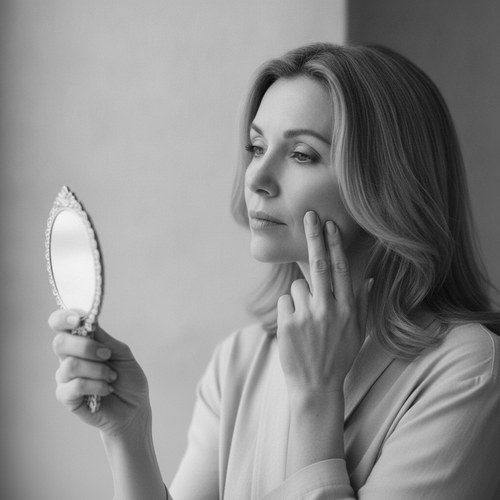
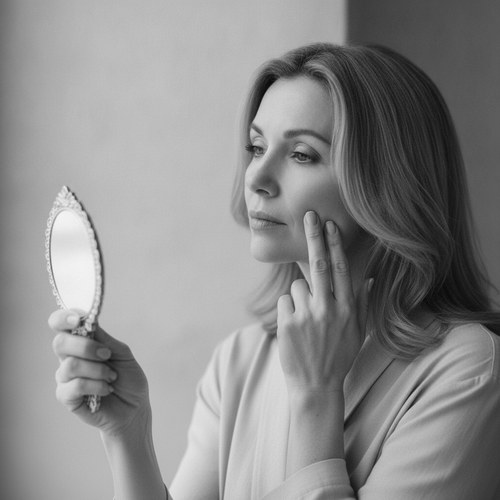
Black and white editorial portrait of a woman in profile in soft side light, jaw and cheek defined. Nonsurgical lifting commentary by Dr. Frank Agullo, MD, FACS.

There is a growing demand for lifting and contouring of the face without surgery. This actually also extends to the breast, body, even the buttocks. I think the growing demand has accelerated due to GLP-1 treatments, where patients undergo rapid weight loss and the appearance of aging shows up much more accelerated. There is also a tendency for maintenance early on, in order to avoid bigger procedures later.

I want to lay out where I think these technologies actually earn their place, and where the field is quietly moving on.

Start With What Aging Actually Is

As we know, aging is a combination of two things: skin laxity and volume loss. In weight loss patients, the skin has already been stretched out. The volume loss shows up as aging. Added to that, the skin that had previously been stretched out is now sagging, so the aging shows up much, much faster than in regular patients.

That is why the GLP-1 patient is changing how this conversation goes. The clock runs faster on them, and the early-maintenance mindset has become the norm rather than the exception.

The Volume Tools, Old and New

We’ve been using fillers underneath the eyes and the temples for quite a long time. The newer volume replacement materials include Sculptra, which is a biostimulator. After it is injected, the body tries to absorb the material and thus produces collagen.

The more exciting category is biostimulating and regenerative. PRP, protein-rich plasma, and PDGF, the platelet-derived growth factor. PDGF has not been cleared for injection, although some practitioners are using it off-label, but it is a great adjunct to any procedure that performs microneedling or resurfacing. It regenerates the tissues quicker, and with the growth factor we get a younger appearance and more protection of collagen.

Lipoderma is one of the newest available fillers. It is a donor-derived fat graft, which has a framework that allows the ingrowth of your own fat cells. This is a more permanent solution, more natural and more like the actual fat that we have in our face, rather than scar tissue or collagen. Tiger Aesthetics is going to come out next year with a similar product called Derma Clay, for the face and hands. They currently have one called Aloe Clay, which we use in the breast and buttock as a natural donor fat graft filler. That filler is more coarse, so it does not work well on the face.

The Tightening Tools

For skin tightening, the best therapies at the moment are radiofrequency. The use of Morpheus8, which is microneedling with radiofrequency, is one of the most sought-after treatments in our practice. We also use FaceTite in the face, which is a more invasive radiofrequency treatment that treats under the skin and above it, and is usually combined with even liposuction of the neck.

We haven’t seen a lot of new technologies in laser, but the fractionated lasers are still the most used. One has to be careful with skin types, as darker skin types tend to create hyperpigmentation or scarring.

Why I Have Almost Left Thread Lifts Behind

I think thread lifts had a peak in the last two years, but patients have found that they’re really not long-lasting. The threads can behave differently on one side of the face than the other and do create asymmetries. Sometimes these threads are not completely absorbed by the body and can be palpated, or give other problems. We’ve really almost diverged away from thread lifts, and we’ve started to do more minimally invasive surgical procedures instead.

That is the quiet shift in the field worth naming out loud. The threads promised a surgical result without surgery, and they did not deliver it consistently enough to keep.

Set the Expectations Honestly

All these treatments are good in the early stages of aging, or weight-loss-related aging, and they usually give subtle improvements. They can correct specific areas like temporal wasting, hollowness underneath the eyes, or nasolabial lines. The longevity depends on the therapy. Regular fillers can last up to a year. Sculptra tends to last longer, as the collagen generated stays around. The new regenerative treatments, like Lipoderma, or in the future Derma Clay, will be longer-lasting, if not permanent. But aging continues once we set the clock back, even in surgical procedures.

The expectations have to be toned down in nonsurgical procedures and well communicated to the patient. This is true especially with skin tightening using radiofrequency. A lot of the tightening is going to depend on the patient’s own response and cannot be foreseen. Every patient reacts differently and gets different tightening results.

The Test That Sends a Patient to Surgery

Here is my rule of thumb. If the patient is consulting with me and they reach up to their face and pull with their fingers upwards, bringing their brows and cheeks and jowls up, or even tightening their neck back, that’s a sign the patient needs a surgical procedure and not a noninvasive one.

The deep plane lift and the endoscopic deep plane lift are great procedures, which create very natural and long-lasting results. We’re seeing patients completely avoid the noninvasive procedures and go straight to the surgical procedures early on. I trained the deep plane facelift the long way, through the Ponytail Academy intermediate course in Pittsburgh and the advanced course in Santa Monica, after a Mayo Clinic fellowship. The patients who skip straight to it are usually the ones who already did the mirror test on themselves.

The Credential Behind the Opinion

Double board-certified by the American Board of Plastic Surgery and the American Board of Surgery, American College of Surgeons Fellow, Mayo Clinic plastic surgery fellowship, Clinical Associate Professor of Plastic Surgery at Texas Tech University Health Sciences Center Paul L. Foster School of Medicine, and Castle Connolly Top Doctor for thirteen consecutive years. I do both the injectables and the surgery, which is exactly why I can tell you when the injectable is the wrong answer.

Ready to Talk?

If you want the honest read on which side of the line your face is on, that is a consultation, not a sales pitch.

For the patient-facing clinical guide and the mirror test in detail, see the companion post on agulloplasticsurgery.com. For the MedSpa-to-surgery continuum, see the version on swplasticsurgery.com.

Call (915) 590-7900, text 1-866-814-0038, or book online at agulloplasticsurgery.com. #StayBeautiful.

@RealDrWorldWide on Instagram, TikTok, and Snapchat, @Agullo on X, or @AgulloPlasticSurgery on Facebook.

The Field Is Diverging From Thread Lifts: A Surgeon’s Read on Nonsurgical Lifting in 2026

Black and white editorial portrait of a woman in profile in soft side light, jaw and cheek defined. Nonsurgical lifting commentary by Dr. Frank Agullo, MD, FACS.

There is a growing demand for lifting and contouring of the face without surgery. This actually also extends to the breast, body, even the buttocks. I think the growing demand has accelerated due to GLP-1 treatments, where patients undergo rapid weight loss and the appearance of aging shows up much more accelerated. There is also a tendency for maintenance early on, in order to avoid bigger procedures later.

I want to lay out where I think these technologies actually earn their place, and where the field is quietly moving on.

Start With What Aging Actually Is

As we know, aging is a combination of two things: skin laxity and volume loss. In weight loss patients, the skin has already been stretched out. The volume loss shows up as aging. Added to that, the skin that had previously been stretched out is now sagging, so the aging shows up much, much faster than in regular patients.

That is why the GLP-1 patient is changing how this conversation goes. The clock runs faster on them, and the early-maintenance mindset has become the norm rather than the exception.

The Volume Tools, Old and New

We’ve been using fillers underneath the eyes and the temples for quite a long time. The newer volume replacement materials include Sculptra, which is a biostimulator. After it is injected, the body tries to absorb the material and thus produces collagen.

The more exciting category is biostimulating and regenerative. PRP, protein-rich plasma, and PDGF, the platelet-derived growth factor. PDGF has not been cleared for injection, although some practitioners are using it off-label, but it is a great adjunct to any procedure that performs microneedling or resurfacing. It regenerates the tissues quicker, and with the growth factor we get a younger appearance and more protection of collagen.

Lipoderma is one of the newest available fillers. It is a donor-derived fat graft, which has a framework that allows the ingrowth of your own fat cells. This is a more permanent solution, more natural and more like the actual fat that we have in our face, rather than scar tissue or collagen. Tiger Aesthetics is going to come out next year with a similar product called Derma Clay, for the face and hands. They currently have one called Aloe Clay, which we use in the breast and buttock as a natural donor fat graft filler. That filler is more coarse, so it does not work well on the face.

The Tightening Tools

For skin tightening, the best therapies at the moment are radiofrequency. The use of Morpheus8, which is microneedling with radiofrequency, is one of the most sought-after treatments in our practice. We also use FaceTite in the face, which is a more invasive radiofrequency treatment that treats under the skin and above it, and is usually combined with even liposuction of the neck.

We haven’t seen a lot of new technologies in laser, but the fractionated lasers are still the most used. One has to be careful with skin types, as darker skin types tend to create hyperpigmentation or scarring.

Why I Have Almost Left Thread Lifts Behind

I think thread lifts had a peak in the last two years, but patients have found that they’re really not long-lasting. The threads can behave differently on one side of the face than the other and do create asymmetries. Sometimes these threads are not completely absorbed by the body and can be palpated, or give other problems. We’ve really almost diverged away from thread lifts, and we’ve started to do more minimally invasive surgical procedures instead.

That is the quiet shift in the field worth naming out loud. The threads promised a surgical result without surgery, and they did not deliver it consistently enough to keep.

Set the Expectations Honestly

All these treatments are good in the early stages of aging, or weight-loss-related aging, and they usually give subtle improvements. They can correct specific areas like temporal wasting, hollowness underneath the eyes, or nasolabial lines. The longevity depends on the therapy. Regular fillers can last up to a year. Sculptra tends to last longer, as the collagen generated stays around. The new regenerative treatments, like Lipoderma, or in the future Derma Clay, will be longer-lasting, if not permanent. But aging continues once we set the clock back, even in surgical procedures.

The expectations have to be toned down in nonsurgical procedures and well communicated to the patient. This is true especially with skin tightening using radiofrequency. A lot of the tightening is going to depend on the patient’s own response and cannot be foreseen. Every patient reacts differently and gets different tightening results.

The Test That Sends a Patient to Surgery

Here is my rule of thumb. If the patient is consulting with me and they reach up to their face and pull with their fingers upwards, bringing their brows and cheeks and jowls up, or even tightening their neck back, that’s a sign the patient needs a surgical procedure and not a noninvasive one.

The deep plane lift and the endoscopic deep plane lift are great procedures, which create very natural and long-lasting results. We’re seeing patients completely avoid the noninvasive procedures and go straight to the surgical procedures early on. I trained the deep plane facelift the long way, through the Ponytail Academy intermediate course in Pittsburgh and the advanced course in Santa Monica, after a Mayo Clinic fellowship. The patients who skip straight to it are usually the ones who already did the mirror test on themselves.

The Credential Behind the Opinion

Double board-certified by the American Board of Plastic Surgery and the American Board of Surgery, American College of Surgeons Fellow, Mayo Clinic plastic surgery fellowship, Clinical Associate Professor of Plastic Surgery at Texas Tech University Health Sciences Center Paul L. Foster School of Medicine, and Castle Connolly Top Doctor for thirteen consecutive years. I do both the injectables and the surgery, which is exactly why I can tell you when the injectable is the wrong answer.

Ready to Talk?

If you want the honest read on which side of the line your face is on, that is a consultation, not a sales pitch.

For the patient-facing clinical guide and the mirror test in detail, see the companion post on agulloplasticsurgery.com. For the MedSpa-to-surgery continuum, see the version on swplasticsurgery.com.

Call (915) 590-7900, text 1-866-814-0038, or book online at agulloplasticsurgery.com. #StayBeautiful.

@RealDrWorldWide on Instagram, TikTok, and Snapchat, @Agullo on X, or @AgulloPlasticSurgery on Facebook.

The Augmentation That Never Touches the Muscle: Why I Switched to Preserve

Black and white portrait study of a woman's profile, soft studio light. Preserve prepectoral breast augmentation commentary by Dr. Frank Agullo, MD, FACS.

A woman sat in my consult room last week, pulled up a photo of herself at twenty-five, and said the line I hear several times a week. She wanted the fullness she used to have, and she wanted to know why she should drive past three closer surgeons to see me.

Here is the honest answer. For most augmentations I do now, I never touch the muscle. Not minimally. Not partially. Not at all.

That is a bigger deal than it sounds, and it is the reason recovery looks nothing like what your mother or your older sister went through.

What the Preserve Actually Is

The Preserve augmentation is prepectoral. The implant sits in front of the pectoralis muscle and behind your breast gland, above the muscle but below the gland. I do not cut the muscle, release it, or go under it.

That distinction is everything. A traditional submuscular augmentation goes behind the pectoralis and partially releases it off the chest wall. That release is the source of the long, sore, six-to-eight-week recovery patients remember. Preserve never goes there, so that whole chapter disappears.

I make the pocket by balloon dissection. No cutting, no electrocautery. The tissues are pushed outward, and the pocket is defined by your breast’s own ligaments. Those ligaments hold the implant in position, which is why I do not need mesh to support it.

That also means the nerves and arteries stay where they belong. You keep a higher likelihood of preserving sensation and breast function, because I am not dividing the structures that supply them.

Preserve Versus Traditional, Side by Side

Question Traditional Submuscular Preserve Prepectoral
Where the implant sits Behind the muscle In front of the muscle, behind the gland
Is the muscle cut Yes, partially released No, never touched
How the pocket is made Cutting and cautery Balloon dissection
What holds the implant Muscle and capsule Your own ligaments
Typical recovery Six to eight weeks Back to work in one to three days

How I Pick Your Size

Cup size is a starting point, not a measurement. I work from your dimensions and a Chrysalix 3D simulation, not from a letter on a bra tag.

Almost everyone has some asymmetry, and that is normal. Breasts are sisters, not twins. So I will often choose slightly different volumes on each side to get you closer to even.

There is a quieter advantage to placing above the muscle. I can put the implant precisely where your breast needs the most volume instead of filling the whole breast uniformly. A smaller implant can give a larger apparent size and a little lift. Lighter breast, same result you wanted.

The Implants I Use, and the Ten-Year Myth

I use Motiva Ergonomix. The old rule about swapping implants every ten years does not apply to these. The rupture rate is under half a percent, and they carry a lifetime guarantee.

The surface matters too. These use a nano-surface called SmoothSilk, which produces the lowest inflammatory response of any implant on the market and an extremely low capsular contracture risk. They are soft, the gummy bear type, and they take on a natural teardrop shape when you stand. Ergonomix implants move with the body, so you do not get that fixed, stuck-on look.

What Recovery Honestly Looks Like

This is the part that surprises people, so I will be specific.

I do it under light conscious sedation. You breathe on your own, and you will not remember much. I place Exparel, a long-acting local, between the ribs so the breast stays numb for about the first three days. The incision is two and a half to three centimeters in the fold under the breast, hidden where you will not see it.

The implant placement takes about thirty minutes. Patients are usually awake, pain-free, and able to raise their arms overhead before they leave, often within an hour. Many go back to work the next day, and the gym is reasonable at about two weeks if augmentation is the only thing we did. Add a lift or liposuction and the timeline shifts, and I will tell you that up front.

Why I Was One of the First to Do This

Being an early adopter of Preserve was a deliberate choice. Motiva trained me directly as one of roughly twenty highly selected surgeons in the United States, and I traveled to Costa Rica twice for that training. There are still fewer than forty surgeons in the country doing this.

I am a double board-certified plastic surgeon, certified by the American Board of Plastic Surgery and the American Board of Surgery. I completed my plastic surgery fellowship at the Mayo Clinic and I teach as a Clinical Associate Professor of Plastic Surgery at Texas Tech University Health Sciences Center Paul L. Foster School of Medicine. I committed to preserving your own anatomy because it recovers faster and ages better than cutting through muscle ever did.

The Animation Problem You Avoid

Here is a detail patients rarely hear about until it bothers them. With a traditional submuscular implant, every time you contract your chest, the muscle squeezes the implant and the breast moves or distorts. Surgeons call it animation deformity, and it is a direct consequence of putting the implant under a muscle that is built to move.

Preserve sidesteps it entirely, because the implant never goes under the muscle. You can do a push-up, a plank, or a heavy press without watching your breast jump. For an athlete, a CrossFit patient, or anyone who lifts, that is not a small thing, and it is one of the quieter reasons I prefer this plane.

One Honest Caveat

Preserve is not for absolutely everyone. Very thin patients with almost no breast tissue sometimes need a different plan, and I will say so in the room rather than force the technique. If a standard augmentation or a fat-based approach fits you better, that is the conversation we have.

Read the Patient-Facing Versions

For the patient-facing walkthrough, see the companion post on agulloplasticsurgery.com. For the practice overview, see the version on swplasticsurgery.com.

Ready to Talk?

The honest answer to what size and which implant is right for you needs an exam and a 3D simulation. Come see me.

Call the office at (915) 590-7900, text 1-866-814-0038, or book online at agulloplasticsurgery.com. #StayBeautiful.

@RealDrWorldWide on Instagram, TikTok, and Snapchat, @Agullo on X, or @AgulloPlasticSurgery on Facebook.
The Quiet Boom in Male Enhancement: What the Demand Is Really Telling Us

Black and white editorial portrait of a man in his forties in soft side light, composed expression. Male enhancement commentary by Dr. Frank Agullo, MD, FACS.

Compared to five years ago, we weren’t doing any of these procedures. Since then, the procedures have increased in demand exponentially, to where we’re probably doing twenty to thirty procedures per month, since around 2024. We’ve actually seen a lot of patients traveling for these procedures from other states and around the country.

I want to talk about it the way I would with a colleague, because the demand is telling us something. So here is the candid version.

Who Is the Typical Patient

The typical patient is actually anything you can imagine. There are really no stereotypes in terms of who’s seeking these procedures. There’s a wide range of ages and a wide range of races. You would think that a lot of men would consider themselves small, and that’s why they’re obtaining these procedures, but actually, a lot of men are already well-endowed, and they’re just looking for enhancements. I can see that the age between thirty and fifty is the most common, but again, we see all types of patients.

What They Are Asking For

They’re asking for several different kinds of procedures. The most common is size enhancement, which is usually done with fillers. The most common fillers, which give the most volume in the penis, are Voluma and VoluX. These fillers are going to increase girth and can increase length up to half an inch, but that’s not the main objective or how it physically works.

Men who want to enhance sensation or who have erectile dysfunction are getting the P-Shot, which is essentially PRP, platelet-rich plasma derived from your own blood, which is injected into the cavernous bodies of the penis and the crown to increase sensation, libido, and erection strength.

Recently, we’ve seen an increased demand for Bocox, which is botulinum toxin injected into the cavernous bodies of the penis. This creates vasodilation, which creates a larger erection. It usually increases length by half an inch to one inch, creates a stronger erection, and is used in normal patients as well as for erectile dysfunction.

Some men are looking for a descended testicle look, where the testicles hang more pronounced, and smoother scrotal skin, and to avoid the scrotal shrinkage that we sometimes see with changes in temperature. These men are good candidates for Scrotox, which is Botox injections into the dartos muscle and the scrotal skin.

The Part I Make Sure Everyone Hears

It is very important to know that Scrotox can cause sterility, because really, those muscles we have are for temperature control of the testicles and the spermatic cord. A patient who would not be a candidate for Scrotox is one who would still want to have a family, as the procedure can make a male sterile.

It’s also important to understand that all of these treatments are off-label. Even though the products are FDA-approved, we are using them in an off-label nature, with the patient’s consent and understanding of the risks and complications.

What Is Really Driving It

I think, essentially, it’s increased self-esteem in sexual encounters and increased performance. Some of the procedures are more about appearance, such as the Scrotox for smoother skin and more descended testicles. Some men actually come for injections to increase the testicle or scrotal size, so that’s more about appearance. I think length and girth are a combination of appearance and sexual confidence. And I think erectile strength is more about sexual confidence and performance.

The Misconceptions Men Walk In With

One of the biggest misconceptions men have when considering these procedures is that the procedure will considerably lengthen the penis. As I’ve discussed before, these procedures really don’t create a lot of length. If anything, it’s half an inch maximum, or one inch. But they do seem to create a lengthening effect at rest, when the penis is not erect, and they mostly create an increase in girth.

The other misconception is that these results are permanent, where, for example, fillers can last one to two years, and Botox usually lasts three to six months.

And then I think the biggest misconception of them all is that bigger is always better, and that’s not necessarily the case. Sometimes the quality of the erection is more important than the size.

Where the Risk Lives

There are many risks and complications. It’s extremely important that you go to a board-certified physician to obtain these enhancement procedures, that the facility is using FDA-approved botulinum toxin and fillers, and that these procedures are performed in sterile environments. This is certainly not a procedure where you would want to bargain or look for the least expensive provider, if that means cutting back on safety and quality products.

The main risks, especially with the penile fillers, would be some areas of contour deformities, which can always be touched up later. Sometimes there could be nodules that are palpable, which can also be dissolved if necessary. It’s very important that the product be injected in the right plane. If it’s injected too superficially, then the nodules and irregularities will be more apparent. They can even create edema in non-circumcised men, which can interfere with intercourse and even regular voiding. The most dangerous complication would be an infection in this area, which is avoidable with the right sterile technique and postoperative care.

The Bigger Picture

I think this is part of a broader male aesthetics trend. We are seeing men more frequently in our clinics for cosmetic procedures, hair restoration, hormone replacement, weight loss therapies, peptides, and wellness IV drips. I think men are getting more comfortable with these treatments. I think a lot of it has to do with finding the right provider that they’re comfortable with and that they can trust.

So many men are curious but embarrassed to ask about these treatments. A lot of them do research online. We even have a chatbot that can talk to them, and at least they seem to think it’s a little bit more private. But what I would say is that these are actually very common procedures that most men know about and have even researched for themselves, that we just don’t talk about. Clinics that perform this on a regular basis understand the needs of men and usually cater to them in a very respectful and private way, where they’ll feel understood and not judged.

The Credential Behind the Opinion

I am double board-certified by the American Board of Plastic Surgery and the American Board of Surgery, an American College of Surgeons Fellow, Mayo Clinic plastic surgery fellowship trained, and a Clinical Associate Professor of Plastic Surgery at Texas Tech University Health Sciences Center Paul L. Foster School of Medicine. Castle Connolly Top Doctor for thirteen consecutive years. I write about this candidly because the field is growing faster than the honest conversation around it.

Ready to Talk?

If you are a man weighing any of this, or a colleague trying to build this part of a practice the right way, the principles are the same: honesty up front, sterile technique, FDA-approved products, and realistic expectations.

For the patient-facing clinical guide, see the companion post on agulloplasticsurgery.com. For the MedSpa and men’s wellness side, see the version on swplasticsurgery.com.

Call (915) 590-7900, text 1-866-814-0038, or book online at agulloplasticsurgery.com. #StayBeautiful.

@RealDrWorldWide on Instagram, TikTok, and Snapchat, @Agullo on X, or @AgulloPlasticSurgery on Facebook.

A Sharper Edge: A Surgeon’s Read on Blade Geometry, Inflammation, and the 114-Patient Study That Changed How I Pick My Scalpel

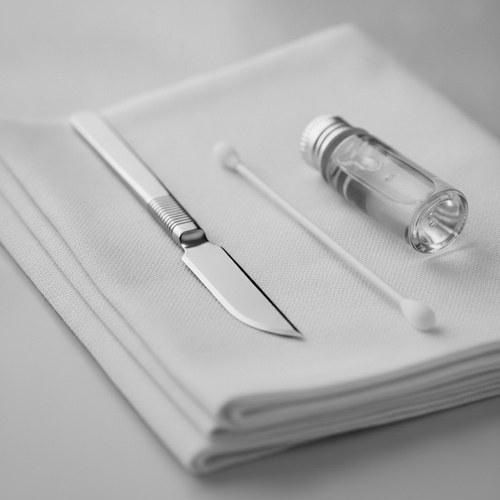
A Sharper Edge: A Surgeon's Read on Blade Geometry, Inflammation, and the 114-Patient Study That Changed How I Pick My Scalpel. Dr. Frank Agullo, MD, FACS, double board-certified plastic surgeon at Southwest Plastic Surgery in El Paso, Texas.

Every plastic surgeon has had the same conversation a thousand times across a desk. The patient is in for a consultation about a planned operation. The operation is well-understood, the indication is clear, the plan is in place, and then the patient asks, quietly, almost as an afterthought, the question that turns out to matter most. What is the scar going to look like.

The honest answer, for years, has been a list of variables that the surgeon controls only partially, layered on top of a list of variables, like genetics and skin type, that the surgeon does not control at all. That answer has been mostly true. It has also been incomplete, because one of the variables sitting right at the surgeon’s hand has been almost entirely absent from the conversation.

The variable is the blade itself. A 114-patient clinical study I served as a principal investigator on, picked up by MPO Magazine in early 2025 under the headline “Significant Reduction in Hypertrophic Scarring Seen With Planatome’s Surgical Blades,” put a hard number on what I had been suspecting in my own practice for years. A cleaner cut produces a quieter scar.

This is the longer surgeon-to-surgeon version of that finding, and what it means for the consultation that starts with “what is my scar going to look like.”

The Study, in One Paragraph

I co-led the 114-patient clinical study evaluating the Planatome surgical blade alongside Michael Sanchez, PhD. The Planatome blade is manufactured with a polishing process that produces a smoother, sharper cutting edge than a standard surgical blade. The study followed patients through standardized incisions and assessed scar quality at multiple time points. The headline finding was a measurable reduction in hypertrophic scarring in the Planatome arm. The trade industry coverage called the reduction significant. I will let other investigators replicate the finding on other populations and in other operations before I make stronger claims, but the result is internally consistent and clinically meaningful.

Why a Cleaner Cut Produces a Quieter Scar

The wound healing cascade begins the moment the blade enters the skin. The depth of the cellular insult at the incision edge is one of the largest single inputs into the inflammatory response that follows. A standard surgical blade, even a brand-new one straight out of the package, has microscopic irregularities along the cutting edge that are functionally invisible to the surgeon at the time. Under a high-magnification image, those irregularities tear the tissue along the incision rather than cleanly transecting it. The cells along the wound edge respond not to the surgeon’s intent but to the cellular environment they are actually in.

A polished, sharper edge produces a different cellular environment. The cells along the incision are cleanly transected rather than crushed. The local inflammatory cascade is quieter. The fibroblast recruitment, the collagen deposition, and the final remodeling that produces the mature scar all start from a different baseline. In the patient who would have formed a flat, fine scar under almost any technique, the difference is invisible because the result was always going to be good. In the patient who would have formed a raised, thickened, hypertrophic scar under any technique, the quieter starting point shifts the curve.

This is the kind of finding that, in retrospect, looks obvious. A sharper knife should produce a cleaner cut and a quieter cellular environment. The reason we needed a study to confirm it is that “obvious” is the most dangerous word in medicine, and the difference between intuition and data is the difference between marketing and a recommendation a surgeon can stand behind.

What the Study Did Not Claim

The study did not claim that blade quality is the only variable in scar formation. It did not claim that a sharper blade will turn a keloid-prone patient into a fine-line healer. It did not claim that the blade matters more than the closure technique, the incision design, the tension on the wound, or the genetics the patient brought with her.

It did claim that, holding the other variables steady, the edge of the blade itself moves the needle. That is a meaningful claim. It is not the only claim.

What I Tell Patients at the Consult

Scar quality is decided across six decisions and one variable I do not control.

The variable I do not control is the patient. Genetics, skin type, anatomic risk, and personal scar history all enter the room with her.

The six decisions are mine. The incision location. The incision orientation. The incision length. The blade. The closure plan, including the layers and the suture choice. The post-operative scar care plan, including silicone, compression, sun protection, and any post-op laser or microneedling on indication.

A sharper blade is the easiest of those six decisions to make. The hardest is honest expectation setting with the patient about what her skin will actually do, regardless of any decision I make.

Where This Lands in Practice

I use the Planatome blade in operations where scar quality is most consequential, including breast augmentation, tummy tuck, mommy makeover, facelift, and any operation on a patient at elevated risk for hypertrophic or keloid scarring.

I also use the study’s existence at the consultation. The patient who wants to know what can be done to give her the cleanest possible scar gets a real answer rather than a vague reassurance, and the answer includes a study I helped design rather than a generic platitude about being careful with the incision.

The trade industry coverage in MPO Magazine framed the result as significant. I would agree. I would also frame it as one of several variables a surgeon can and should optimize for scar quality, and the variable that is easiest to control. The reason it took a 114-patient study to put the finding on the record is that the field genuinely needed the data.

A Brief Word on What the Field Should Do Next

The Planatome study is one data point in a larger conversation about how blade geometry, blade manufacturing, and blade sharpness interact with the inflammatory cascade and the final scar. The questions worth answering next are predictable. Does the effect hold across all skin types and all anatomic locations. Does it hold for procedures that involve electrocautery for the deeper dissection but a cold blade for the initial skin incision. Does it interact with newer scar management modalities, like silicone alternatives, post-op fractional laser, and microneedling at the right interval.

Other investigators will answer those questions in time. The study I co-led is the floor for that work, not the ceiling.

How I Talk About the Whole Scar Equation

When a patient asks “what is my scar going to look like” at a consultation, the honest answer takes ten minutes. It is the most useful ten minutes of the consultation, because the scar is the part of the operation she will see in the mirror for the rest of her life. The plan we make about the scar is the plan we make about her relationship to the result of the operation.

The blade is one part of that ten minutes. The study makes it possible to discuss the blade as a variable backed by real data rather than as a vague reassurance about surgical care. The rest of the ten minutes is still about the patient, the operation, the closure, the post-op plan, and the contingency plan if the scar does not behave the way we hope.

Ready to Talk?

If a planned operation is on your mind and the scar is part of what you are weighing, the first conversation is a consultation. The ten minutes about the scar will be the most useful ten minutes of the visit.

For the clinical patient-facing version of this conversation, see A Sharper Edge: How Blade Geometry Reduces Hypertrophic Scarring on agulloplasticsurgery.com. For the practice-program version of the scar management continuum, see The Scar Management Program at Southwest Plastic Surgery.

Call (915) 590-7900, text 1-866-814-0038, or book online at agulloplasticsurgery.com. #StayBeautiful.

@RealDrWorldWide on Instagram, TikTok, and Snapchat, @Agullo on X, or @AgulloPlasticSurgery on Facebook.

Jingle Bells, Your Butt Smells: A Surgeon’s Protocol for the BBL Recovery Nobody Talks About

Jingle Bells, Your Butt Smells: A Surgeon's Protocol for the BBL Recovery Nobody Talks About. Dr. Frank Agullo, MD, FACS, double board-certified plastic surgeon at Southwest Plastic Surgery in El Paso, Texas.

Australia’s GP-trade journal, Medical Republic, opened a piece on me last month with the line above, and I will admit to laughing out loud when the alert hit my phone. The piece, titled “Jingle bells, your butt smells,” reprinted the four-bullet post-operative hygiene protocol I wrote for Brazilian Butt Lift patients, credited me as a founding vice-president of the World Association of Gluteal Surgeons, and pushed the conversation out of the back rooms of the practice and into the GP literature halfway around the world.

The reason it traveled is that the topic genuinely is one of the least discussed parts of BBL recovery. The reason I wrote the protocol down in the first place is that nearly every BBL patient in my practice eventually asks me a quieter version of the same question. So here is the longer surgeon-to-surgeon version of the protocol, with the clinical reasoning behind each step.

What the Inside of a Fresh BBL Looks Like at Week Two

A BBL is two operations done together. A liposuction harvest from the donor sites, which can include the abdomen, the flanks, the back, the lower back, the inner thighs, and any other compartment from which the fat has been planned. And a structured gluteal injection, in which the harvested and processed fat is distributed in the subcutaneous compartment of the gluteal region using anatomic, low-pressure cannula technique that respects the safe planes.

By week two, the patient is in the compression garment most of the day. She is sleeping prone or side-lying. She is restricted from sitting in the conventional way. Sweating is increased because the garment is occlusive. Lymphatic fluid is weeping slowly through the small liposuction port incisions. The perineum and the intergluteal cleft are spending most of the day inside a humid, occluded, bacterially friendly environment.

That environment, without disciplined hygiene, produces three predictable problems. A surface odor. A surface skin breakdown. And, in the worst case, a low-grade bacterial colonization of an incision that should have closed cleanly. The patient experiences all three as a single, embarrassing question she does not want to ask out loud, and the answer to that question is a protocol she can run at home.

The Four-Part Protocol, With the Why

Chlorhexidine (Hibiclens) as a Body Wash, Days One Through Twenty-One

Hibiclens is a chlorhexidine gluconate antibacterial wash widely used in pre-operative skin preparation. It has a meaningful residual antibacterial effect on the skin after rinsing, which means the protective effect carries past the shower into the hours when the patient is back in the compression garment. For BBL patients, the perineum and intergluteal cleft are the highest-risk zones in the first two weeks, and a daily Hibiclens wash to that area measurably reduces the bacterial load on the skin without requiring a prescription.

Above the neck, normal soap. Off the eyes, the ears, and any frankly broken or rashy skin. In the small subset with a chlorhexidine sensitivity, substitute a different antibacterial wash, but in my practice the substitution is rare and the protocol holds.

Bidet for the Perineum and the Intergluteal Cleft

Toilet paper after a BBL is abrasive, leaves residue, and tends to drag through tissue that has been freshly operated on. A bidet (full installed unit, sprayer attachment, or a peri-bottle, in that order of luxury) rinses without abrading. The compression garment then goes back on over genuinely clean tissue. Dry gently with a soft towel after the rinse. The same hardware that fifty percent of new mothers swear by after a vaginal delivery serves the same function after a BBL.

Two Compression Garments in Rotation, Washed Daily

This is the change with the largest single effect on odor and on incision-site comfort. Own two garments. Wear one. Wash one. Rotate every twenty-four hours. Cold to warm wash with a gentle detergent. No fabric softener. Flat air dry. Dryer heat tends to break down the medical-grade fabric over time. Patients who try to run a single garment for the entire six weeks discover that the inside of the garment is doing a lot of the work the protocol is supposed to be preventing.

Post-Operative Manual Lymphatic Drainage by an Experienced Therapist

Two to three sessions a week for the first two weeks, weekly through week six, tapering through week twelve. The technique mobilizes lymphatic fluid out of the donor sites and the gluteal compartment along the body’s natural drainage pathways. The recognized benefits, less swelling, faster bruise resolution, less fibrosis, better contour at six weeks, are the headline reasons. The hygiene-related benefit, which is less discussed but real, is that a well-drained donor site is a less hospitable environment for low-grade skin colonization than a poorly drained one.

The Protocol at a Glance

Part What When Why
Hibiclens body wash Chlorhexidine wash, body, not face Days 1 through 21 Residual antibacterial effect on the high-risk skin
Bidet Rinse perineum and intergluteal cleft Every bathroom use Cleans without abrading, no residue under garment
Two-garment rotation Wear one, wash one, swap daily Six weeks Removes the humid environment from inside the garment
Lymphatic drainage Trained therapist, structured cadence Weeks 1 through 12 Less swelling, less fibrosis, less substrate to colonize

Why the World Association of Gluteal Surgeons Exists

I serve as a founding vice-president of the World Association of Gluteal Surgeons. The organization was founded because the BBL became, very rapidly, one of the most commonly performed aesthetic body procedures in the world, and the field needed an organized peer body that could push safety standards, training standards, and post-operative care standards across borders. The hygiene protocol is one of a series of standards that exist because the early operation, while transformative, was also producing avoidable post-operative problems that better technique and better aftercare could prevent.

Ultrasound-guided injection has been the largest single safety advance in BBL technique in the past five years. The hygiene protocol is one of the largest single comfort-and-infection advances in BBL aftercare. Neither is exotic. Both are now table stakes.

What This Protocol Does Not Replace

It does not replace the antibiotic course if one has been prescribed. It does not replace the surgical follow-up cadence. It does not replace the position restrictions and the activity restrictions of the early weeks. And it does not replace a phone call to the operating surgeon if any of the warning signs appear: a fever above 100.4 F, focal redness, swelling, increasing pain, or a frank wound discharge. The protocol is the layer on top of the surgical plan that quietly prevents the problems nobody wants to discuss out loud. The surgical plan, the follow-up, and the patient’s communication with the operating surgeon are still primary.

How I Built the Protocol

I built the protocol the same way every honest piece of clinical guidance gets built. By doing a high volume of the operation, by listening to the patients who came to follow-up visits, and by writing down the steps that, repeated reliably, eliminated the problems they kept describing. By the time the Medical Republic piece picked it up, the protocol had been in my recovery handout for years and the GP author had simply found that handout via the BBL recovery post on my practice site.

It is short. It is repeatable. It costs almost nothing in dollars. And it does as much work as any peri-operative antibiotic in keeping a BBL recovery on the curve the patient expected when she scheduled the operation.

Ready to Talk?

If a BBL is on your mind and you want to know what a serious recovery plan looks like before you book the operation, the first step is a consultation. The protocol is part of the plan from the beginning, not a handout at discharge.

For the clinical patient-facing version, see What Nobody Tells You About BBL Recovery on agulloplasticsurgery.com. For the practice-program version with the in-house recovery support, see The BBL Recovery Program at Southwest Plastic Surgery.

Call (915) 590-7900, text 1-866-814-0038, or book online at agulloplasticsurgery.com. #StayBeautiful.

@RealDrWorldWide on Instagram, TikTok, and Snapchat, @Agullo on X, or @AgulloPlasticSurgery on Facebook.

The Lower Third Tells the Story: A Surgeon’s Read on the Part of the Face Everyone Misses

The Lower Third Tells the Story: A Surgeon's Read on the Part of the Face Everyone Misses. Dr. Frank Agullo, MD, FACS, double board-certified plastic surgeon at Southwest Plastic Surgery in El Paso, Texas.

A UK paper called me on a Friday afternoon last week for a quote on a public figure whose face had been the subject of a thousand “what did she have done” comments online. The reporter wanted a technical read. She had already spoken to a colleague of mine, Dr. Douglas, who had focused on the lower half of the face. She wanted to know whether I agreed.

I did. Not because I had any inside knowledge of the patient. Because the lower third of that face was the part of the face that had changed, and the change was readable from the photographs.

Every plastic surgeon has had this exact conversation a thousand times in private, across a desk, with a real patient sitting on the other side of the desk asking about a feature that is not actually the feature that needs the work. The features the patient points to are almost always the upper or middle third. The eyes. The brows. The cheekbones. The features the surgeon wants to talk about are almost always in the lower third. The jawline. The cheek pad. The perioral region. The chin.

So let me write the long version of why. Not for the celebrity story. For the patient.

The Three Thirds, and What Lives in the Lower One

The face divides into three horizontal thirds. Upper, hairline to brow. Middle, brow to base of nose. Lower, base of nose to chin. Each third ages on its own clock. Each third answers to different operations. Each third tells the surgeon something different.

The lower third holds the jawline border, the jowl, the prejowl sulcus, the labio-mandibular fold, the marionette region, the corner of the mouth, the perioral skin, the chin, the submental fat pad, the platysma, and the cervicomental angle. The cheek pad, anatomically a midface structure, drops down into the lower third as the supporting ligaments lengthen and is therefore best read together with what is happening below it.

The lower third is the integrator. Almost every change in the upper and middle thirds eventually shows up in the lower third. Volume loss in the midface drops into the marionette region. Skin laxity above the jaw drops into the jowl. Loss of mandibular definition takes the line that the eye reads as “young” and erases it. A small chin makes the whole lower face look heavier than it is.

The features a patient points to in the mirror are the noise. The lower third is the signal.

The Five-Minute Read Across the Desk

When I sit across from a new patient, the read happens in the first five minutes, before the patient has finished telling me what she came in for. The order goes roughly as follows.

The mandibular border, angle to chin. Clean line, or interrupted by a jowl that has migrated forward and down over the bone.

The cheek pad position. Sitting high on the zygoma, or slid forward and down into the upper lower third.

The perioral region. Lip volume, vermilion border, philtrum, upper lip length, dental show in repose, dental show in animation, corner of the mouth, marionette.

The chin and the cervicomental angle. Projection in profile. Submental fullness or laxity. Platysma. The line between face and neck.

That read is what shapes the next forty minutes of the consultation. If the patient came in to discuss her cheekbones and the read says the lower face has dropped, we are going to spend the next forty minutes on the lower face, because that is the conversation that produces a plan that matches her actual face.

The Five Forces That Change the Lower Third

There are five primary drivers of change in the lower third, and most patients have more than one of them in play.

Bone resorption. The mandible and the maxilla both lose bone with age. The lower jaw narrows. The chin recedes a few millimeters. The soft tissue above the bone has more space to drift.

Ligament lengthening. The retaining ligaments that hold the cheek pad to the zygoma and the jowl out of the mandibular border lengthen over decades. The soft tissue slides down the rails.

Volume loss. Deep fat compartments shrink unevenly. The midface flattens. The nasolabial fold deepens. The corner of the mouth turns down because the structures behind it have lost volume, not because the patient is unhappy.

Skin laxity. Collagen and elastin both decline. The dermis thins. The skin loses its grip on the underlying structures and starts to read the shape of whatever has moved.

Weight change and prior treatment. Significant weight loss, especially the rapid loss now common with the GLP-1 medications, can age a lower third by a decade in eighteen months. Years of poorly placed filler can create a lower face that reads heavier than it would have aged on its own. I see both of these often enough now that they deserve their own line in the read.

The Operation That Addresses the Lower Third Best in 2026

For most patients with a dropped cheek pad, an early jowl, and a marionette region that has lost its definition, the right operation in 2026 is a deep plane facelift. The deep plane lifts the cheek pad back to the zygoma, repositions the jowl behind the mandibular border, and restores the line that the eye reads as “young.” It does not stretch the skin to do the work. It moves the deeper structures back to where they used to live and lets the skin redrape.

I trained the deep plane facelift the long way around. Mayo Clinic plastic surgery fellowship, then the Ponytail Academy intermediate course in Pittsburgh and the advanced course in Santa Monica, then years of doing the operation. The “facelift won” debate is over. The debate now is how deep, how wide, on whom, and through which access. The answers depend on the lower third.

Why Editorial Reads of Public Figures Are Almost Always Wrong

When a paper or a website asks a surgeon to read a public figure’s face, the answer is usually written in the form of “she had X.” Filler, threads, deep plane, deep neck lift, buccal fat removal, chin implant. The shortcut sells better than the longer answer.

The longer answer is that the change you are reading on a public figure’s face is almost never one thing. It is almost always a combination of things, layered over years, sometimes with a real operation in there, sometimes without, sometimes with a weight change or a hormonal change or a hair change that contributes more than any procedure on the list. Telling the difference from a press photograph is hard. Telling the difference from across a desk in a consultation room, with the patient’s photographs from a decade earlier and the chance to put hands on the face, is easy.

That is why I take the call from a reporter when one comes, and that is why I am careful with my answer. The technical read is fair game. The diagnosis of “she had X” is not.

What I Will Not Do

I will not chase the cheekbone with filler in a face whose lower third has dropped. That makes the lower face look heavier, not the upper face younger.

I will not place a filler pillow under a marionette fold that needs the jowl repositioned.

I will not augment a chin that needs the soft tissue above it moved, not added underneath.

I will not perform a facelift on a patient whose ligaments are still intact and whose lower face is still well-defined, because that patient does not need one yet.

The honest consultation starts with the honest read. The honest read starts with the lower third.

Ready to Talk?

If a facial procedure is on your mind and you are not sure where the conversation should start, the conversation should start with the lower third. We will read it across the desk, set it next to the rest of your face, and build a plan that matches the face in front of me, not the feature you walked in to ask about.

For the clinical patient-facing version of this conversation, see The Lower Third Tells the Story: How a Surgeon Reads a Jawline on agulloplasticsurgery.com. For the practice-program version that lays out the surgical and non-surgical continuum at Southwest Plastic Surgery, see The Lower Face Program at Southwest Plastic Surgery.

Call (915) 590-7900, text 1-866-814-0038, or book online at agulloplasticsurgery.com. #StayBeautiful.

@RealDrWorldWide on Instagram, TikTok, and Snapchat, @Agullo on X, or @AgulloPlasticSurgery on Facebook.