The Daily Mail asked me to help walk readers through a century of American female beauty, from the flat-chested early 1900s through the glamour of the studio era into the surgery-driven look of the last decade. The feature ran on July 4th, which was a fitting date for a story that is essentially about how a country keeps changing its mind about what a woman is supposed to look like.
I supplied the surgical read. I want to expand on it here, because a magazine article can only hold so much.
The Pendulum Is the Story
If there is one line I would put above the whole piece, it is this. The pendulum has never sat still.
The early twentieth century minimized the female body on purpose. Corsets flattened the chest. Dresses hid the hips. Faces were painted pale and small. Then the pendulum swung the other way, into the hourglass silhouette of the studio era, into the exaggerated glamour of the fifties, into the boyish thinness of the sixties, into the athletic body of the eighties, into the heroin-thin nineties, into the curvier ideal of the 2010s that pushed the pendulum farther than any prior era.
Each swing was culture reacting to whatever the previous decade had insisted on. Each swing was also, quietly, a swing in what women were being asked to do with their own bodies to keep up.
What Actually Changed in the 2010s
For most of that century, the tools were external. Clothing, corsets, girdles, makeup, hair, lighting, camera angle. You could dress into an ideal or paint over the gap.
The 2010s did something new. The tools moved from external to internal.
The Brazilian butt lift went from a niche procedure to a household term inside a decade. Jawline-focused work, chin implants, buccal fat removal, deep neck contouring, went from a small subset of male facial cases to the number one thing a twenty-two-year-old man asks me about. Lip filler stopped being a discreet lunchtime add-on and became a first-year-of-college purchase. Rhinoplasty patterns changed with what a phone camera can show a patient about her own profile.
The pendulum did not just swing. The mechanism changed. That is what I told the Daily Mail, and it is the part I want a reader of this post to sit with.
Why That Matters
An external tool comes off at the end of the day. A corset comes off. A shade of lipstick washes off. A pair of hips built into a 1953 pattern-cut skirt is a Saturday night. It is not you.
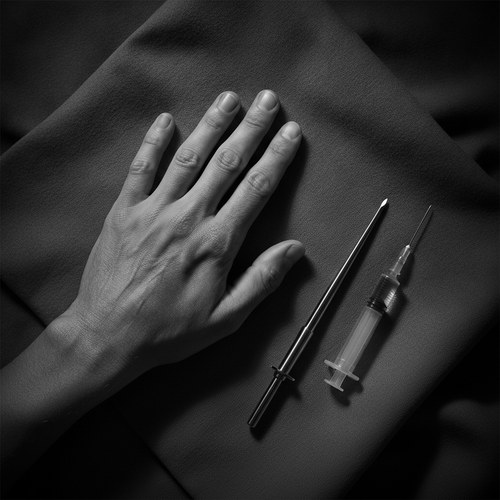
An operation is you.
I say this not to sound alarmed. I do this work. I do a lot of it. I have watched grown patients cry at a mirror the day their bandages come off because for the first time in a long time the person looking back matches the person inside their head. That is real. That is the case for the field.
I say it because the calculus has changed. When the tool is internal and permanent, the responsibility to slow down, to ask why now, to ask whose photograph the patient has saved, is much higher on the surgeon than it was in 1953.
Every Era Was Also a Reaction
The other thing I keep pointing out is that no era invented itself. Every look was a reaction to the one before it.
The flat, minimized 1920s was a reaction to the corseted Victorian body. The va-va-voom 1950s were a reaction to wartime austerity. The thin sixties were a reaction to the fifties. Athletic eighties reacted to disco thinness. Heroin-chic nineties reacted to bright, hard, aerobicized eighties. The curves of the 2010s were a reaction to the extreme thinness of the nineties and early 2000s. The quieter, natural-face energy of the mid-2020s is, in real time, a reaction to the overfilled 2010s.
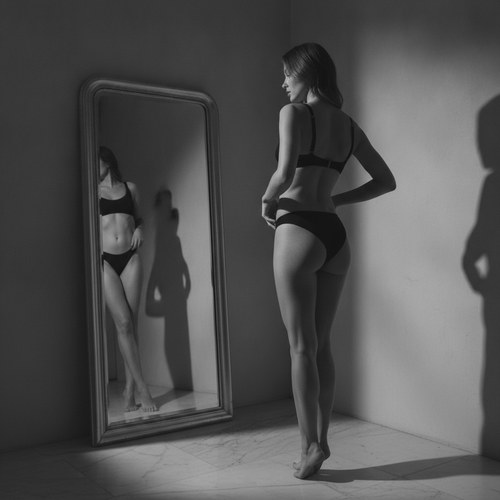
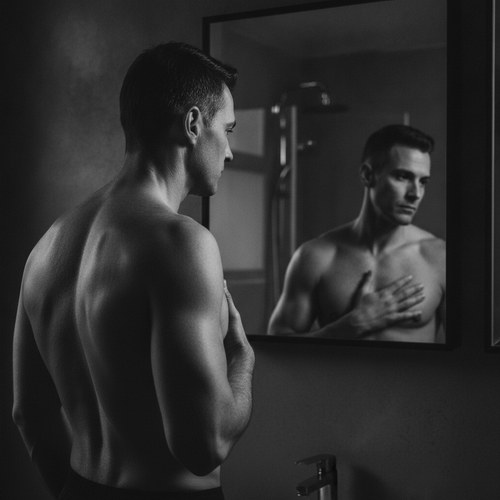
Every generation looks in the mirror and reshapes itself against whatever the last generation insisted on. That is not new. What is new is how quickly the mirror talks back, and how many of the tools now involve an operating room.
What I Do About It In My Own Practice
I take three things very seriously in a consult, more than I did ten years ago.
First, I ask what the patient sees on her phone. Not to snoop. Because the reference photo is the most honest single piece of information she will give me. If the reference photo is a different bone structure than the patient in front of me, we have a much longer conversation before anything is scheduled.
Second, I ask whose voice the patient is bringing into the room. A partner’s, a coworker’s, a comment section’s. If the loudest voice in the room is not hers, we slow down.
Third, I am willing to say the word no more often than I used to. Not every request warrants a procedure, and not every patient in front of me is a candidate today. Sometimes the most useful thing I can offer is a recalibration and a follow up in six months.
Those three moves are not about being precious. They are about the fact that surgery is now the tool for what used to be a costume, and the ethics have to change with it.
The Credential Behind the Opinion
I am double board certified by the American Board of Plastic Surgery and the American Board of Surgery, a Fellow of the American College of Surgeons, and completed my plastic surgery fellowship at the Mayo Clinic. I am a Clinical Associate Professor of Plastic Surgery at Texas Tech University Health Sciences Center Paul L. Foster School of Medicine, sit on the Editorial Board for Aesthetic Plastic Surgery, and now sit on the Editorial Board for PRS Global Open. Castle Connolly has recognized me as a Top Doctor for thirteen consecutive years.
I have watched the pendulum swing in real time inside my own operating room. I would rather comment on it honestly than pretend the field is standing still.
The Point
American beauty standards were never fixed. They swung, and each swing asked women to remake themselves in a different direction. What changed in the last fifteen years is that the remaking is often permanent. That is not a scandal. It is a responsibility.
Read the curve, not the current moment. #StayBeautiful.
For the patient-facing companion, see the post on agulloplasticsurgery.com. For the local read on how this shows up in our El Paso consult room, see the version on swplasticsurgery.com.
Ready to Talk?
Thinking about a procedure and want to know whether the reason is yours or borrowed? Ask. That question deserves a real conversation, not a quote sheet.
Call (915) 590-7900, text 1-866-814-0038, or book online at agulloplasticsurgery.com.
@RealDrWorldWide on Instagram, TikTok, and Snapchat, @Agullo on X, or @AgulloPlasticSurgery on Facebook.