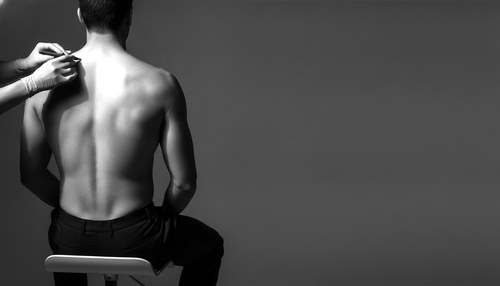
Two Balls Instead of a Muscle: When Trapezius Implants Have To Come Out

Black and white editorial photograph for trapezius implant removal commentary by Dr. Frank Agullo, MD, FACS.

Muscle implants are a quiet corner of plastic surgery. Calves, pecs, biceps, traps. A man came in for a four month facial follow-up and brought up something else entirely: trapezius implants placed about ten years ago, somewhere else. What follows is that part of the consult, identifiers removed.

Him: “About ten years ago I got trap implants, but now they look like two balls. I don’t know how they moved. They’re just not in their place.”

Me: “Let’s take a look.”

Him: “They made an incision right here. The pain wasn’t anything.”

Me: “Was it the same surgeon that did your abdominal etching?”

Him: “The second time, yes. They found them, but they were in the wrong place. They were under the muscle. They’re supposed to put them on top, and they were under. So of course they were never going to show, especially if I gain weight. And they were folded like a taco.”

Me: “I probably wouldn’t put in a new implant here. I would just take these out.”

Him: “No?”

Me: “I’ve never done it. You know, I’m very honest with you. I will start researching it.”

Him: “Because it would have to be almost like a triangle here, right?”

Me: “Yeah, literally like that. It should go all the way to here.”

He worked out the shape problem himself. The trapezius is a big triangle. A small round implant under it looks like a lump, not like the muscle.

Using His Own Fat Instead of a Second Implant

Me: “What if the fat that I take out, I inject it into your traps, and I bulk them up?”

Him: “You could do that, but if I lose weight? Well, you don’t think so? I usually maintain.”

Me: “If you usually stay the same, that will make them bulk up and it’s going to look natural. I do that with the biceps a lot.”

Him: “And then, the back?”

Me: “No pieces, no scars. Just a little bit. It would make it thinner. But we have to use the J-Plasma to tighten the skin. We could do the whole thing, and use the J-Plasma, that way you get a little bit more fat, and then we’ll put it here, and I think it’ll give you a nice result. It’s going to look better than this.”

Him: “I think eventually these will give me problems in the future.”

Me: “Yeah, and we just need to get them out.”

Him: “It’s like your body’s angry around them.”

Me: “Exactly. They’re almost wanting to come out on their own. So that’s pretty simple.”

The Takeaway

Grafted fat is your own tissue, so it goes up and down with you. Stable weight, stable result. His answer of “I usually maintain” mattered more here than anything I measured.

My exam note from that day: “This patient has two trapezius implants, which are very small, and they look like two bumps on the trapezius area. He has some excess adipose tissue in the upper back and lower back with some excess skin.”

I am a double board-certified plastic surgeon, a Mayo Clinic fellowship alum, and I teach plastic surgery as a Clinical Associate Professor at Texas Tech University Health Sciences Center. Revision work is less about technique than about saying plainly which operations I have done and which I have not.

Ready to Talk?

If an old implant has shifted, hardened, or never looked right, let’s take a look together. Call the office at (915) 590-7900, text us at 1-866-814-0038, or book a consultation at drworldwide.com.

#StayBeautiful

@RealDrWorldWide on Instagram, TikTok, and Snapchat, @Agullo on X, or @AgulloPlasticSurgery on Facebook.

The Underarm Nobody Talks About: Why Liposuction Will Not Fix It

Black and white editorial photograph for axillary breast tissue commentary by Dr. Frank Agullo, MD, FACS.

She booked the visit for her abdomen. Partway through the exam she brought up her underarms, and put it like this:

Her: “I feel like I’m always flashing people.”

Here is the rest of that consult, identifiers removed.

The Abdomen

Her: Can you do my stomach too, but not a six pack?

Me: “So we can do the verticals. We can do it a little bit here. You don’t have a lot of fat, but we can plug it a little bit here, a little triangle here, and then go up and down. And then just remove a little here and use the J Plasma to tighten up the skin.”

The Underarm

Her: What is it? Can you liposuction it out?

Me: “So I will have to make the little incision here on the axilla, that I can get that tissue out, because it’s more like gland, it’s not so much like fat. So if I try to get it out with liposuction, it really doesn’t go away. So the best way, I mean, if you don’t want a scar, I can try to get it out, and I actually have an arthroscopic shaver where I can get the gland out, and then we just cut out the nipple on each side.”

Her: Will the scar show?

Me: “The scar goes in the axilla, you don’t see it. One of the side effects is that I remove some of the sweat glands. It would actually be right on the crease, so it would look like a crease. And then I would still have to do just a little cut to remove the nipple itself. No, it wouldn’t be a thick scar, just the size of the nipple, so it just looks like a little line.”

Her: How long, and how long am I down?

Me: “This would take probably two hours, general anesthesia, in and out, you can go home the same day. Recovery I would say is like five days, but nothing more, you can go back to normal activity. And then exercise usually in about three weeks or so.”

Her: Could we do it awake?

Me: “This would have to definitely be under general anesthesia.”

Me: “I have patients that have come and they’ve had it done and they’re like, oh, that was horrible. So this way we can be more aggressive, but we’re not worried about you being uncomfortable.”

The Takeaway

It is gland, not fat. That is the whole thing. Liposuction takes out fat cells, so it leaves this behind, and plenty of women have paid for that lesson. The tissue has to come out, through a small incision in the crease of the underarm, and any small extra nipple comes out through the same access.

Two hours. Home the same day. Five days to normal activity, three weeks to the gym. Fewer sweat glands on that side, which nobody has ever complained about.

I am a double board-certified plastic surgeon, a Mayo Clinic fellowship alum, and I teach plastic surgery as a Clinical Associate Professor at Texas Tech University Health Sciences Center.

Ready to Talk?

If your underarm has been bothering you longer than you would like to admit, let’s take a real look at it. Call the office at (915) 590-7900, text us at 1-866-814-0038, or book a consultation at drworldwide.com.

#StayBeautiful

@RealDrWorldWide on Instagram, TikTok, and Snapchat, @Agullo on X, or @AgulloPlasticSurgery on Facebook.

A Thorn in My Side Since I Was Eleven: A Gynecomastia Consult, Nearly Verbatim

Black and white editorial photograph for gynecomastia commentary by Dr. Frank Agullo, MD, FACS.

He came in on a Friday morning between a painter and a car negotiation. He had been almost two ninety back in 2017. He was down about a hundred pounds and going to the gym two or three times a week. And the chest had not moved.

I am publishing this consult nearly as it happened, identifiers removed, because men ask me these exact questions and almost nobody answers them out loud.

Him: This has been a thorn in my side since I was about 11 or 12 years old.

Me: “The problem is that we have a considerable amount of sagging. If I just did lipo, obviously you remove the volume, but it would still be sagging. So I don’t think you want that.”

Me: “Unfortunately, the trade off is the only way to do it is really with a scar. So I would have to put a scar right underneath the fold. And it would go to about here. And with that, I would be able to remove the tissue and the fat and the breast tissue, and then we would use the nipple. I would take it off completely, and then put it back on like a graft. Because I don’t think even with the tightening lasers, I don’t think it’s going to spring back. Especially this side.”

Him: How flat will it be?

Me: “It’ll be completely flat.”

Me: “And that’s why I recommend doing the lipo on the sides, because otherwise it’s going to look like you have a side breast. Because you won’t have anything here.”

The tummy tuck came with it

He had already been told he was a candidate. He was.

Me: “So you are a good candidate for a tummy tuck. The incision goes here. It will remove some of the fat on the mons and it’ll also lift it up. And the scar is going to go to where the fold ends. So it’s going to go to about right here where this fold ends.”

Me: “With that, we’ll be able to remove pretty much all the skin from here down. And then I’ll use this skin, and that’s the one we’re going to pull down. Look at your muscles. If there’s any separation, we’ll put them back together. But you’ll have a nice, tight, flat abdomen.”

Him: Does it make sense to do everything all together?

Me: “Yes. Because really the chest is not going to add any recovery. So you have that advantage of just that one recovery, and you’re done. Number one, it’s safe because we’re still under six hours, which is most important. And then it becomes a little less expensive, because the first hour of surgery is the most expensive.”

Me: “If we did it together, the surgery would be about four and a half to five hours, general anesthesia. It is in and out. You can go home the same day.”

Recovery, and the two drains

Me: “Recovery wise, you’re looking at about two weeks, mostly from the tummy, to get back to normal activity, driving, things like that. And then six weeks where you can go back to exercise, lifting, pretty much back to normal without any restrictions.”

Me: “We would have drains, both in the chest, one on each side. Those are going to come out pretty quick, four to seven days. Then the tummy, those can take a little longer. It could be seven to fourteen days.”

Me: “You’ll have your garments. I do recommend doing lymphatic massages. We have a tech here. And it helps get the swelling down a lot quicker, especially in the areas of liposuction. It helps avoid the fibrosis and bumpiness.”

The question men do not think to ask

Him: The only thing recovery wise I was concerned with, I have three dogs.

Me: “Do you have somebody to help you at home?”

Him: No.

Me: “So then is somebody going to bring you to the surgery?”

Him: I’d probably come by myself.

Me: “So then I would keep you overnight, because we can’t send you home like that. And then in the morning, we do have a service that can take you back home. My nurse will visit you the day after you stay overnight, to help you shower and how to take care of the drains and go over all the instructions again. You can extend those visits, or there’s also a third party we work with a lot that can keep coming in to check on you, and even help you with food and transportation.”

Me: “You would probably want to board your dogs for at least a while.”

Then, because it was true: “We had a male patient that had a facelift and we didn’t find out until after the surgery that he had 25 cats. So he would come to his post op and he would have scratches, and we were like, no. No.”

Why he was there at all

Him: I’ll go to the gym, but then I get really discouraged. I get to a certain point, like, oh, this is good. And then it’s not going to tighten.

Me: “We can take care of that for you.”

My exam note from that morning: bilateral gynecomastia, no dominant masses, ptosis worse on the right, right breast bigger than the left, a lot of excess skin and subcutaneous tissue in the lateral chest, abdomen, upper back and lower back, an abdominal pannus continuing laterally, and some degree of rectus diastasis.

The takeaway

Gynecomastia is not a weight problem and the gym does not fix it. If the skin has been stretched for twenty years, or stretched by a hundred pounds and then emptied, it will not recoil, and no laser changes that. On a chest with real sagging, the honest answer is a scar under the fold, and often a nipple graft. On a firm chest with fatty fullness, liposuction with skin tightening can be enough.

I am a double board-certified plastic surgeon, certified by both the American Board of Plastic Surgery and the American Board of Surgery, a Mayo Clinic fellowship alum, and I teach plastic surgery as a Clinical Associate Professor at Texas Tech University Health Sciences Center.

Ready to Talk?

If your chest has bothered you since you were a teenager, you have already waited long enough. Call the office at (915) 590-7900, text us at 1-866-814-0038, or book a consultation at drworldwide.com.

#StayBeautiful

@RealDrWorldWide on Instagram, TikTok, and Snapchat, @Agullo on X, or @AgulloPlasticSurgery on Facebook.

The Tummy Tuck Quote That’s Half of Ours: What You’re Actually Paying For

Greyscale editorial photograph for a tummy tuck cost essay by Frank Agullo, MD, FACS.

I received a quote from a surgeon in Mexico less than half of ours from a patient this week. She was not haggling; she simply wanted to know where the difference lay. She was right to ask, however, and deserved a real answer, not a defensive one.

The Numbers and the Content

Our price for a tummy tuck begins at $16,000 and extends to $26,000, genuinely all-inclusive: surgeon’s fee, facility fee, anesthesia, garments, and the preoperative and postoperative package, SinEcch for bruising, Skinuva scar cream, a skin moisturizer, and Exparel for extended pain relief, among other items. In addition to every session of drainage therapy and postoperative examination, we include, if necessary, even a BBL cushion. The sole exception is that you must claim your prescriptions.

When you see a quote that is half of that price, something in that list is lacking. It is time to ask what is there. How do all these quotes vary so much?

Why the Number Isn’t the Same Everywhere

Location differs, and overhead in one city versus another. One factor is how much a surgeon is in demand and indeed how complicated the specific case is; this takes into account combinations and expected time. There is a wide difference.

The Type of Tuck Changes the Math

The calculation changes with the kind of tuck. Mini tummy tuck patients do not have as much loose skin. It is a quicker operation and involves a C-section or equivalent incision length being determined, while the excision of surplus tissue within a standard abdominoplasty requires more effort and skill. The incision of an extended tummy tuck extends as far as the hips where the abdominal fold begins to extend over the buttocks. The full circumferential procedure, however, for overall looseness with a sag, is the longest and most comprehensive of the four, adding an increasingly large charge depending on the duration.

Where the Real Savings Show Up

These actual savings can be gained during an abdominal tuck with liposuction combined with a mommy makeover. In this particular case, each operation is included under a single fee in one cost-effective payment; this also allows for just one dosage of anesthesia.

The tummy tuck alone dictates the time for recovery whether combined with other procedures or not. From the time of surgery to return to activity takes up to two weeks and up to six weeks before the patient, as shown above, resumes heavy exercise, even with an additional procedure combined.

How Patients Actually Pay for This

PatientFi, AlphaEon, Cherry, CareCredit, or financing directly through the practice, as well as the major credit cards, cash, or financing through an outside bank, are all accepted, so terms of payment for the surgery ahead can work around whatever schedule you need.

The Part I Actually Want to Warn You About

However, this one piece of warning will suffice to warn you of a risk. I perform abdominoplasty revisions on numerous patients every year, after operations previously completed elsewhere, at times across borders in countries such as Mexico which charge less than what it takes. The price of rectifying a botched abdominoplasty can go beyond anything the original surgery charged, while the outcome usually cannot surpass what could have been achieved if it were done correctly the first time.

Check what has been cut in a quote that seems too good to be true: the surgeon’s training, the facility’s certifications, or the anesthesia used. A deal that demands a revision later, on top of the financial and health cost of that revision, is not a bargain at all.

Why I Price It This Way

As a Mayo Clinic fellowship-trained, double board-certified plastic surgeon and a Castle Connolly Top Doctor for thirteen consecutive years, I would rather be transparent about what’s in the number than let a patient find out what’s missing after the fact. An exact quote can only be given after a consultation, but the starting range and what’s included in it are not a secret. For the complete breakdown, see the full guide on agulloplasticsurgery.com.

Ready to Talk?

Bring your quote. I’ll tell you exactly what’s different about ours.

Call (915) 590-7900, text 1-866-814-0038, or book online at agulloplasticsurgery.com/appointments. #StayBeautiful

@RealDrWorldWide on Instagram, TikTok, and Snapchat, @Agullo on X, or @AgulloPlasticSurgery on Facebook.



  • Full guide on agulloplasticsurgery.com: “What a Tummy Tuck Actually Costs in El Paso (And What Moves the Number)” (canonical)
  • Med spa side on swplasticsurgery.com: “What a Tummy Tuck Costs at Southwest Plastic Surgery” (link once live)

One Surgery, Many Decisions: What Actually Goes Into a Mommy Makeover

Greyscale editorial photograph for a mommy makeover essay by Frank Agullo, MD, FACS.

Mommy makeover is a misleading name. It sounds like a single procedure. It is not. It is a name given to a decision tree that every patient is faced with.

Most mommy makeovers are the same, except where they are customized. In general, they come 360 around the torso, with a tummy tuck and breast work. Breast work can be a reduction and lift, an augmentation, or an augmentation with a lift. We offer fat grafting to the buttock and people like to call that an extreme mommy makeover, but the truth is that it is often just a further decision-making addition.

Is It Actually Safe

As you will see in the next paragraph, we safely perform this combination of breast, abdominal, and buttock work several times a week. Often patients ask, are the results lasting? So long as the patient does not have more children after the mommy makeover, the results often remain the same. The liposuction performed with the tummy tuck removes most patients of five to ten pounds. You will notice the effect of the shape change more through that than through the change in your weight directly.

People come in asking us: is it safe to combine surgery, and what is included in my mommy makeover? What is even safer is your experience. We do this combination of surgeries three to four times a week. I would not be doing as many mommy makeovers if I had any reservation about the safety of combining them. All mommy makeovers typically run under six hours, with the patient in compression socks and sequential compression devices, walking that same day, following a blood thinner.

What Breast Surgery You Need Depends Entirely on Your Body

The breast has the biggest variety of factors. All we do is look at the patient and decide what we can do to make it better. Maybe you experienced volume loss after nursing, and we repair that with an implant. Some patients even combine a breast implant with fat transfer for extra volume. After you have decided on the fat transfer and or implant, then a conversation about the nipple becomes relevant depending on the change you experienced from nursing.

When planning a breast lift we examine both how much your breast droops and the shape that drooping has taken. Where your nipple ends up is perhaps our most prominent visual guide to an ideal outcome. The other option is a smaller circumareolar lift. Regardless of whether you pursue an extreme mommy makeover, a mini mommy makeover, or somewhere in between, most patients get a mesh that holds the breast result in place, GalaFLEX or DuraSorb.

In contrast to most cosmetic clinics, it is impossible for me to give a price on a mommy makeover when a patient first asks. I do not give a quote until your anatomy is sitting in front of me, so we can have a personalized discussion. My entire purpose as a Mayo Clinic fellowship-trained, double board-certified plastic surgeon is making sure patients feel confident in breast, abdomen, and buttock work without losing their natural looks or jeopardizing their bodies while pursuing a higher level of confidence.

Tummy Tuck Decisions

When making an inquiry into a tummy tuck, the options are generally pretty easy. It entirely boils down to how much skin is loose. Minimal laxity calls for a mini tummy tuck, roughly the length of a C-section incision. A higher amount of skin laxity signals a standard tummy tuck. If the skin rolls are pronounced, we are probably looking at an extended abdominoplasty, or a circumferential body lift when there is more extensive sagging around the back and buttock.

Typically, 360-degree liposuction across the torso pairs with our Renuvion J-Plasma tightening technique. Arms and inner thighs, when treated, get BodyTite for that same skin-tightening effect.

As a Castle Connolly Top Doctor for thirteen consecutive years and a double board-certified plastic surgeon, I have got your back.

Ready to Talk?

Bring your anatomy, not a checklist. We will build the plan together.

Call (915) 590-7900, text 1-866-814-0038, or book online at agulloplasticsurgery.com/appointments. #StayBeautiful

@RealDrWorldWide on Instagram, TikTok, and Snapchat, @Agullo on X, or @AgulloPlasticSurgery on Facebook.


  • Full surgical guide on agulloplasticsurgery.com: “What Really Goes Into a Mommy Makeover, and Why It’s Safe as One Surgery” (canonical)
  • Med spa side on swplasticsurgery.com: “Built Around You: How Southwest Plastic Surgery Customizes a Mommy Makeover” (link once live)

Thirty-Four Studies Later, the Numbers Finally Caught Up

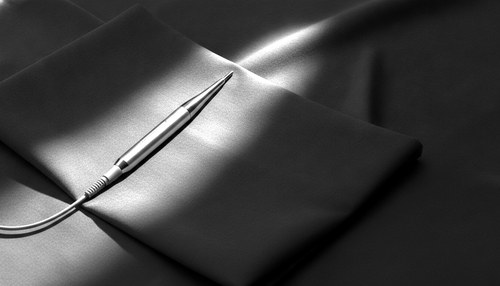
Black and white photograph of a slim electrosurgical handpiece on a folded surgical drape under hard directional light. Renuvion commentary by Frank Agullo, MD, FACS.

For seven years my confidence in this device rested on my own eyes, which is the weakest evidence there is. Every surgeon thinks his results are excellent. The ones who are wrong think so just as firmly.

So this year somebody pooled 34 studies and 3,508 patients on Renuvion J-Plasma, and I finally got to check my eyes against other people’s arithmetic.

I started with it in 2019, early enough that I was making calls without much published evidence behind me. Ten to twenty cases a week now. Apyx puts me in the top ten worldwide by volume.

The pooled findings: 92% patient satisfaction, confidence interval 83 to 97. Investigators said 92% improved, patients said 94%. Independent photographic review, where somebody with nothing at stake grades the pictures, said 86%. Complications 5% for Renuvion alone, 8% alongside liposuction.

That photographic number is the one I go to first in any paper like this. Satisfaction is soft. A patient who chose a procedure and paid for it wants to be pleased with it. A stranger looking at photos does not care.

Q: What is your reaction to those numbers?

“I have had a similar experience with my patients. There is a very high satisfaction rate for the patient, and I would like to say that for myself as well, the surgeon. I see considerable skin tightening and very low complication rates. I think that in this study, actually, the complication rates are higher than in my hands. I can say that I rarely see a complication from Renuvion, or Renuvion with liposuction.”

I said a moment ago that a surgeon’s read on his own results is the weakest evidence going, so hold me to it. Mine is an impression, unaudited, unpublished. But the gap is not mysterious either. A meta-analysis averages across every surgeon in it, including the ones who had done twelve cases when they wrote it up.

Q: How has the volume changed your technique?

“With such high volume, we have become very efficient at performing Renuvion J-Plasma, with or without liposuction. We have been following the latest protocols in terms of energy delivery per surface area, and this has proven to be dramatically more effective. And we have learned that more power doesn’t necessarily mean more results. It is more about choosing the exact power needed in the area to create the results.”

Every surgeon new to an energy device assumes more energy buys more tightening. It does not. Past what the tissue needs you get nothing you wanted and something you did not.

Q: Alone, or with liposuction?

“Most of the time, I’m using Renuvion with liposuction, as we’re using it to tighten after liposuction for an improved result. There are instances where we use Renuvion alone, and this is where we just want to get some skin tightening without any removal of subcutaneous fat. So there’s really no volume change, just tightening.”

Q: Who do you turn down?

“Patients with severe skin laxity are really not good candidates for J-Plasma. They may see some improvement, but it’s not going to be as effective as a skin excision procedure. The other group is some patients with implantable devices, such as pacemakers, who may not be able to undergo radiofrequency treatments unless they are monitored in the hospital by their device manufacturer.”

Skin stretched far enough for long enough does not come back, however much you heat it. I would rather lose that case than sell her the smaller operation and watch it disappoint her.

Q: The authors disclosed consulting ties to Apyx. Does that bother you?

“When the authors are consultants or involved with the company, the actual study is scrutinized further to make sure there is no bias or data manipulation. I’m very happy that the authors gave all of their disclosures and conflicts of interest. This creates transparency. For these studies to be published, they are peer reviewed by other plastic surgeons who scrutinize the paper and look for any faults or reasons to reject it. On top of this, the study itself has to be IRB approved, meaning approved by an Institutional Review Board, which in itself scrutinizes any conflict of interest and human safety.”

Do not stretch that past where I meant it. A declared conflict draws extra eyes; an undeclared one draws none, because nobody knows to look. It was the 86% that reassured me here, not the disclosure page.

Ready to Talk?

If you have loose skin and you want an honest answer about whether a device fixes it or whether you need excision, let’s talk. Call (915) 590-7900, text 1-866-814-0038, or book at drworldwide.com.


Source: Shridharani SM, Sterodimas A, Harsch MR, Larson KA. “Helium Plasma Radiofrequency for Aesthetic Subdermal Treatment: A Systematic Review and Meta-Analysis.” Aesthetic Surgery Journal Open Forum, 2026. doi:10.1093/asjof/ojag092. The authors disclose consulting and advisory relationships with Apyx Medical, manufacturer of Renuvion.

Q&A source: Q&A Transcriptions/Renuvion-Systematic-Review-QA.md (Frank, 2026-08-24). All quoted passages are verbatim.

#HappyIsBeautiful #StayBeautiful #MakeItHappen

@RealDrWorldWide on Instagram, TikTok, and Snapchat, @Agullo on X, or @AgulloPlasticSurgery on Facebook.
Half My Weight Loss Patients Now Come From a Pen

Black and white editorial image of a slim woman at a mirror gathering the loose skin at her lower abdomen after major weight loss. Commentary on body contouring by Frank Agullo, MD, FACS.

Two consultations back to back on the same afternoon recently, similar age, a similar amount of loose skin across the abdomen and the arms. One had come from a gastric sleeve. The other had come from a GLP-1. I gave them different answers about when I would take them to the operating room, and the second one wanted to know why.

That question would not have existed a few years ago. For most of my career the phrase “massive weight loss patient” meant bariatric and nothing else: Roux-en-Y or a gastric sleeve, a year to eighteen months of steady loss, a plateau, a six month wait, then surgery. That sequence got standardized over about two decades, and it has held up well.

The GLP-1s have handed us a second population that does not slot into it cleanly, and I am not convinced the field has caught up.

What Deflation Does, Whatever the Route

The mechanism does not care how the weight came off. There is a rapid amount of weight loss, the loss of volume deflates skin that was previously stretched out, and that skin ultimately sags and creates contour irregularities.

Where it shows up is what patients are unprepared for. Everyone anticipates the abdomen. Far fewer anticipate that the loss in volume also creates breast ptosis, in men as well as women, and buttock ptosis, or that it turns up in the arms, the inner thighs, and the outer thighs in anyone prone to saddlebags.

Where the Two Groups Diverge

Timing is the real split. GLP-1 weight loss usually happens over three to nine months, sometimes a year, and those patients seem to plateau a little quicker and to be ready a little faster after they plateau, usually about three months. My post-bariatric patients wait six.

I want to be careful about how hard I state that three month figure. It is my current practice, not a guideline. GLP-1s have been around a lot less time than bariatric surgeries have, so the gold standard and timing of body contouring surgery for them is yet to be defined, and anybody handing you a firm rule right now is quoting themselves.

If I had to explain the divergence, I would point at magnitude. Bariatric patients still seem to have a greater amount of weight loss compared to GLP-1s, and that may be one of the differentiating factors. More total loss means more skin and more nutritional disruption, which happens to be exactly where the complication risk lives.

Where the Risk Actually Lives

Here is the part I think gets underdiscussed at meetings, because it is less photogenic than a before and after.

Post-bariatric patients are still at higher risk for wound complications than GLP-1 patients. This has been seen in recent studies, and it is not surprising. Bariatric patients do have more nutritional deficiencies, and they often have a much higher percentage of body weight loss.

So the preoperative workup is not a formality. We look at protein levels and protein intake before the surgery. We look at hemoglobin, to make sure the patient is not anemic. For these cases we are excising a lot of tissue, so there is a larger degree of blood loss, which usually requires a Cell Saver device to auto-transfuse the patient’s own blood loss, as well as blood transfusions.

A surgeon who is not thinking about protein and hemoglobin in this population before booking the room is going to meet those numbers later, at the incision, on day nine.

The Operation Is Bigger Than People Say

The gold standard is usually an abdominal procedure, a tummy tuck. But more often than not, because of the massive weight loss, it has to be extended circumferentially, so we can lift the buttock and the lateral thigh, reduce the lower back, and fix the abdomen at the same time. Add a monsplasty. Add a breast procedure, usually a full lift with an anchor-type incision, or a gynecomastia reduction in men. Then frequently a brachioplasty, a medial thigh lift, and excision of back rolls or lateral chest rolls.

Doing all of it in one sitting usually entails an overnight stay and a possible transfusion. Splitting it, in my hands, works best as upper body then lower body. Facial work, facelifts and neck lifts, gets staged in along the way.

Recovery scales accordingly, and this is where I see the most unrealistic expectations. A tummy tuck alone usually needs about two weeks. Combine procedures and we usually need at least three weeks to return to normal activity, and it can be six to eight weeks before any exercise. Patients budget for the tummy tuck number. Their bodies bill them for the combined one.

No, the Device Will Not Save You Here

I am one of the highest-volume Renuvion J-Plasma users in the world, so I am not the guy talking down energy devices. I will still say this without qualification: once the skin has been stretched out to a certain degree, it loses its elasticity and really does not react to radiofrequency energy the way healthy skin would. When the laxity is significant, the only option at that point is excisional.

That does not mean we may not have different tools in the future. As of this writing, that is the recommendation, and selling a massive weight loss patient a device package instead of an operation is selling them a disappointment on a three month delay.

Scars, and the Conversation Nobody Wants to Have

Most of these scars can be hidden by normal clothing. The circumferential body lift hides under swimwear or underwear. Some do not hide well: the arm lift is the obvious one, and so is a vertical abdominal scar, the fleur-de-lis, or an extended medial thigh lift with its vertical scar running from the groin to the knee.

Oftentimes patients are willing to have these scars because of the amount of excess skin in those areas, and ultimately they will feel better in clothing than not doing anything at all.

That is the trade, stated out loud. Balancing pros versus cons, benefits versus risks and scars. It requires a full consultation with a conversation about expectations, and if a surgeon has not had that conversation with you, you have not had a consultation. You have had a sales meeting.

Where I Am Coming From

Double board-certified by the American Board of Plastic Surgery and the American Board of Surgery, Mayo Clinic fellowship-trained, Clinical Associate Professor of Plastic Surgery at Texas Tech University Health Sciences Center Paul L. Foster School of Medicine, and a Castle Connolly Top Doctor for thirteen consecutive years. I have written the full patient-facing version of this over on Agullo Plastic Surgery, with the timelines laid out in a table.

Ready to Talk?

If you have lost the weight, whether by surgery or by prescription, and you want a straight answer about when you are ready, come in with your labs.

Call (915) 590-7900, text 1-866-814-0038, or book online at agulloplasticsurgery.com/appointments. #StayBeautiful

@RealDrWorldWide on Instagram, TikTok, and Snapchat, @Agullo on X, or @AgulloPlasticSurgery on Facebook.


  • Full patient guide on agulloplasticsurgery.com: “When Are You Ready for Body Contouring After Massive Weight Loss?” (link once live)
  • Practice version on swplasticsurgery.com: “Planning Body Contouring After Major Weight Loss at Southwest Plastic Surgery” (link once live)

Going Smaller: When Buttock Implants and Big BBLs Come Back Out

Black and white editorial photograph for buttock implant removal and BBL reduction commentary by Dr. Frank Agullo, MD, FACS.

For years the consult was always the same direction: bigger. Lately a different patient sits down across from me. She had buttock implants or a large fat transfer a decade ago, and now she wants smaller, leaner, and natural.

The pendulum is swinging, and reversing the work of 2015 is its own operation. Here is how I answered one of these patients recently, in my own words.

Can It All Come Out?

Yes. The patient I am thinking of had 300 cc silicone implants placed inside the muscle ten years ago, then two Brazilian butt lifts adding about 1,100 cc of fat per side. Her goal was simple: much smaller, leaner, more natural looking. The plan combines implant removal, liposuction to reduce the transferred fat, and a lift to handle the loose skin left behind.

What Happens to the Muscle?

Less than people fear. When a surgeon places an intramuscular implant, the muscle is not really cut. It is spread apart to make a space. Remove the implant and the muscle simply comes back together. The only place I repair muscle is where I make the cut to take the implant out. Stitching the middle of the muscle accomplishes nothing; there is no fascia there, and sutures just rip through.

The Capsule Question

You take as much as you need to. A thick capsule comes out. A ruptured implant means the entire capsule comes out. Sometimes the capsule is so thin that chasing it only damages muscle, and sometimes there is barely a capsule at all. At the ten year mark, rupture or leaking would not change my plan. I clean everything out either way.

Will You Be Flat?

No. You keep projection, just less of it. Occasionally an implant is creating the shape in one specific spot, and removing it would leave a divot. When that happens, I save some of the fat and skin from the lift and flip it in to restore the volume. Smooth, round, natural, smaller. That is the assignment.

Why the Lift Rides Along

Take out an implant and a liter of fat per side and the skin needs somewhere to go. A buttock and lateral thigh lift removes the excess, tightens both the superficial layer and the deep fascial layer so it holds, and smooths the transition into the thigh. The incision is long, but it hides in clothing lines.

The Boring Safety Details That Matter

Drains stay until they are ready, about a week, and they are why seromas stay rare. Hematomas in the buttock are extremely rare; in more than a thousand buttock cases I have never seen one there, because the muscle’s blood supply essentially repairs itself within days. Surgery runs about four to four and a half hours under general anesthesia. You can sit and sleep on your back right away unless I add fat for small irregularities.

Many of these patients had their original surgery abroad. What matters now is where the removal happens: an accredited facility. My surgery center is Quad A accredited, the same standard as a hospital, with pre-op labs and an EKG on everyone.

I put the full patient Q&A, including recovery timelines and out-of-town planning, on the practice site.

Ready to Talk?

Call my office at (915) 590-7900, text the consult line at 1-866-814-0038, or book a consultation at agulloplasticsurgery.com.

#StayBeautiful

@RealDrWorldWide on Instagram, TikTok, and Snapchat, @Agullo on X, or @AgulloPlasticSurgery on Facebook.

Where the Fat Goes: The Science of BBL Survival, From My OR

Moody greyscale photograph of a woman resting face down on a recovery lounge in a surgical compression garment. BBL fat survival science explained by Frank Agullo, MD, FACS, Dr. WorldWide.

Every BBL I consult ends the same way: “So, how much of that fat stays long-term?”

Patients arrive from the internet convinced the fat basically just melts away. Colleagues outside the field ask because they suspect the results will not last. Both parties have a mistaken perception of what the surgery does, so here is the answer I would give across the conference table: the biology.

The Number, and Why It Is a Range

Fifty percent to eighty percent. So the difference is a 30% span? Yeah, that is kind of the magic. But that difference is not random; there is really little random variance from one patient to another.

A fat graft is living tissue that comes from the recipient. I took fat tissue that had its blood source detached, squeezed it through a syringe-like tool called a cannula and then put it in a place where it can only rely on diffusion to get to nutrients for the first 2 weeks until it is able to build a blood supply. The tissue that successfully reattaches will last for the next few decades. In contrast, the tissue that did not attach will simply be absorbed into your body, resulting in volume loss.

It is much more than just moving tissue. Every decision the surgeon makes is focused on making sure those cells can live on for two weeks.

The Wash Most Patients Never Hear About

Surgeons often want to see my fat-washing protocol more than any other piece of my entire fat-grafting procedure. And before all that nice soft fat goes back to the patient, I am washing that fat thoroughly with AuraClens, a solution that contains Poloxamer 188.

What is the best way? First is housekeeping. When you get lipoaspirate harvested from patients, it is not clean: it includes tumescent solution, free oil due to burst adipocytes, as well as dead adipocytes. This process removes the sludge to deliver a concentrated product of viable cells. Each cc injected contains the maximal amount of living fat possible. Now you double pay when you inject nonviable debris. That mass will disappear as the cellular detritus dissolves, and this trash creates a massive amount of inflammation among the living adipocytes attempting to survive.

The second benefit is the one worthy of a journal club. Poloxamer 188 is a membrane-active surfactant; it does more than simply scrub/clean the membrane. What makes it so unique is how it actually works to repair and stabilize the adipocyte membrane, essentially patching up damaged holes in cell walls and making them resist apoptosis, the programmed self-destruction that stressed adipocytes would carry out, whereas the ones scheduled for elimination instead just keep kicking along.

The Patient’s Half of the Equation

I can scrub and prep the fat perfectly and still lose the graft to a barstool. Pressure destroys grafts in the first two weeks, which is why my sitting protocol is non-negotiable. For two weeks: nothing hard under the buttock, a BBL cushion shifting the weight onto the thighs for any sitting, and stomach sleeping, or a wedge-supported beach chair position for anyone who cannot manage the stomach.

The other patient-side lever is the massage table. Lymphatic drainage two, preferably three times a week for the entire first month, and honestly as often as the schedule allows: it works scar tissue and fluid out of the donor sites. My patients run theirs through the post-surgical massage program at Southwest Plastic Surgery. It is an unsexy part of the operation and the one that makes the most substantial difference in the final contour.

The payback comes fast. Final volume is essentially there at week four, when every restriction lifts, and the settled result is declared at three to six months. Out-of-town patients, most of my practice, fly home on day five.

What I Tell Colleagues About the Long Game

If the fat makes it through its first month, it is no longer vulnerable. It is permanently on the payroll and it behaves like fat behaves. Weight loss will cause it to shrink; weight gain will cause it to expand. The ruined results I occasionally witness are almost never a result of the surgery itself. They are yo-yo cycles, losing and regaining weight, which stretch out the skin, sag the mound I painstakingly created, and leave contour issues that no revision entirely fixes.

For all my fellow plastic surgeons: We choose our patients not only for their anatomy but also for their understanding of what it will take to maintain results. Before an op, tell those considering significant weight fluctuations that the size of their gluteal graft will inevitably follow their weight journey. The full patient-facing timeline, week by week, lives on my practice page for the Brazilian butt lift.

Where I Sit in This Field

The procedure itself started to really coalesce as an entity in the last 10 years, partially through my contribution, as I am a founding vice-president of the World Association of Gluteal Surgeons. Back then, all you heard about was the normal BBL; now you have the ultrasound-guided BBL and the supercharged BBL, which pairs fat grafting with intramuscular implants. That means you have a variety of approaches just as rhinoplasty now has different styles to choose from and all of them stem from the science behind the survival.

The Mayo Clinic taught me to treat every graft like the transplant it truly is. The liposuction that harvests it, the wash that protects it, and the two weeks that anchor it are one operation, not three separate events. Surgeons who treat them separately end up stuck at the fifty percent end of the range, wondering why.

Ready to Talk?

Whether you are a patient counting weeks or a colleague comparing protocols, my door is open.

Call (915) 590-7900, text 1-866-814-0038, or book online at agulloplasticsurgery.com/appointments.

@RealDrWorldWide on Instagram, TikTok, and Snapchat, @Agullo on X, or @AgulloPlasticSurgery on Facebook.


  • Week-by-week patient guide on agulloplasticsurgery.com: “BBL Recovery Week by Week: What Actually Happens After a Brazilian Butt Lift” (link once live)
  • Aftercare version on swplasticsurgery.com: “The Aftercare That Makes a BBL: Massages, Garments, and the Two-Week Rules” (link once live)

The Gynecomastia Quote Nobody Explains: Why $7,050 Is Just the Starting Line

Black and white editorial photograph of a man seen from behind, looking at his own reflection in a mirror, hand resting on his chest. Gynecomastia surgery cost commentary by Frank Agullo, MD, FACS.

Every gynecomastia forum has the same number floating around, usually quoted with more confidence than the person posting it has any right to. A flat price, no exam, no distinction between the patient who needs a few minutes of liposuction and the patient who needs an actual excision. I understand the appeal of a single number. I just can’t defend one in a consult room, and neither should anyone else who’s being honest about this operation.

Our own starting price is real and published: $7,050, all-inclusive of anesthesia, facility, testing, and garments, prescription medications excluded. I’ll defend that number. What I won’t defend is pretending it’s the final number for every chest that walks in.

Three Words That Get Collapsed Into One

Clinically, “gynecomastia” is doing the work of three different diagnoses. True glandular tissue is firm, fibrous, disc-shaped under the nipple. Pseudogynecomastia is fat with no gland involvement at all. Most chests I see are a blend. The word on the intake form is the same regardless. The operation is not, and neither is the price.

The Patient Nobody’s Price List Accounts For

Most of my gynecomastia patients could have had this corrected during puberty. Almost none of them did. What I actually see, over and over, is a patient who waits until he’s financially independent and can take care of it himself, sometimes a decade or more after the fullness first showed up, carrying real self-consciousness about it the entire time.

Anabolic steroids, testosterone replacement therapy, and a handful of medications can also trigger genuine glandular growth. Here’s the myth I correct on repeat, regardless of cause: weight loss shrinks the fatty component of an enlarged chest. It does not shrink the gland. The gland grows on its own signaling, independent of body weight, and assuming diet and exercise will eventually take care of it is simply wrong.

What Actually Moves the Number

The $7,050 starting fee covers gland removal, and it’s actually pretty rare that gland removal alone is the whole job. That’s mostly reserved for athletic patients with well-developed pectoral muscles and no real excess fat, just fullness behind the nipple. Everyone else needs more, and it’s worth naming the additions instead of burying them in a “final price may vary” disclaimer:

  • Liposuction of the breast with Renuvion J-Plasma, clearing the excess subcutaneous fat (often driven by the gland’s own signaling) and tightening the skin that goes loose afterward, the same way a balloon goes slack when you let the air out.
  • Liposuction of the lateral chest wall and axilla with Renuvion, because the fullness frequently extends past the central chest and blunts pectoral definition.
  • A donut lift, a circumareolar incision, for the more severe cases with real breast ptosis or a stretched areola that needs reducing.

Every one of those has a clinical reason to exist, not just a billing reason. An exact number only comes after an exam, and I say that plainly instead of hiding behind it.

The Scarless Claim, Examined Honestly

Patients read “scarless gynecomastia surgery” online and assume it’s marketing. Here’s the actual answer, not the marketing version. We no longer have to put a scar underneath the areola to remove the gland behind the nipple and areola. I use a method where a small incision is made inferior and lateral to the breast or chest. It’s about four millimeters long, and it’s used for the liposuction of the lateral chest and the breast area. Through that same incision, I insert an arthroscopic shaving device and shave down the gland, no large incision needed.

The reason an incision was ever necessary is that the breast gland is rubbery, more indurated than the soft fat around it, so a liposuction cannula cannot suction it out. The arthroscopic shaver is what lets me shave the gland down and remove it instead. With this technique there’s less risk of contour irregularities. After an old-style excisional gland surgery with a scar, a large divot behind the nipple and areolar complex was common. That’s avoided here, and I guard against it further by injecting fat into the area after gland removal. The exception is the patient with true ptosis or a badly stretched areola, who needs a donut lift, a real incision, just a well-hidden one.

Why I Publish a Fee I Know Will Climb

I’d like to think our practice distinguishes itself by providing excellent patient service, pre- and postoperative care, and the latest current techniques and innovations. Because of this, a lot of our fees run on the higher end. We publish them anyway, so patients know before a consultation what it may entail financially, and whether it works for them. That way we avoid surprises after a consultation, and we have better-educated patients. It’s the same philosophy behind everything we do on social media and the website: educate patients as much as possible, so by the time they come in for a consultation, they already know a lot about the procedure itself. The consultation becomes about determining the best technique for that patient specifically, what their expectations are, whether those expectations can be met, and whether there’s the kind of rapport between us that will carry us through the next six months to a year of recovery and results.

What the Waiting Actually Costs

The men who end up in my consult room have usually carried real weight over this, not financial weight, the other kind. Bullying. Years of swimming with a shirt on, or not swimming at all. Locker rooms avoided outright. I tell them plainly that it’s common, and that a lot of people have stood exactly where they’re standing. It’s also true, and worth saying, that longstanding gynecomastia tends to fibrose further with time. The wait doesn’t show up on an invoice, but it isn’t free either.

Why This Sits in a Surgical Practice, Not a Price Comparison Chart

I did my plastic surgery fellowship at Mayo Clinic and I’m a Clinical Associate Professor of Plastic Surgery at Texas Tech University Health Sciences Center Paul L. Foster School of Medicine, where I teach the anatomy this operation depends on. Castle Connolly has named me a Top Doctor for thirteen straight years. None of that is a gynecomastia-specific credential. It’s the reason I’d rather quote honest additions to a real number, and a real technique, than one flat figure I can’t stand behind.

Ready to Talk?

Skip the forum number. Come in, and I’ll tell you which of the three chests you actually have, and what an honest quote looks like for it.

Call (915) 590-7900, text 1-866-814-0038, or book online at agulloplasticsurgery.com/appointments. #StayBeautiful.

@RealDrWorldWide on Instagram, TikTok, and Snapchat, @Agullo on X, or @AgulloPlasticSurgery on Facebook.