A Sharper Edge: A Surgeon’s Read on Blade Geometry, Inflammation, and the 114-Patient Study That Changed How I Pick My Scalpel

A Sharper Edge: A Surgeon's Read on Blade Geometry, Inflammation, and the 114-Patient Study That Changed How I Pick My Scalpel. Dr. Frank Agullo, MD, FACS, double board-certified plastic surgeon at Southwest Plastic Surgery in El Paso, Texas.

Every plastic surgeon has had the same conversation a thousand times across a desk. The patient is in for a consultation about a planned operation. The operation is well-understood, the indication is clear, the plan is in place, and then the patient asks, quietly, almost as an afterthought, the question that turns out to matter most. What is the scar going to look like.

The honest answer, for years, has been a list of variables that the surgeon controls only partially, layered on top of a list of variables, like genetics and skin type, that the surgeon does not control at all. That answer has been mostly true. It has also been incomplete, because one of the variables sitting right at the surgeon’s hand has been almost entirely absent from the conversation.

The variable is the blade itself. A 114-patient clinical study I served as a principal investigator on, picked up by MPO Magazine in early 2025 under the headline “Significant Reduction in Hypertrophic Scarring Seen With Planatome’s Surgical Blades,” put a hard number on what I had been suspecting in my own practice for years. A cleaner cut produces a quieter scar.

This is the longer surgeon-to-surgeon version of that finding, and what it means for the consultation that starts with “what is my scar going to look like.”

The Study, in One Paragraph

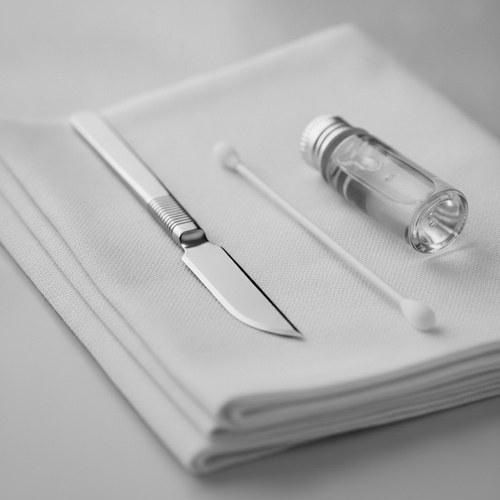
I co-led the 114-patient clinical study evaluating the Planatome surgical blade alongside Michael Sanchez, PhD. The Planatome blade is manufactured with a polishing process that produces a smoother, sharper cutting edge than a standard surgical blade. The study followed patients through standardized incisions and assessed scar quality at multiple time points. The headline finding was a measurable reduction in hypertrophic scarring in the Planatome arm. The trade industry coverage called the reduction significant. I will let other investigators replicate the finding on other populations and in other operations before I make stronger claims, but the result is internally consistent and clinically meaningful.

Why a Cleaner Cut Produces a Quieter Scar

The wound healing cascade begins the moment the blade enters the skin. The depth of the cellular insult at the incision edge is one of the largest single inputs into the inflammatory response that follows. A standard surgical blade, even a brand-new one straight out of the package, has microscopic irregularities along the cutting edge that are functionally invisible to the surgeon at the time. Under a high-magnification image, those irregularities tear the tissue along the incision rather than cleanly transecting it. The cells along the wound edge respond not to the surgeon’s intent but to the cellular environment they are actually in.

A polished, sharper edge produces a different cellular environment. The cells along the incision are cleanly transected rather than crushed. The local inflammatory cascade is quieter. The fibroblast recruitment, the collagen deposition, and the final remodeling that produces the mature scar all start from a different baseline. In the patient who would have formed a flat, fine scar under almost any technique, the difference is invisible because the result was always going to be good. In the patient who would have formed a raised, thickened, hypertrophic scar under any technique, the quieter starting point shifts the curve.

This is the kind of finding that, in retrospect, looks obvious. A sharper knife should produce a cleaner cut and a quieter cellular environment. The reason we needed a study to confirm it is that “obvious” is the most dangerous word in medicine, and the difference between intuition and data is the difference between marketing and a recommendation a surgeon can stand behind.

What the Study Did Not Claim

The study did not claim that blade quality is the only variable in scar formation. It did not claim that a sharper blade will turn a keloid-prone patient into a fine-line healer. It did not claim that the blade matters more than the closure technique, the incision design, the tension on the wound, or the genetics the patient brought with her.

It did claim that, holding the other variables steady, the edge of the blade itself moves the needle. That is a meaningful claim. It is not the only claim.

What I Tell Patients at the Consult

Scar quality is decided across six decisions and one variable I do not control.

The variable I do not control is the patient. Genetics, skin type, anatomic risk, and personal scar history all enter the room with her.

The six decisions are mine. The incision location. The incision orientation. The incision length. The blade. The closure plan, including the layers and the suture choice. The post-operative scar care plan, including silicone, compression, sun protection, and any post-op laser or microneedling on indication.

A sharper blade is the easiest of those six decisions to make. The hardest is honest expectation setting with the patient about what her skin will actually do, regardless of any decision I make.

Where This Lands in Practice

I use the Planatome blade in operations where scar quality is most consequential, including breast augmentation, tummy tuck, mommy makeover, facelift, and any operation on a patient at elevated risk for hypertrophic or keloid scarring.

I also use the study’s existence at the consultation. The patient who wants to know what can be done to give her the cleanest possible scar gets a real answer rather than a vague reassurance, and the answer includes a study I helped design rather than a generic platitude about being careful with the incision.

The trade industry coverage in MPO Magazine framed the result as significant. I would agree. I would also frame it as one of several variables a surgeon can and should optimize for scar quality, and the variable that is easiest to control. The reason it took a 114-patient study to put the finding on the record is that the field genuinely needed the data.

A Brief Word on What the Field Should Do Next

The Planatome study is one data point in a larger conversation about how blade geometry, blade manufacturing, and blade sharpness interact with the inflammatory cascade and the final scar. The questions worth answering next are predictable. Does the effect hold across all skin types and all anatomic locations. Does it hold for procedures that involve electrocautery for the deeper dissection but a cold blade for the initial skin incision. Does it interact with newer scar management modalities, like silicone alternatives, post-op fractional laser, and microneedling at the right interval.

Other investigators will answer those questions in time. The study I co-led is the floor for that work, not the ceiling.

How I Talk About the Whole Scar Equation

When a patient asks “what is my scar going to look like” at a consultation, the honest answer takes ten minutes. It is the most useful ten minutes of the consultation, because the scar is the part of the operation she will see in the mirror for the rest of her life. The plan we make about the scar is the plan we make about her relationship to the result of the operation.

The blade is one part of that ten minutes. The study makes it possible to discuss the blade as a variable backed by real data rather than as a vague reassurance about surgical care. The rest of the ten minutes is still about the patient, the operation, the closure, the post-op plan, and the contingency plan if the scar does not behave the way we hope.

Ready to Talk?

If a planned operation is on your mind and the scar is part of what you are weighing, the first conversation is a consultation. The ten minutes about the scar will be the most useful ten minutes of the visit.

For the clinical patient-facing version of this conversation, see A Sharper Edge: How Blade Geometry Reduces Hypertrophic Scarring on agulloplasticsurgery.com. For the practice-program version of the scar management continuum, see The Scar Management Program at Southwest Plastic Surgery.

Call (915) 590-7900, text 1-866-814-0038, or book online at agulloplasticsurgery.com. #StayBeautiful.

@RealDrWorldWide on Instagram, TikTok, and Snapchat, @Agullo on X, or @AgulloPlasticSurgery on Facebook.

Preservation, Not Minimalism: I Wrote a Manifesto for Connectively

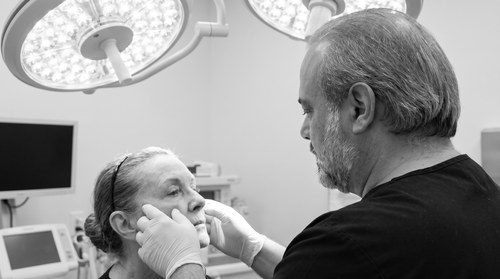
Dr. Frank Agullo, MD, FACS, double board-certified plastic surgeon in El Paso, Texas, in black scrubs in the operating room examining a facelift candidate as part of the preservation-era technique described in his bylined Connectively article.

Preservation, Not Minimalism: I Wrote a Manifesto for Connectively

I keep hearing the same thing in consults. “Doctor, plastic surgery is going smaller now, right? Less volume. Subtler results.”

Half true. Mostly misleading.

Connectively just published my bylined piece on this, and I wanted to push back on the frame in my own voice here too. Volume has not gone anywhere. Patients in my OR this month still wanted fuller breasts. Fuller hips. I still placed implants. I still grafted hundreds of cc of fat per side.

What changed in the last decade is what we refuse to damage when we add that volume.

The Old Bargain

For thirty years, adding volume came with a quiet compromise we did not really put into words for patients.

Breast augmentation, the way I was first taught to do it in training, meant a wide pocket dissection. That meant cutting through the suspensory ligaments of the breast. Those are the fibers that hold the breast up against gravity. We took them down to make room for the implant and we did not think twice about it. The implant looked great at six months. At year five, the breast started to bottom out, and by year ten the patient was back asking what happened.

Gluteal fat grafting in its early era was a free pass. Pre-2015, the field grafted into and through planes that we now know are dangerous. Plenty of surgeons added beautiful volume. A subset of patients did not survive it. The complication that killed people was fat embolism, and the cause was depth, not volume.

Facelifts of that era depended on tension. We pulled skin tight over tissue that had already failed structurally. At one year the patient looked rested. At ten years the patient looked pulled. The lateral sweep. The wind-tunnel mouth. That look did not come from “too much” facelift. It came from a facelift that was working only at the surface.

We did not really articulate any of that to patients at the time. Two reasons. The long-term follow-up data on these trade-offs was incomplete, and in some cases still is. And we did not have reliable alternatives. So we delivered volume, and the side effects came due fifteen years later in someone else’s consult room.

I had the luxury, during my Mayo Clinic plastic surgery fellowship, of seeing both eras in the same hospital. The old habits and the new evidence in the same hallway. That bothered me then. It still drives how I plan a case now. So does the Ponytail Academy training I did later, intermediate course in Pittsburgh, advanced course in Santa Monica, which gave me a deep plane facelift approach that holds at year ten the way an earlier-era SMAS tightening simply does not. Thirteen consecutive Castle Connolly Top Doctor years (2014 through 2026) is a long enough patient sample to feel honest about that claim.

What Preservation Actually Looks Like in My OR

The word “preservation” gets used loosely. So let me show you what it actually means at a case-planning level, by procedure.

Breast Augmentation

I am using ergonomic, lighter implants now (Motiva is the line I use most, see my Motiva Preserve post for what the recovery actually looks like). They project differently, with less weight per cc on the native tissue. That alone lets me use a slightly smaller implant for the same on-camera result.

My pocket dissection is narrower. The suspensory ligaments of the breast, particularly the inframammary ligament along the fold, are preserved instead of divided. The dual-plane release is precise rather than broad. The implant sits where I put it and stays there, because the soft tissue scaffold underneath it is still intact.

My patient leaves the OR with a result that looks finished on day one. The deeper test is what the breast looks like at year five and year ten. That is what preservation buys.

Gluteal Fat Grafting

If you are a regular reader, you know I do not graft above three or four hundred cc per side without a reason. The reason for me is not volume restraint. It is plane discipline.

Every BBL I do is ultrasound-guided. The probe sits on the buttock while I am cannulating. I can see the fascia. I can see the cannula. I can see the plane I am working in, in real time. That is not optional anymore. That is the standard.

Three hundred, four hundred, five hundred cc per side is achievable safely now in carefully selected patients with the right anatomy. Volumes that fifteen years ago carried a risk profile I would not accept. The volume number is not the safety story. The plane is the safety story.

This is the era I trained into. I sit on safety task forces for the Aesthetic Society and the conversation is no longer whether to use ultrasound. It is which probe and how to teach it.

Facial Volume

Here is where most patients have the wrong mental model entirely.

The patient sits down and tells me, “I do not want to look puffy. I do not want filler face.” Good. Neither do I. So I am going to put more volume in your face than you think, just not where you are picturing it.

Aging is not a wrinkle problem. Aging is a volume-loss problem. Deep facial fat compartments empty out over decades. Bone resorbs. The midface loses structural support. The skin you can see is the last thing to fail, and tightening it without restoring what collapsed underneath is the wind-tunnel facelift I described above.

A preservationist face today gets more volume, placed deeper, in the compartments that actually emptied. Buccal extension. Deep medial cheek. Pyriform aperture. Done correctly, the patient does not look “added to.” They look like themselves, ten years younger, because the architecture is back. I cover the technique side of this in my Deep Plane and Ponytail Lift post on this same site.

The Face Volume Surprise

I want to sit with this one for a paragraph because it is the most counterintuitive part of the whole conversation.

Filler trends pushed in the opposite direction. We watched a decade of overfilled, surface-level work go viral. Patients walked into my office showing me Instagram screenshots of what they did not want. Reasonable.

The correction was not less volume. It was deeper volume.

Volume placed superficially, in the wrong compartment, without regard for architecture, gives the puffed, frozen, unnatural read everyone fears. Same patient, same milliliter count, placed in the deep medial cheek and along the bony pyriform: that patient looks rested, not filled. The volume restored structure. It did not distort it.

This is also why I keep telling patients that fillers, used the wrong way, are a tax. You pay every nine to eighteen months, and you slowly add surface volume in places that should not carry it. A correctly planned surgical fat graft, deep, compartment by compartment, lasts years and does the architectural job instead of the cosmetic one.

What To Ask At Your Consult

If you take one practical thing from this piece, take this. The question to bring to a consultation is no longer “How much volume can I get?”

The better one is “What do I want preserved?”

For a breast augmentation: ask the surgeon how wide the pocket dissection is, and how they handle the inframammary ligament.

For a gluteal fat graft: ask whether ultrasound guidance is used intraoperatively, and which plane they graft into.

For a facelift or facial volume restoration: ask which compartments they target, and at what depth.

A surgeon who answers in those terms is operating in the modern framework. A surgeon who answers only with the volume number, with no thought to what is preserved underneath, is using a thirty-year-old playbook on a 2026 patient.

I wrote the full version of all of this for Connectively, with examples and the broader case the field needs to make to patients. You can read it here.

Volume was never the issue. It never was. What we have learned, sometimes the painful way, is that volume and preservation are not in opposition. The craft is knowing precisely where to put what you add, and what you refuse to damage to get there.

That is the shift worth paying attention to.

Ready to Talk?

If you want to have this conversation in person, my office line is (915) 590-7900 and our text consult line is 1-866-814-0038. Book online at agulloplasticsurgery.com. Follow along at @RealDrWorldWide on Instagram, TikTok, and Snapchat, @Agullo on X, and @AgulloPlasticSurgery on Facebook.

#StayBeautiful

The Repair Your Insurance Calls Cosmetic: Diastasis Recti After Three Babies

Editorial black and white side-profile portrait of a postpartum woman in a silk slip, one hand resting across her midsection, sculptural side light casting a long architectural shadow on the wall behind her. Dr. Frank Agullo, MD, FACS, double board-certified plastic surgeon in El Paso, Texas, on diastasis recti and the insurance gap.

Last week HuffPost ran a piece by a mother of three who paid out of pocket to repair the abdominal wall that pregnancy had separated. The editor reached out to me for the surgeon’s perspective. I will repeat here what I told them.

Insurance companies will prescribe painkillers for decades to manage the back problems caused by an unrepaired diastasis recti. They will not pay to repair the separation itself. They will call the repair cosmetic, because the separation is not an emergency. That word, “cosmetic,” is doing an enormous amount of work in that sentence, and most of it is wrong.

Diastasis recti is not a flat-stomach problem. It is a structural problem with a cosmetic side effect.

What Diastasis Recti Actually Is

You have two long bands of abdominal muscle running down the front of your torso, one on each side of your midline. They are connected in the middle by a thin sheet of connective tissue called the linea alba. Pregnancy stretches that sheet. So does certain types of weight gain. In some women, the sheet stretches and recovers. In others, it stretches and stays stretched, and the two muscle bands stay further apart than they were before.

That is diastasis recti. The muscles themselves are fine. The wall between them is not.

When the wall between them is loose, the core can no longer brace the way a closed abdominal wall braces. Standing posture changes. The lower back has to do more work. Pelvic floor symptoms get worse. Some patients develop a visible dome that appears when they try to sit up out of bed. Some develop a true ventral hernia at the umbilicus and need a repair regardless of how the rest of the abdomen looks.

None of that is cosmetic.

How to Tell Diastasis Recti from the Other Things It Gets Confused With

This is the comparison most postpartum women are not given. They walk into a primary care visit, they describe a soft belly that did not bounce back, and they leave with “try some core work.” That is sometimes the answer. Sometimes it very much is not.

Diastasis Recti Loose Skin Only Soft Postpartum Belly
What is separated Linea alba is stretched, rectus muscles sit apart Nothing structural Nothing structural
Visible sign A dome or ridge when you try to sit up from lying flat Skin laxity, stretch marks Soft fullness that responds to weight loss
Back pain pattern Common, often years of it Uncommon Uncommon
Hernia risk Real Low Low
Helped by core PT alone Sometimes, sometimes not No Yes
What a real repair requires Plicating the rectus muscles back to midline, surgically Skin excision No surgery at all
Insurance label “Cosmetic” “Cosmetic” N/A

The table is honest about what physical therapy can do and what it cannot. For some patients, a good pelvic floor and core program closes the gap enough that they live a normal active life. For others, the connective tissue is permanently stretched, and no amount of training will rejoin it. PT cannot reattach a ligament. PT cannot close a hernia. PT cannot bring two muscle bellies that have been pulled apart by three pregnancies back to the midline.

When PT is the answer, I send patients to PT. When PT is not the answer, I tell them that too.

Who Is a Candidate for Surgical Repair

I look for three things in consultation. First, a real, measurable diastasis on physical exam, ideally confirmed on ultrasound or CT if the case is complicated. Second, symptoms that match the anatomy: back pain that started or worsened after pregnancy, core weakness, pelvic floor strain, the visible dome, or an umbilical hernia. Third, a patient who is finished having children and is at a weight she can hold steady through recovery.

If all three are present, surgical repair (most often as part of a tummy tuck, sometimes as a standalone abdominal wall reconstruction) is the operation that actually solves the problem. The rectus muscles are plicated back to the midline with permanent or long-acting suture. Loose skin and stretched lower-abdominal tissue are addressed at the same time. A hernia, if there is one, is repaired in the same operation.

That is a real surgery. It is not a vanity procedure. The fact that the patient also looks like herself again when she heals does not retroactively make the medical problem cosmetic.

Why the Insurance Argument Bothers Me

Here is what insurance pays for happily. Years of physical therapy that did not work. Anti-inflammatory medications. Muscle relaxants. Eventually opioids for the back pain. Specialist visits for the pelvic floor. Hernia repairs when the umbilical hernia finally herniates, because at that point the structural argument is impossible to deny.

Here is what insurance will not pay for. The one operation that addresses the root cause before the years of medication and the eventual hernia repair.

That is not medical sense. That is accounting.

I told HuffPost what I will tell you. The word “cosmetic” is being used as an exclusion code, not a clinical description. Diastasis recti repair has a strong functional rationale. The peer-reviewed literature has been catching up for years. A handful of insurers are starting to cover it under narrow circumstances. Most still will not.

Why You Want This Done Right

A diastasis repair done poorly recurs. The suture line pops, the dome comes back, the symptoms come back, and the patient now has a scar and a redo on her list. A diastasis repair done well lasts decades.

What separates the two is technique. The closure has to be tension-balanced and layered. The plication has to extend the full length of the diastasis, not just the visible portion. The surgeon has to understand the umbilical stalk well enough to address a small hernia if one is hiding there. The recovery instructions have to actually protect the repair while it heals.

I trained in general surgery before I trained in plastic surgery. I did my plastic surgery fellowship at Mayo Clinic. I teach abdominal wall and body contouring as a Clinical Associate Professor of Plastic Surgery at Texas Tech University Health Sciences Center. I have been Castle Connolly Top Doctor for thirteen consecutive years. I am explaining the procedure to you the way I explain it to the residents and fellows who scrub with me. Because that is the version that actually holds up.

Why Choose Dr. Agullo

Double board-certified (American Board of Plastic Surgery, American Board of Surgery). Fellow of the American College of Surgeons. Mayo Clinic plastic surgery fellowship. Clinical Associate Professor of Plastic Surgery, Texas Tech University Health Sciences Center. Affiliate Professor, UTEP. Castle Connolly Top Doctor, thirteen consecutive years. Founder of Southwest Plastic Surgery and Plastic Surgery Studios. Quoted in HuffPost, USA Today, Allure, Texas Today, and Featured.com on procedures across the face and body. Over 3.5 million followers across Instagram, TikTok, and Snapchat.

Ready to Talk?

If you have been told for years that what you are feeling in your abdomen is “just being a mom,” or that the back pain that started after your last delivery is something you need to live with, come see me. I will examine you, tell you whether what you have is a diastasis, and tell you honestly whether surgery is the right answer for your case. If physical therapy is still your best move, I will say that. If repair is the right answer, I will explain what that operation involves and what your recovery looks like.

Call (915) 590-7900, text 1-866-814-0038, or book online at agulloplasticsurgery.com/appointments. Follow along on social at @RealDrWorldWide on Instagram, TikTok, and Snapchat, @Agullo on X, or @AgulloPlasticSurgery on Facebook. #StayBeautiful.

The Vial in the Vanity: A Plastic Surgeon’s Honest Read on the GLP-1 Glow-Up

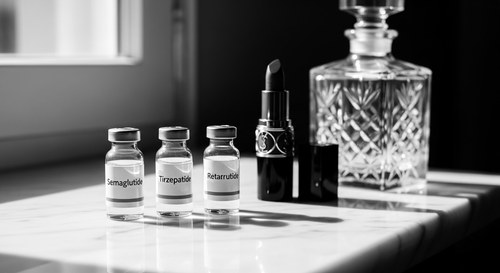
Three vials of compounded semaglutide, tirzepatide, and retatrutide on a vanity, greyscale editorial image, GLP-1 weight loss program at Southwest Plastic Surgery overseen by Frank Agullo, MD, FACS, double board-certified plastic surgeon in El Paso, Texas

A patient came in last week and put her phone on my desk. Photo of her vanity drawer. Serum she couldn’t pronounce. Her mother’s old YSL lipstick. A small fridge pouch with a vial of compounded semaglutide. Which of the three, she asked me, was actually doing the work.

Keep all three. Probably not for the reasons she thought.

This kind of question hits my office a lot now. Several times a week. Eighteen months ago it was once a month. And the women asking aren’t the ones with a hundred pounds to lose. They eat clean. They do Pilates. They’re stuck on the last fifteen before a wedding, a fiftieth, or a surgery date already on my books. Ozempic. Mounjaro. Now, more and more, the third one. The one their trainer keeps name-dropping. Retatrutide.

So let me answer the way I’d answer across the desk, without the marketing copy.

Three vials, three generations

The brand names dominate the popular conversation. The compounds underneath are not the same drug.

Semaglutide is the one everyone started with. Single receptor. Mimics GLP-1, the gut hormone for satiety. Translation: walks into your brain and tells you you’re not hungry, and means it. Trial data puts loss around fifteen percent of body weight by twelve months. Life-changing for plenty of people. On some faces, it also produces the hollow look the wellness columns have been calling Ozempic face. I’ll get to that.

Tirzepatide added a second receptor. GLP-1 plus GIP, an insulinotropic peptide. What the GIP receptor does, on the data we have, is two things. It spares a bit more lean mass. And it pushes loss past where sema usually stalls. Twenty percent at twelve months is where good responders are landing in the trials. In my program, tirz is where I move someone after sema plateaus and the scale stops moving.

Retatrutide is the newest. Three receptors. GLP-1, GIP, and glucagon. Early-phase data is striking. Patients pushing toward twenty-five percent loss at a year, which is a number that didn’t exist in this category two years ago. We offer it as a compounded formulation. Not casually. The patients we put on it are screened with a level of caution that the popular coverage hasn’t, frankly, been encouraging.

Compound Receptors Typical loss at 12 months Where it fits in our program
Semaglutide GLP-1 ~15% Default for most patients
Tirzepatide GLP-1 / GIP ~20% Plateaued patients, or larger loss goals
Retatrutide GLP-1 / GIP / glucagon ~25% Specific candidates, closely supervised

These are not interchangeable shots. Choosing among them is a clinical call. Not a pricing decision.

The face the internet noticed

So about that hollow look.

Weight comes off the face first. Cheeks lose volume. Temples sink. The jawline appears, but the skin that draped over a fuller face is now draping over nothing. People call it Ozempic face. A surgeon calls it volume loss layered on top of skin laxity that the weight had been hiding.

Not a reason to skip a GLP-1. A reason not to take one in a vacuum.

The fix, when needed, is the kind of thing I do every week. Filler done by someone who actually does faces. A deep plane facelift if the laxity is real. A skin program in any case. What I do not want is the patient who spent six months losing weight and only realizes at month seven that no one on her care team was thinking about her face. Body and face are one conversation. They have to be.

Where this gets interesting

This is the side of the GLP-1 story I find more fascinating than anyone else seems to. The wellness press isn’t writing about it. The trainers aren’t. The patients usually haven’t put the pieces together yet.

A patient drops thirty to forty pounds in three months on one of these drugs (a number we see week in and week out now) and walks into my body contouring consult a meaningfully different person than she’d have been at her starting weight. The fat is gone. The skin envelope she’s wearing was sized for the fat. That gap is where my side of the work begins.

I lay hands on an abdominal wall that, three months earlier, would’ve been hidden under a layer of subcutaneous fat thick enough to bury the rectus muscles. I feel the diastasis through skin. A real triple plication is suddenly on the table. So is a waist reduction I used to reserve for thinner patients. The BBL I’d have offered her at her starting weight isn’t the BBL I’d offer today. Proportions changed. Canvas changed. What I can build on it changed.

The GLP-1 didn’t produce that result. It let me do the operation I’d have done anyway, except now the operation hits twice as hard.

That’s the quiet thing nobody’s writing about. The aesthetic ceiling on body contouring went up the day this drug class went mainstream. Every plastic surgeon I know who’s been operating on bodies for fifteen-plus years is having some version of this realization, mostly in private, mostly over coffee at the annual meetings.

How our program runs

Patients ask less than they should about how a weight loss program is supervised. So here is ours.

I am the medical director. My nurse practitioner runs day-to-day. I stay in the loop on dosing, intake, and any patient who needs a second medical opinion before we change anything. Labs at intake, no exceptions. Nobody on my team hands a vial to a patient who has only filled out a form.

That sounds heavier than the GLP-1 you can have shipped after a five-minute online questionnaire from an Instagram brand. The point is that it is. Pancreatitis is the side effect that should make patients nervous about how they get their drug. A flare on a shot you ordered yourself becomes a 2 a.m. trip to an ER where a stranger has to figure out what you took and at what dose. The same flare on the same drug, prescribed in our program, is a phone call to my office, where your chart is already open.

One more thing about the glow

A patient asked me last month, half-joking, whether the program would make her glamorous. I told her it would not.

What it will do is hand her back a body she can dress, photograph, and walk into a room in without the internal commentary that comes with the wrong size of denim. That is what patients are pointing at when they say glow. The rest of glamour, the part the wellness press is trying to bottle, is built out of unsexy fundamentals nobody puts on a billboard. Sleep. Skin care. The correct surgery if and only if. A stress level somewhere south of catastrophic.

I have been doing plastic surgery long enough to watch four or five “miracle” technologies arrive and underdeliver. The GLP-1 class, on the evidence so far, is the rare one doing more than it advertised. That deserves real respect, and respect means running it like medicine, not a cosmetic line.

Why this lives inside a plastic surgery practice

A weight loss program in 2026 isn’t an isolated medical service. It’s a step inside a longer arc. Face, body, skin, recovery, sometimes surgery. Pretending otherwise is how patients end up disappointed by the result they paid for.

I’ll say it. The Mayo Clinic fellowship taught me, above everything else, to treat volume, skin envelope, and structural support as one system. Not three. One. The thirteen straight years on the Castle Connolly list, the Texas Tech academic appointment I’ve held since 2011, the peer-reviewed work, all of it points the same direction: stay close to what actually moves a patient’s outcome, and let the rest go. None of that overlapped with weight loss medicine until the medicine started visibly reshaping who walks into a body contouring consult. Once that happened, sending the program to a med spa across the parking lot was never going to be my answer.

So I run it. With my NP. With my chart open in front of me on the days a patient needs an actual physician on the line.

Ready to talk?

A GLP-1 is a medication. The first move should be a conversation, not a prescription. Bring your goals. Bring any recent labs. Bring a photo of the version of yourself you are trying to come back to. If surgery is also on your mind, we plan the arc together. If the only goal is to drop fifteen pounds and feel like yourself again in clothes, that is a real goal too, and we run that program with the same care.

Call (915) 590-7900, text 1-866-814-0038, or book online at agulloplasticsurgery.com. Follow along on social at @RealDrWorldWide on Instagram, TikTok, and Snapchat, @Agullo on X, or @AgulloPlasticSurgery on Facebook. #StayBeautiful

Back Street’s Back!

Of all the performances at the 2018 VMAs, the one we were most excited about was the Back Street Boys! The show came on the 20th anniversary of their first appearance on the VMAs in 1998.  Their songs have remained in loyal fans’ playlists for that entire time.

Truly, though the band went through changes and breaks, they never truly left the entertainment business.  A look through pictures from the last twenty years documents their changing hairstyles and fashions, some more hilarious than others, but those same pictures also document a lack of change in their facial and body appearance. Though their outward look became more defined, svelte, and mature, they don’t actually look any older! How did they do that?

Age Defiance

As performers, the boys of Back Street have access to makeup artists and stylist who keep them looking sharp for the public eye.  Additionally, their shows involve a major dance component, which require regular practice and workouts to perfect. You probably don’t have this kind of resource to dress and prepare you daily, not to mention the need to perform your workouts on perfectly on stage. But you can get the kind of help that helps you look 20 years younger!

Facial, Body, andHair Restoration in El Paso

Dr. Agullo and the team at Southwest Plastic Surgery can keep you looking your best, and when you look great, you also feel great! Whether you need to restore your hairline, fill in the lines or lift your face, or sculpt your body you can trust Dr. Agullo to give you a beautiful look.  Check out our before and after photos and follow us on social media: @RealDrWorldWide on Snapchat and Instagram, @Agullo on Twitter, or @AgulloPlasticSurgery on Facebook.

Natural Woman, Natural Confidence

img-blog-Black and white fashion art studio portrait of beautiful elegant woman

No matter what picture you look at, Ms. Aretha Franklin looks full of confidence and frequently, joy. Determination was in her eyes, while happiness lights up her smile. The Queen of Soul always seemed to be confident and composed. 

Now it’s true that some of this could have been accomplished with a small army of stylists, but we prefer to think that most of her confidence came from within!

Lamenting Lady Soul

Aretha had plenty to feel confident about. Her voice, her position, her look; her professional life was amazing. Those who were fortunate enough to see her perform live often talked about how much a part of her music she was. Whatever she was singing was what she was living at that moment. Her passing leaves a huge hole in the fabric of the entertainment world, a darkness where there was previously light. She will be greatly missed.

Draw from Her Strength

When you think about being more confident in your life, think about Aretha. Channel her lively spirit. Turn on “RESPECT” and make that song your mindset for the day. If you still feel like you need a little help looking and feeling confident, contact Southwest Plastic Surgery. 

Whether you are looking to trim extra skin after a massive weight loss or recontour your body after pregnancy,  Dr. Agullo can give you several ideas for how you can look and feel great in your own body. Get social with us for more ideas: @RealDrWorldWide on Snapchat and Instagram, @Agullo on Twitter, or @AgulloPlasticSurgery on Facebook.

“Say Yes to The Dress!”

Body contouring model

Summer is the season of weddings! Whether you are one of the many brides planning to walk down the aisle this summer, one of the bridesmaids, or planning your wedding for next summer, you know that the wedding gown is a key element in making the day perfect.

Every girl who dreams of a wedding, dreams of the perfect dress, the perfect location, the perfect spouse waiting for her at the altar. And while traditionalism may be on the way out, it’s a perennial truth that the bride should look and feel fabulous in her dress, whether it’s a high collared, long sleeved, white satin dress or a champagne colored ballgown with a plunging neckline.

Speaking of Traditionalism

Supposedly, brides shouldn’t show off too much of their bodies as they walk down the aisle, but every bride wants to feel confident. So whether you’ve chosen a haute couture gown to show off your torso, a sleek, backless sheath, or a strapless, mermaid gown, chances are that you’ll need to eat well and exercise to keep your gown fitting right and make the most of your exposed arms, back, and abs. But what can you do about your breasts? No amount of diet or exercise can make them fuller, and a push-up bra will only work if you’re covering your assets. But if you’re still planning your wedding and dress, why not consider breast implants to voluptuously fill your gown and help you feel confident and sexy on your big day.

Dr. Agullo specializes in breast augmentation and body contouring. You can get your best bridal body with a little help from your friends at Southwest Plastic Surgery. Check out our before and after galleries and follow us on social media: @RealDrWorldWide on Snapchat and Instagram, @Agullo on Twitter, or @AgulloPlasticSurgery on Facebook.