Traditional Chinese Medicine and Hair Loss: What the Evidence Actually Supports, and What to Be Careful With

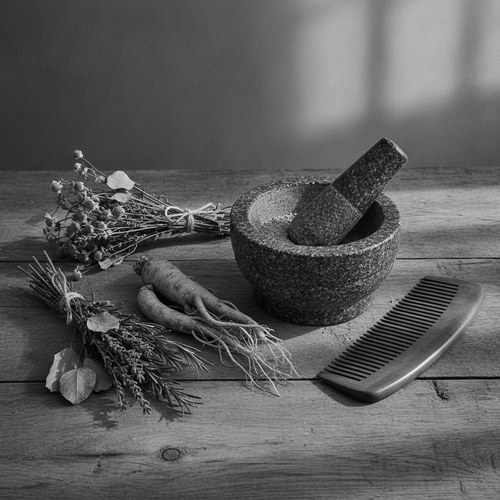
Black and white editorial still of dried botanical herbs beside a mortar in soft side light. Traditional Chinese medicine and hair loss, by Dr. Frank Agullo, MD, FACS.

He shou wu. People take it for their hair, and most of them have no idea it is one of the most reported causes of herbal liver injury in the world.

I get a lot of questions about Chinese medicine for hair. I never dismiss it out of hand, because some of it actually has studies behind it. But the he shou wu story is why I always say the same thing first. All natural does not mean automatically safe. So here is my plain version, the parts that work and the parts to watch.

Before grading any remedy, I want to be precise about what we are even treating. Normal shedding is fifty to a hundred hairs a day. True hair loss is more than that. The hair that grows back comes in thinner, with worse texture and worse density. We call that miniaturization. Here is the part that matters most. A shrunken follicle can still be revived with growth factors, medications, or therapies. A lost follicle cannot be brought back. So any herb that claims to help has to be judged against that line.

So What Is Traditional Chinese Medicine, Really?

It is a compounding of various treatments and diagnostic principles developed in China. Like a lot of Eastern medicine, it treats the body as one connected system and cares a lot about balance across that whole network. Herbs, acupuncture, diet, massage. On hair specifically, the thinking ties hair health to blood circulation and the kidneys. Hair is something you can see, so when it declines, they read that as the person’s vitality declining.

The Herb to Be Careful With

Polygonum multiflorum is a plant used in Chinese medicine to support the health and growth of hair. It can even counteract hair whitening. It acts on three mechanisms at the same time: DHT damage inhibition, cellular protection, and circulatory improvement of the scalp.

Here is the candid part. Most of the studies have been in vitro, which means in the lab, and in animals, and there hasn’t really been a strict comparison against Western medical treatments. There have been some cases of liver damage using this herb. Worldwide, it is one of the most reported causes of herbal liver injury. The risk is higher when using the raw root rather than the processed version. The reaction is really unpredictable. And since this is a dietary supplement, it’s not regulated by the FDA in the same way that traditional medication is.

That is exactly the kind of thing patients need to hear before they order a supplement off the internet because it is natural.

The Ones the Evidence Treats More Kindly

Ginseng is among the most well-known and most extensively researched traditional Chinese medicine herbs. It promotes scalp blood circulation, and the existing research shows promise and encouraging results.

Angelica sinensis was traditionally known as a blood tonic. It is an herb they believe moves blood, or prevents stagnation. Some of the published studies include laboratory research showing anti-inflammatory properties and improved circulatory blood flow.

Scalp acupuncture is the one that interests me most as a surgeon. If we think about it, it almost behaves like microneedling, which we’ve shown scientifically to improve hair growth. It improves the microcirculation of blood flow to the hair follicles.

Scalp massage is perhaps the simplest recommendation, and it has been scientifically proven to work. It improves circulation, which seems to be a recurring theme here, and studies have shown it can increase hair thickness and the number of hairs.

The Recurring Theme

Notice the pattern across the items that hold up. Ginseng, acupuncture, massage, and even the microneedling we do in clinic all improve the same thing, which is scalp circulation. It seems to be a recurring theme, and it is probably why the modern regenerative tools and the older traditions sometimes land in the same place.

The Two Things to Take Away

Well, I think the most important thing to know is that a remedy being all natural does not mean that it is automatically safe. There are dangers, like we spoke about previously with Polygonum multiflorum. And second, the most important thing is to visit a physician for consultation as soon as hair loss begins. This is the time when therapies can be initiated and actually help, and it’s also helpful to rule out any reversible causes.

The Credential Behind the Opinion

Double board-certified by the American Board of Plastic Surgery and the American Board of Surgery, American College of Surgeons Fellow, Mayo Clinic plastic surgery fellowship, member of the International Society of Hair Restoration Surgery, and Castle Connolly Top Doctor for thirteen consecutive years. I am happy to talk about the traditions seriously, and just as happy to tell you which herb has a liver-injury problem.

Ready to Talk?

If you want a read on what is worth trying and what is worth avoiding for your hair, that is a consultation.

For the patient-facing guide to the hair cycle and the five most common causes, see the companion post on agulloplasticsurgery.com. For the scalp-health and hair-restoration program at the practice, see the version on swplasticsurgery.com.

Call (915) 590-7900, text 1-866-814-0038, or book online at agulloplasticsurgery.com. #StayBeautiful.

@RealDrWorldWide on Instagram, TikTok, and Snapchat, @Agullo on X, or @AgulloPlasticSurgery on Facebook.

Traditional Chinese Medicine and Hair Loss: What the Evidence Actually Supports, and What to Be Careful With

Black and white editorial still of dried botanical herbs beside a mortar in soft side light. Traditional Chinese medicine and hair loss, by Dr. Frank Agullo, MD, FACS.

He shou wu. People take it for their hair, and most of them have no idea it is one of the most reported causes of herbal liver injury in the world.

I get a lot of questions about Chinese medicine for hair. I never dismiss it out of hand, because some of it actually has studies behind it. But the he shou wu story is why I always say the same thing first. All natural does not mean automatically safe. So here is my plain version, the parts that work and the parts to watch.

Before grading any remedy, I want to be precise about what we are even treating. Normal shedding is fifty to a hundred hairs a day. True hair loss is more than that. The hair that grows back comes in thinner, with worse texture and worse density. We call that miniaturization. Here is the part that matters most. A shrunken follicle can still be revived with growth factors, medications, or therapies. A lost follicle cannot be brought back. So any herb that claims to help has to be judged against that line.

So What Is Traditional Chinese Medicine, Really?

It is a compounding of various treatments and diagnostic principles developed in China. Like a lot of Eastern medicine, it treats the body as one connected system and cares a lot about balance across that whole network. Herbs, acupuncture, diet, massage. On hair specifically, the thinking ties hair health to blood circulation and the kidneys. Hair is something you can see, so when it declines, they read that as the person’s vitality declining.

The Herb to Be Careful With

Polygonum multiflorum is a plant used in Chinese medicine to support the health and growth of hair. It can even counteract hair whitening. It acts on three mechanisms at the same time: DHT damage inhibition, cellular protection, and circulatory improvement of the scalp.

Here is the candid part. Most of the studies have been in vitro, which means in the lab, and in animals, and there hasn’t really been a strict comparison against Western medical treatments. There have been some cases of liver damage using this herb. Worldwide, it is one of the most reported causes of herbal liver injury. The risk is higher when using the raw root rather than the processed version. The reaction is really unpredictable. And since this is a dietary supplement, it’s not regulated by the FDA in the same way that traditional medication is.

That is exactly the kind of thing patients need to hear before they order a supplement off the internet because it is natural.

The Ones the Evidence Treats More Kindly

Ginseng is among the most well-known and most extensively researched traditional Chinese medicine herbs. It promotes scalp blood circulation, and the existing research shows promise and encouraging results.

Angelica sinensis was traditionally known as a blood tonic. It is an herb they believe moves blood, or prevents stagnation. Some of the published studies include laboratory research showing anti-inflammatory properties and improved circulatory blood flow.

Scalp acupuncture is the one that interests me most as a surgeon. If we think about it, it almost behaves like microneedling, which we’ve shown scientifically to improve hair growth. It improves the microcirculation of blood flow to the hair follicles.

Scalp massage is perhaps the simplest recommendation, and it has been scientifically proven to work. It improves circulation, which seems to be a recurring theme here, and studies have shown it can increase hair thickness and the number of hairs.

The Recurring Theme

Notice the pattern across the items that hold up. Ginseng, acupuncture, massage, and even the microneedling we do in clinic all improve the same thing, which is scalp circulation. It seems to be a recurring theme, and it is probably why the modern regenerative tools and the older traditions sometimes land in the same place.

The Two Things to Take Away

Well, I think the most important thing to know is that a remedy being all natural does not mean that it is automatically safe. There are dangers, like we spoke about previously with Polygonum multiflorum. And second, the most important thing is to visit a physician for consultation as soon as hair loss begins. This is the time when therapies can be initiated and actually help, and it’s also helpful to rule out any reversible causes.

The Credential Behind the Opinion

Double board-certified by the American Board of Plastic Surgery and the American Board of Surgery, American College of Surgeons Fellow, Mayo Clinic plastic surgery fellowship, member of the International Society of Hair Restoration Surgery, and Castle Connolly Top Doctor for thirteen consecutive years. I am happy to talk about the traditions seriously, and just as happy to tell you which herb has a liver-injury problem.

Ready to Talk?

If you want a read on what is worth trying and what is worth avoiding for your hair, that is a consultation.

For the patient-facing guide to the hair cycle and the five most common causes, see the companion post on agulloplasticsurgery.com. For the scalp-health and hair-restoration program at the practice, see the version on swplasticsurgery.com.

Call (915) 590-7900, text 1-866-814-0038, or book online at agulloplasticsurgery.com. #StayBeautiful.

@RealDrWorldWide on Instagram, TikTok, and Snapchat, @Agullo on X, or @AgulloPlasticSurgery on Facebook.