Three Days in Boston: A Surgeon’s Read on The Aesthetic Meeting 2026

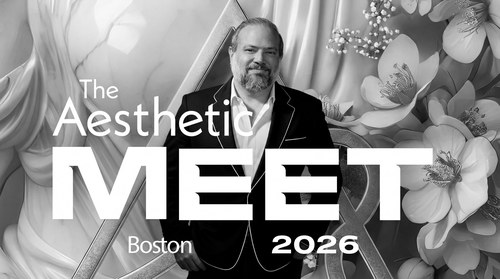
Dr. Frank Agullo, MD, FACS, double board-certified plastic surgeon, at The Aesthetic Meeting 2026 in Boston, in front of the The Aesthetic MEET Boston 2026 floral and gold branded backdrop, where he presented in the practice-management track on AI for reputation management.

Three Days in Boston: A Surgeon’s Read on The Aesthetic Meeting 2026

The Aesthetic Society’s annual meeting wrapped Sunday in Boston after kicking off on Wednesday. The press releases will tout innovation and “the next big thing.” For me, what actually mattered came out of three days of panels, technique sessions, and lobby-bar conversations with surgeons who do this work every week.

I came home with three things: the rise of the deep plane facelift, the evolution of the rules around endoscopic access, and AI. I am saving AI for last because there is the most to unpack there.

The Deep Plane Was the Room

The entire track devoted to deep plane facelifts was the focal point of the face program this year. Full rooms. I would guess that half the attendees already perform deep plane dissections and were present for subtle refinements rather than basic technique. The other half are clearly contemplating the move. Just five years ago, you would find a deep plane discussion running opposite a SMAS plication panel that would pack the bigger convention center room. Now the SMAS panels are the side rooms, empty except for the hardy few who still rely solely on that dissection.

I had several key takeaways from the deep plane content.

The neck content was tighter than I have seen it in years. Speaker after speaker explained the same idea from different perspectives. Durability in the neckline truly comes from the deep neck. The sub-platysmal compartment, the digastric muscles, the submandibular gland, the deep fat. A platysmaplasty alone, done superficial to that compartment, gets you a decent result at three months and a disappointing one at three years. The data on properly executed direct sub-platysmal work, including selective digastric reduction and partial submandibular gland resection in the right anatomy, is solid enough that the focus of the discussion is no longer “should we do it,” but “on whom, and to what extent.”

The midface release content was stronger than last year. The zygomatic ligament releases that I routinely include in my deep plane were thoroughly confirmed by anatomical talks and by ten-year-plus follow-up photos. The newer development this year was a more aggressive discussion around the masseteric ligaments and the platysma-auricular ligament, with several speakers now strongly recommending full versus partial release. It gave me pause. I am hesitant to adopt much more aggressive ligament releases without firsthand dissection experience on cadavers. Boston was a stark reminder to schedule cadaver lab time before I move my own technique to include deeper and wider releases.

The submandibular gland question turned out to be less about whether to reduce the gland and more about where to put the scar. A vocal subset of surgeons is committing to a longer low cervical incision, almost at the neck crease, to give themselves direct line of sight to the gland. I have a hard time with that. The submental incision under the chin hides beautifully in the natural shadow, and that is the access I prefer for partial gland reduction. For hemostasis I use the LigaSure, which most of the room supported. I also keep a cell saver running as a backup. If we have any meaningful blood loss the patient gets her own red cells back instead of someone else’s. It is an inexpensive safety net for an elective operation and there is no good reason not to have one in the corner of the room.

The opinionated take after the weekend. Deep plane has won. The remaining question is not whether to operate beneath the SMAS. It is how deep, how wide and on which patient.

Endoscopic Access Evolved, Rules Solidifying

The endoscopic facelift track ran parallel to the open deep plane sessions, which was the right organization. The fundamental dissection philosophy and tissue manipulation are the same. The problem lies in the access route and the visualization.

I trained for the endoscopic deep plane, the operation often referred to as the Ponytail Lift, at the Ponytail Academy. The intermediate course was in Pittsburgh and the advanced course was in Santa Monica. I came to Boston wanting a clearer picture of which patients are actually good candidates for this approach versus which ones absolutely need the open operation. This year’s meeting delivered.

The endoscopic deep plane facelift is the right operation for the patient who is beginning to experience descent in the midface and brow, still has robust skin elasticity, and has a firm refusal of any pre-auricular scarring. Hairline incisions simply vanish into the temporal and post-tragal tufts. The surgical dissection plane is exactly the same as my workhorse open deep plane. The outcome is a full deep plane lift without any external signs that surgery happened.

Conversely, the endoscopic deep plane is the worst operation for the patient with significant skin laxity, jowl-dominant aging in the lower third of the face, or a long ear-lobe-to-mandible distance that is clearly going to demand open redraping to get a good twelve-month result. A few speakers were refreshing in their blunt honesty. The conversion-to-open rate when you over-select for the endoscopic lift is a real number, and the twelve-month photos show it on their own, whether you present them or not.

The fixation chatter was useful. Endotines and bone-anchored fixation are not the hardline debate they used to be. Most rooms I sat in are converging on suture fixation to the deep temporal fascia for the temporal and lateral fixation in primary cases. For that part of the operation, my hands look like everyone else’s. The midface is where I split off. In my hands, the endoscopic Ponytail Lift with an Endotine Ribbon at the midface delivers a stronger and more durable lift than any suture-only construct I have tried, and Boston did not show me a long-follow-up photo set that gave me a reason to put the Endotine Ribbon away.

There is one more piece of my technique I want to mention here, because patients ask about it on consult. When the face calls for an open deep plane in 2026, I am running a hybrid. The brows, forehead and midface go through Ponytail Lift access, with the Endotine Ribbon midface fixation. The lower face and the deep neck get the open deep plane. The combination, on the right patient, gives me the lift quality of an open deep plane in the lower face with the scar discipline of the Ponytail Lift across the top of the face. Boston did not invent that operation for me. Boston confirmed that the surgeons whose twelve-month photos I trust are quietly doing the same thing.

AI’s Clinical Relevance? Underwhelming.

So, AI.

I went into those sessions wanting to be impressed. A real-world intraoperative ligament mapping tool. A planning system that shaves time off my deep plane markup without introducing risk. A preoperative simulator that produces an outcome image the patient can actually rely on instead of being fooled by. Anything someone is using on a real patient next Tuesday.

Nobody gave that talk. The clinical AI content at this meeting was, in my honest read, half a letdown. A few academic posters on imaging analysis. One talk on AI-assisted aesthetic ranking that was interesting but unusable in clinic. No one stood up and said “I run this tool in my operating room on a real face, here is the workflow, here is the data on outcomes.” That gap is enormous, and it is the gap our specialty needs to close before the marketing copy stops being embarrassing.

The other half of the AI track, though. That was actually useful, and I had a stake in it. I presented in the practice-management track this year on AI for reputation management in plastic surgery. The practice management content was stronger than I expected. So was the patient communication content. So was the lead handling content. A lot of the practical AI work in aesthetic medicine is happening on the patient experience side and the panels reflected that.

AI front-desk coverage and after-hours support are now a real thing. The good tools handle scheduling, qualify inbound leads against the practice’s actual aesthetic criteria, send tailored pre-op and post-op communication, and escalate the unusual cases to a human at the right moment. A handful of practice owners walked through deployment timelines and conversion numbers. The numbers were credible.

EMR-integrated documentation tools (ambient scribes, structured note generators, post-op summary drafting) are not a demo anymore. Surgeons in private practice are running them on real cases. The hours back per surgeon per week are not trivial.

For my practice in El Paso, this is already in place. The chatbot is live on my homepage, picking up the after-hours inbound that used to sit in a queue until Monday morning. An ambient AI scribe runs in the consultation room so my eyes stay on the patient and not on a keyboard, and the chart is largely drafted by the time she stands up to leave. Neither tool is there to automate away the humans in my office. Both are there because the patient who fires off a text at midnight from Toronto, or who sends a recovery question from Seattle on a Sunday morning, deserves a prompt and accurate first response. The humans on my team are then free to focus on the conversations where a human interaction is the appropriate and beneficial tool.

I will absolutely not overstate the role AI plays in the surgical planning phase. The patient who shows up for a consultation in 2026 expecting a computer algorithm to design her facelift has been oversold something the field has yet to fully develop. I will not be the doctor playing along with that notion.

Why Choose Dr. Agullo

Double board-certified by the American Board of Plastic Surgery and the American Board of Surgery. Fellow of the American College of Surgeons. Plastic surgery fellowship at Mayo Clinic. Clinical Associate Professor of Plastic Surgery at Texas Tech University Health Sciences Center, Paul L. Foster School of Medicine. Affiliate Professor at the University of Texas at El Paso. Castle Connolly Top Doctor for thirteen consecutive years. Texas Super Doctors Hall of Fame, 2025. Aesthetic Everything Top Plastic Surgeon, 2026. Ponytail Academy intermediate (Pittsburgh) and advanced (Santa Monica) training.

Ready to Talk?

If you are seriously considering a facelift, a Ponytail Lift, or a deep neck lift this year, the consultation is where the real work starts. Bring pictures of yourself from a decade or so ago. Bring the current photos that are causing you the most concern. Most importantly, bring the questions that you would only trust asking a surgeon you feel comfortable with. I will assess your anatomy and tell you which surgical approach, if any, it is asking for. If filler is the right answer for now, I will tell you so, plainly. And if it is the right time for a more definitive procedure, I will tell you that just as plainly.

Call (915) 590-7900, text 1-866-814-0038, or book online at agulloplasticsurgery.com. Follow along on social at @RealDrWorldWide on Instagram, TikTok and Snapchat, @Agullo on X, or @AgulloPlasticSurgery on Facebook. #StayBeautiful
The Facelift You Can’t See: Deep Plane and the Ponytail Lift

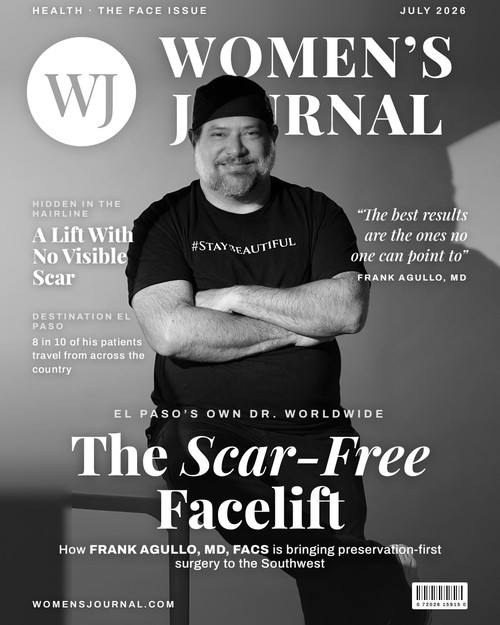
Black and white editorial portrait of a woman after a Deep Plane Facelift by Frank Agullo, MD, FACS (Dr. WorldWide), El Paso, Texas.

Every surgeon has a story about the first time they saw a facelift that actually looked good. Mine was at Mayo Clinic during my plastic surgery fellowship. The patient was about a year out. She looked ten years younger. Not pulled, not waxy, not surprised. Rested. I asked my attending how the result held up over time. He said, “If you do it in the deep plane, it holds up longer than anything else we have.”

That line stuck with me. It’s the reason I went to Pittsburgh for the Ponytail Academy’s intermediate course, and then to Santa Monica for the advanced.

What a Deep Plane Facelift actually does

For decades, the standard facelift worked like this: you pulled on the skin, tightened a thin layer underneath called the SMAS, and closed. It gave a result, but not forever. Skin stretches. And patients who came back for a second facelift often noticed the second one felt a little more “done” than the first.

The Deep Plane Facelift doesn’t pull on skin. It dissects underneath the SMAS, releases the four retaining ligaments that anchor the face to the skull (zygomatic, masseteric, mandibular, and platysma), and repositions the whole composite flap as one unit. Skin, SMAS, fat, muscle. All moving together. Nothing is under tension.

That one detail changes everything. Because the tissue isn’t stretched, the face doesn’t look stretched. Because the anatomy is restored instead of pulled, the result lasts. Peer-reviewed data shows Deep Plane Facelift results holding at ten, twelve, and fifteen years.

The quick comparison:

Aspect

Traditional SMAS facelift

Deep Plane Facelift

What moves


Skin and a thin SMAS layer


Skin, SMAS, fat, and muscle together


Ligaments released


No


Yes (all four)


Skin tension


High


Low


Typical longevity


6 to 8 years


10 to 15 years


The “pulled” look


Possible over time


Rare; tissue isn’t stretched


The Ponytail Lift: same philosophy, hidden incisions

The Ponytail Lift is the endoscopic version of the Deep Plane Facelift. Same tissue release, same ligaments, same composite flap. What’s different is the access. Instead of incisions in front of the ears, the work is done through tiny openings hidden inside the hairline, using an endoscope for visualization.

No pre-auricular scar. No earlobe distortion. The incisions heal inside the hair, which means even a patient pulling their hair back into a ponytail (hence the name) doesn’t reveal anything.

It’s not an easier operation. It’s a more demanding one, because you’re working through small access points with indirect visualization. The benefit is that the right patient gets a deep plane result with no visible scar. Which matters.

Who is (and isn’t) a Ponytail Lift candidate?

The right candidate is usually in their forties or fifties, has early-to-moderate midface and jowl descent, has skin with decent elasticity, and cannot accept any trace of a pre-auricular scar. Patients with thick hair can fully hide the hairline incisions, which is ideal.

The wrong candidate is usually a patient with heavier skin laxity or patients in their mid-sixties and beyond. That anatomy does better with a traditional open Deep Plane Facelift, because the skin itself needs to be redraped and excised, not just the deep tissue repositioned.

Part of the consultation is figuring out which version is right for you. If a traditional deep plane fits your face better, that’s what I’ll recommend. If the Ponytail Lift is the better match, we’ll go that route. I’m not attached to one operation. I’m attached to the result.

Why the Ponytail Academy?

I’ve been doing facelifts my whole career. I could have watched a YouTube video, told my patients I do the Ponytail Lift, and called it a day. A lot of surgeons do exactly that. I didn’t.

The Ponytail Academy is the advanced training program built around this technique. It’s small, it’s cadaver-based, and it’s taught by the surgeons who invented the approach. I took the intermediate course in Pittsburgh first, then returned for the advanced course in Santa Monica. Days in the lab dissecting, releasing, and repositioning, with real-time correction from faculty who do this operation every week. That’s how I learned plastic surgery at Mayo. That’s how I wanted to learn this.

My patients deserve the version of the Ponytail Lift taught by the people who wrote it. Not the version taught by someone who read about it.

One more thing about fillers

I love fillers for the right patient. I use them every day. But fillers are a tax. You pay it every six to twelve months, and when you stop paying it, the face goes back to where it was.

A Deep Plane Facelift is an investment. You pay for it once, and it appreciates over the decade that follows. Patients who chase volume loss with filler for years often arrive in my office with a face that looks fuller, not younger. Puffy cheeks, no jawline, weird upper-lip volume. That’s the filler tax, paid too many times.

If fillers are right for you, we’ll use them. If surgery is right for you, we’ll do it right. The goal is always the same. The face you recognize in the mirror. #StayBeautiful.

Why choose Dr. Agullo for a Deep Plane Facelift in El Paso?

Double board-certified (American Board of Plastic Surgery, American Board of Surgery). Fellow of the American College of Surgeons. Mayo Clinic plastic surgery fellowship. Clinical Associate Professor of Plastic Surgery at Texas Tech University Health Sciences Center, where I teach the same techniques I use every day. Affiliate Professor at UTEP. Castle Connolly Top Doctor, thirteen consecutive years. Ponytail Academy, advanced endoscopic deep plane training. Over 3.5 million followers across Instagram, TikTok, and Snapchat, because patients want to see the work before they trust someone with their face.

Ready to talk?

The best way to figure out which operation is right for you is an in-person or virtual consultation. I’ll evaluate your anatomy, walk you through the options honestly, and tell you what I’d recommend if you were my sister. If the answer is “not yet, come back in three years,” I’ll tell you that too.

Call (915) 590-7900, text 1-866-814-0038, or book online at agulloplasticsurgery.com. Follow along on social at @RealDrWorldWide on Instagram, TikTok, and Snapchat, @Agullo on X, or @AgulloPlasticSurgery on Facebook.