A national outlet asked me for a technical read on Katie Miller’s transformation, and I agreed with my colleague that the lower half of the face was where the change was. Here is the longer, candid version. It is an educational read from photographs, not a diagnosis. I have not treated her, and a photo is not a consultation.
The Before
In her earlier pictures, we can see that Katie has pretty full cheeks and fullness in the lower face, making her face very rounded, giving her a tired appearance. There’s also a lack of definition of the jawline.
The After
I think a combination of things has occurred since then. She does look younger and more refreshed. Her face is more triangulated, and her jawline is more defined.
What Could Explain It
I think she’s had a combination of botulinum toxin around the forehead, the glabella, and crow’s feet. I think she’s had some weight loss, probably aided by GLP-1, but the lower face change is rather significant.
I think this would only be achievable either with liposuction, with the aid of something like FaceTite for skin tightening and Morpheus8, both of which are radiofrequency treatments, and removal of the buccal fat pad. If she truly has had weight loss, she may be keeping the upper cheek fullness with fillers or biostimulators like Sculptra. Or if she actually had the liposuction and buccal fat removal, she may have had some fat injections to the cheek and zygomatic area. I think it would be a little bit too far-fetched to think that she’s had a lower face lift, although it’s not out of the question.
Why “She Had X” Is the Wrong Read
This is what I want colleagues and readers to take from it. From a photograph, the honest read is a hedged read. The lower-face change here could be a real procedure, a real GLP-1 weight loss, or a combination, and telling those apart from press photos is hard. The technical read is fair game. The flat “she had a buccal fat removal” headline is not, because the same look can be produced more than one way.
Why the Lower Face Did the Talking
The lower third integrates almost everything that happens above it. Volume that drops, skin that loosens, and weight that comes off all collect along the jawline and the lower cheek. So when a face moves from rounded and tired to triangulated and defined, the lower third is where I look first, because that is where the story almost always is. That is exactly why my colleague and I both landed on the lower half of the face.
The Credential Behind the Opinion
Double board-certified by the American Board of Plastic Surgery and the American Board of Surgery, American College of Surgeons Fellow, Mayo Clinic plastic surgery fellowship, Clinical Associate Professor of Plastic Surgery at Texas Tech University Health Sciences Center Paul L. Foster School of Medicine, Editorial Board Member at Aesthetic Plastic Surgery, and Castle Connolly Top Doctor for thirteen consecutive years.
Ready to Talk?
If your own before-and-after is what is on your mind, the read on your face is the place to start.
There is a growing demand for lifting and contouring of the face without surgery. This actually also extends to the breast, body, even the buttocks. I think the growing demand has accelerated due to GLP-1 treatments, where patients undergo rapid weight loss and the appearance of aging shows up much more accelerated. There is also a tendency for maintenance early on, in order to avoid bigger procedures later.
I want to lay out where I think these technologies actually earn their place, and where the field is quietly moving on.
Start With What Aging Actually Is
As we know, aging is a combination of two things: skin laxity and volume loss. In weight loss patients, the skin has already been stretched out. The volume loss shows up as aging. Added to that, the skin that had previously been stretched out is now sagging, so the aging shows up much, much faster than in regular patients.
That is why the GLP-1 patient is changing how this conversation goes. The clock runs faster on them, and the early-maintenance mindset has become the norm rather than the exception.
The Volume Tools, Old and New
We’ve been using fillers underneath the eyes and the temples for quite a long time. The newer volume replacement materials include Sculptra, which is a biostimulator. After it is injected, the body tries to absorb the material and thus produces collagen.
The more exciting category is biostimulating and regenerative. PRP, protein-rich plasma, and PDGF, the platelet-derived growth factor. PDGF has not been cleared for injection, although some practitioners are using it off-label, but it is a great adjunct to any procedure that performs microneedling or resurfacing. It regenerates the tissues quicker, and with the growth factor we get a younger appearance and more protection of collagen.
Lipoderma is one of the newest available fillers. It is a donor-derived fat graft, which has a framework that allows the ingrowth of your own fat cells. This is a more permanent solution, more natural and more like the actual fat that we have in our face, rather than scar tissue or collagen. Tiger Aesthetics is going to come out next year with a similar product called Derma Clay, for the face and hands. They currently have one called Aloe Clay, which we use in the breast and buttock as a natural donor fat graft filler. That filler is more coarse, so it does not work well on the face.
The Tightening Tools
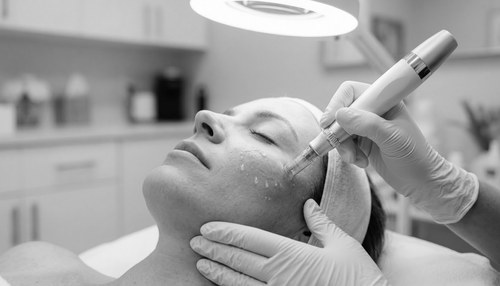
For skin tightening, the best therapies at the moment are radiofrequency. The use of Morpheus8, which is microneedling with radiofrequency, is one of the most sought-after treatments in our practice. We also use FaceTite in the face, which is a more invasive radiofrequency treatment that treats under the skin and above it, and is usually combined with even liposuction of the neck.
We haven’t seen a lot of new technologies in laser, but the fractionated lasers are still the most used. One has to be careful with skin types, as darker skin types tend to create hyperpigmentation or scarring.
Why I Have Almost Left Thread Lifts Behind
I think thread lifts had a peak in the last two years, but patients have found that they’re really not long-lasting. The threads can behave differently on one side of the face than the other and do create asymmetries. Sometimes these threads are not completely absorbed by the body and can be palpated, or give other problems. We’ve really almost diverged away from thread lifts, and we’ve started to do more minimally invasive surgical procedures instead.
That is the quiet shift in the field worth naming out loud. The threads promised a surgical result without surgery, and they did not deliver it consistently enough to keep.
Set the Expectations Honestly
All these treatments are good in the early stages of aging, or weight-loss-related aging, and they usually give subtle improvements. They can correct specific areas like temporal wasting, hollowness underneath the eyes, or nasolabial lines. The longevity depends on the therapy. Regular fillers can last up to a year. Sculptra tends to last longer, as the collagen generated stays around. The new regenerative treatments, like Lipoderma, or in the future Derma Clay, will be longer-lasting, if not permanent. But aging continues once we set the clock back, even in surgical procedures.
The expectations have to be toned down in nonsurgical procedures and well communicated to the patient. This is true especially with skin tightening using radiofrequency. A lot of the tightening is going to depend on the patient’s own response and cannot be foreseen. Every patient reacts differently and gets different tightening results.
The Test That Sends a Patient to Surgery
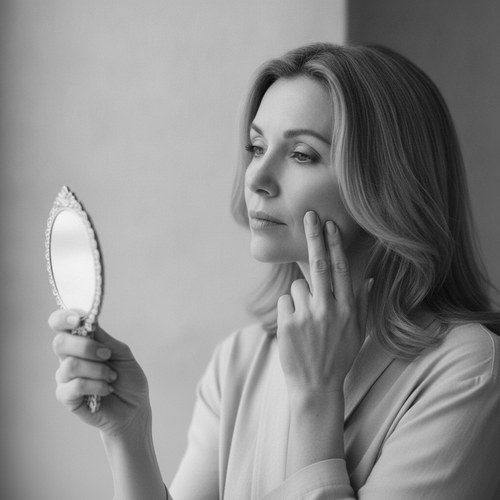
Here is my rule of thumb. If the patient is consulting with me and they reach up to their face and pull with their fingers upwards, bringing their brows and cheeks and jowls up, or even tightening their neck back, that’s a sign the patient needs a surgical procedure and not a noninvasive one.
The deep plane lift and the endoscopic deep plane lift are great procedures, which create very natural and long-lasting results. We’re seeing patients completely avoid the noninvasive procedures and go straight to the surgical procedures early on. I trained the deep plane facelift the long way, through the Ponytail Academy intermediate course in Pittsburgh and the advanced course in Santa Monica, after a Mayo Clinic fellowship. The patients who skip straight to it are usually the ones who already did the mirror test on themselves.
The Credential Behind the Opinion
Double board-certified by the American Board of Plastic Surgery and the American Board of Surgery, American College of Surgeons Fellow, Mayo Clinic plastic surgery fellowship, Clinical Associate Professor of Plastic Surgery at Texas Tech University Health Sciences Center Paul L. Foster School of Medicine, and Castle Connolly Top Doctor for thirteen consecutive years. I do both the injectables and the surgery, which is exactly why I can tell you when the injectable is the wrong answer.
Ready to Talk?
If you want the honest read on which side of the line your face is on, that is a consultation, not a sales pitch.
For the patient-facing clinical guide and the mirror test in detail, see the companion post on agulloplasticsurgery.com. For the MedSpa-to-surgery continuum, see the version on swplasticsurgery.com.
Call (915) 590-7900, text 1-866-814-0038, or book online at agulloplasticsurgery.com. #StayBeautiful.
@RealDrWorldWide on Instagram, TikTok, and Snapchat, @Agullo on X, or @AgulloPlasticSurgery on Facebook.
After the Needles: The Growth Factor That Earned Its Spot Next to My Morpheus8
Last month a longtime patient sat down on my Morpheus8 table, looked at the small kit on the tray, and asked me where the blood draw was. We had done platelet-rich plasma after every one of her treatments for the past five years. Tube, centrifuge, twelve-minute wait, supernatant painted onto freshly needled skin, small bandage on the inner arm at the end. That was the rhythm of the visit.
I told her we were doing something different this time. A small kit, mixed in a minute, no needle in the arm. Same idea as PRP. A cleaner version of the same idea.
The product is called Ariessence pure PDGF+. The molecule inside is recombinant platelet-derived growth factor BB. I have been using it on a subset of my Morpheus8 patients since the start of the year, and over the past few months it has quietly replaced PRP in my MedSpa for most post-procedure protocols. This is the long version of why.
What PDGF actually is
Platelet-derived growth factor is one of the body’s lead first-responder proteins at any tissue injury. When platelets release at a wound site, PDGF recruits fibroblasts to lay down collagen, calls in the cells that build new microvasculature, and helps coordinate the rest of the early healing response. It is the most studied tissue growth factor in regenerative medicine. Four FDA-approved drug products contain it. Over the past twenty-eight years, more than five and a half million patients have been treated with PDGF-containing FDA-approved products in non-cosmetic medical indications such as periodontal regeneration and diabetic foot ulcer healing. The molecule has a long safety record.
For most of the past decade, the way clinicians delivered PDGF to skin in an aesthetic context was indirect. We drew the patient’s own blood, spun it down, and applied platelet-rich plasma to freshly microneedled skin. PDGF was in there. So were dozens of other proteins, in concentrations that varied with the patient and the centrifuge run.
Recombinant pure PDGF is the next step. The protein is produced in cultured cells from a human gene sequence and purified to a single active species. The label calls it sh-Polypeptide-59 Dimer. There are no human-derived components in the formulation. The dose is controlled by the manufacturer and is the same in every kit.
Why topical, and why right after a microchanneling procedure
Topical PDGF on intact skin is a moisturizer with an interesting label. The protein is too large to cross an intact stratum corneum in a meaningful concentration. Healthy skin keeps macromolecules out. That is the barrier doing its job.
Topical PDGF in the brief window after Morpheus8, RF microneedling, fractional laser, or a medium-depth peel is a different story. The procedure has just opened thousands of microchannels into the dermis. The growth factor reaches the compartment that is asking for it. The window closes within hours.
That is why this product is sold to clinicians, not on a shelf at Sephora. Without a procedure to pair it with, you have an expensive serum.
The Gold 2025 study
In September 2025, Gold and colleagues published a randomized, evaluator-blinded, controlled trial in the Journal of Cosmetic Dermatology. Subjects between thirty and sixty years old got a single Morpheus8 session and were randomized to receive either bland Aquaphor or topical recombinant pure PDGF-BB immediately after. Patients were graded at seven and thirty days using the Clinical Global Aesthetic Improvement Score and Canfield Visia objective imaging.
The PDGF group did better. The difference on the global aesthetic score at thirty days was statistically significant. The PDGF group performed favorably on six of the seven Visia metrics. Patient-reported outcomes were better on the experience measures. No serious adverse events were reported.
The manufacturer is explicit about one caveat in the published reprint, and I will repeat it. The exact formulation in the Gold trial is not identical to the marketed Ariessence product. The trial supports the use of topical recombinant pure PDGF-BB after RF microneedling as a category. It is not a label claim for a specific commercial bottle. I tell patients this clearly. They appreciate it.
Where it sits next to PRP, PRF, and exosomes
The regenerative aesthetics category is crowded. Here is how I sort the actual contenders in my room.
What it is
Source
Blood draw?
Predictability of dose
Where it fits in 2026
Aquaphor (bland emollient)
Petroleum jelly
No
Total, no biological signal
Default barrier, comparator in trials
PRP (platelet-rich plasma)
Patient’s own blood, single spin
Yes
Variable, patient to patient
Reasonable. Less predictable than recombinant.
PRF (platelet-rich fibrin)
Patient’s own blood, slower spin
Yes
Slightly more consistent than PRP
Some practices prefer it. Not a step change.
Exosomes
Cultured stem cell media (donor-derived)
No
Manufacturer-dependent. Regulatory status unsettled.
I have not adopted these.
Ariessence pure PDGF+
Recombinant rhPDGF-BB in HA serum
No
Identical dose every kit
Default after Morpheus8, RF microneedling, fractional laser, or medium-depth peel.
The table is not exhaustive. Topical recombinant epidermal growth factor preparations also exist, for instance. But it captures the choices a patient is realistically being offered today.
Who is the right candidate
Anyone scheduled for Morpheus8, RF microneedling, fractional laser resurfacing, or a medium-depth chemical peel who wants the cleanest possible thirty-day skin. Anyone who has always disliked the blood draw side of PRP. Anyone who has had wildly different PRP results over the years and wants to know whether a controlled dose evens out the experience.
It is not a stand-alone serum. It is not an injectable. It is not a substitute for sunscreen, a retinoid, or the procedure itself. Patients with active facial infection, active inflammatory dermatoses on the treatment area, or any contraindication to the underlying procedure are not candidates until those issues resolve.
What it is not
Ariessence pure PDGF+ is sold as a topical cosmetic. It is not an FDA-approved drug. The Cosmetic Product Listing number is on file with the agency. Cosmetics in the United States do not require FDA pre-market approval. The agency does require honest labeling, prohibits drug-style claims, and oversees safety and adverse-event reporting. Ariessence operates within those constraints.
The product is not approved to diagnose, treat, cure, mitigate, or prevent any disease or condition. It is not for injection. The four FDA-approved PDGF-containing drug products (GEM 21S, Augment, Augment Injectable, Regranex) are unrelated formulations approved for non-cosmetic indications. Their decades of safety data inform the molecule’s general safety profile. They do not transfer regulatory approval to the cosmetic.
I tell patients all of this before we add it to a treatment plan. The Ariessence label does the same.
Why I added it to my MedSpa stack
PRP after microneedling has earned its place over the years. I am not knocking it. A controlled, recombinant dose of the lead growth factor in the platelet release is, on the data we have today, a little better.
Workflow is the second piece. PRP requires a draw, a centrifuge, a twelve-minute wait, and a patient who is okay with a needle in her arm before a needle in her face. Ariessence is mixed in under a minute on the same tray as everything else. My MedSpa team prefers it. My patients prefer not having to roll up a sleeve.
The third piece is consistency with how I think about aesthetic medicine. Preservation, precision, controlled dosing, predictable outcomes. PDGF is the most studied tissue growth factor in regenerative medicine, with more than a hundred clinical trials and a twenty-eight-year FDA-approved drug heritage in non-cosmetic indications. Bringing the recombinant pure version into the cosmetic side of the practice fits.
From Vampire Facials to recombinant pure PDGF
If you have followed me for a while, the throughline matters. The 2019 piece on this blog argued for PRP after microneedling. The science was right then. The recombinant era is a refinement, not a refutation. The molecule is the same lead actor in the platelet release. The vehicle is cleaner and the dose more dependable. I would rather a patient be reading a 2026 update than a 2019 piece pretending to still be current.
Why choose Dr. Agullo for skin in El Paso?
Double board-certified by the American Board of Plastic Surgery and the American Board of Surgery. Fellow of the American College of Surgeons. Mayo Clinic plastic surgery fellowship. Clinical Associate Professor of Plastic Surgery at Texas Tech University Health Sciences Center. Affiliate Professor at the University of Texas at El Paso. Castle Connolly Top Doctor for thirteen consecutive years. Texas Super Doctors Hall of Fame, 2025. Aesthetic Everything Top Plastic Surgeon, 2026. Morpheus8 in active rotation in our MedSpa, paired with Ariessence pure PDGF+ as the post-procedure topical when the indication fits.
We run a clinic and a MedSpa under one roof for one reason. The arc of facial aging is decades long, and you should not have to drive across town to handle it.
Ready to talk?
If you are thinking about Morpheus8, an RF microneedling course, fractional laser, or a peel, and you want to understand what your skin care protocol should look like in the thirty days after, the most useful forty-five minutes of your year is a consultation with the surgeon who would actually plan it. I will tell you whether Ariessence pure PDGF+ is the right add-on for your treatment, whether you are better off with a different combination, or whether the procedure you are asking for is not the one you actually need.
Call (915) 590-7900, text 1-866-814-0038, or book online at agulloplasticsurgery.com. Follow along on social at @RealDrWorldWide on Instagram, TikTok, and Snapchat, @Agullo on X, or @AgulloPlasticSurgery on Facebook. #StayBeautiful