Number One Went Down and Nobody Mentioned It

Black and white torn-paper collage of two cut-out portraits with engraved magnolia beside a large numeral five.

Every August my specialty publishes its numbers, and every August the same list goes out. Liposuction is number one. Fifth year in a row.

The part that got left out is that liposuction fell 1 percent. So did most of the list, more or less. Four of the top five barely moved.

Number one is a component, not a request

“Liposuction is certainly the most common procedure in my practice, and the main reason is that it’s part of any body contouring procedure. When I perform a tummy tuck, liposuction is included in the abdomen and the lower back. When I perform an arm lift, I do liposuction first. When I do a thigh lift, I do liposuction first. When we perform many breast procedures, we’re often doing liposuction of the lateral chest, the axilla, or the upper back.”

“On top of that, procedures like the Brazilian butt lift and fat transfer involve taking fat from other areas using liposuction to transfer to the buttock, and even to the breast.”

Count every one of those as a liposuction and of course it wins. That is a counting decision, not a popularity contest.

The one number that moved

Eyelid surgery, up 19 percent, the most popular facial surgery of the year.

“It seems to be the first part of the face that patients notice as they age, especially the upper eyelid skin, which can hang and even rest on the eyelashes, giving the patient the impression of being tired and even making makeup hard to put on.”

“The lower eyelids are also quite popular, as more and more patients with fat loss can see the lower eye bags more easily, along with the tear trough deformity.”

Rank it differently and the list changes completely

“In my practice, I’ve really seen a huge increase in face procedures, specifically the deep plane face lift and deep plane neck lift, as well as the total endoscopic deep plane face lift, otherwise known as the ponytail lift.”

“The reason we’re seeing this increase exponentially is that patients are noticing signs of facial aging earlier, or they’ve been on GLP-1s and have had accelerated aging from fat loss in the face and skin sagging.”

Facelift 13 percent. Neck lift 21. Forehead lift 29. Facial fat grafting 39, the biggest jump of anything in the report. None of it in the top five.

The bit worth stealing

“The most interesting thing about a face lift procedure is that it can make you look ten to fifteen years younger. Of course, that depends on the age at which you get the procedure. If you get it at forty, you’re probably going to look like you’re in your early thirties, or even late twenties. But time keeps moving forward, so if we repeat the procedure ten years later, we take you back to that earlier stage of yourself. Now you’re in your fifties, looking like you’re in your thirties.”

“So the earlier we do the procedure, the sooner we can keep bringing you back to a younger age. That has really changed the game, because these procedures are not as invasive, we don’t have to make as big changes, and we can maintain that youthfulness.”

Wait for one big operation, or start earlier and stay ahead of it. Those are different plans, and the second one is newer than most people realise.

One caveat

These are estimates extrapolated from more than 3,000 board-certified plastic surgeons, not a census, and they count only board-certified plastic surgeons. Everything done outside that group is missing from the table. For a top five list, fine. For anything about safety, that absence is the whole story.

Consultations at Southwest Plastic Surgery in El Paso.

Call (915) 590-7900 or text 1-866-814-0038.

#StayBeautiful


Source: ASPS 2025 Procedural Statistics Report, national table. Commentary from Dr. Agullo’s 2026-09-07 dictation.

Thirty-Four Studies Later, the Numbers Finally Caught Up

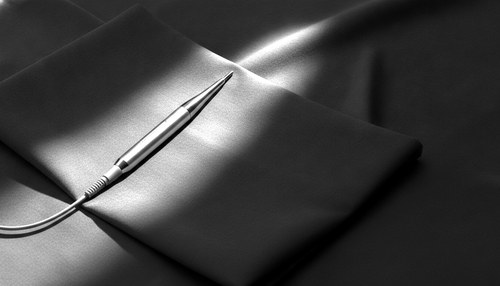
Black and white photograph of a slim electrosurgical handpiece on a folded surgical drape under hard directional light. Renuvion commentary by Frank Agullo, MD, FACS.

For seven years my confidence in this device rested on my own eyes, which is the weakest evidence there is. Every surgeon thinks his results are excellent. The ones who are wrong think so just as firmly.

So this year somebody pooled 34 studies and 3,508 patients on Renuvion J-Plasma, and I finally got to check my eyes against other people’s arithmetic.

I started with it in 2019, early enough that I was making calls without much published evidence behind me. Ten to twenty cases a week now. Apyx puts me in the top ten worldwide by volume.

The pooled findings: 92% patient satisfaction, confidence interval 83 to 97. Investigators said 92% improved, patients said 94%. Independent photographic review, where somebody with nothing at stake grades the pictures, said 86%. Complications 5% for Renuvion alone, 8% alongside liposuction.

That photographic number is the one I go to first in any paper like this. Satisfaction is soft. A patient who chose a procedure and paid for it wants to be pleased with it. A stranger looking at photos does not care.

Q: What is your reaction to those numbers?

“I have had a similar experience with my patients. There is a very high satisfaction rate for the patient, and I would like to say that for myself as well, the surgeon. I see considerable skin tightening and very low complication rates. I think that in this study, actually, the complication rates are higher than in my hands. I can say that I rarely see a complication from Renuvion, or Renuvion with liposuction.”

I said a moment ago that a surgeon’s read on his own results is the weakest evidence going, so hold me to it. Mine is an impression, unaudited, unpublished. But the gap is not mysterious either. A meta-analysis averages across every surgeon in it, including the ones who had done twelve cases when they wrote it up.

Q: How has the volume changed your technique?

“With such high volume, we have become very efficient at performing Renuvion J-Plasma, with or without liposuction. We have been following the latest protocols in terms of energy delivery per surface area, and this has proven to be dramatically more effective. And we have learned that more power doesn’t necessarily mean more results. It is more about choosing the exact power needed in the area to create the results.”

Every surgeon new to an energy device assumes more energy buys more tightening. It does not. Past what the tissue needs you get nothing you wanted and something you did not.

Q: Alone, or with liposuction?

“Most of the time, I’m using Renuvion with liposuction, as we’re using it to tighten after liposuction for an improved result. There are instances where we use Renuvion alone, and this is where we just want to get some skin tightening without any removal of subcutaneous fat. So there’s really no volume change, just tightening.”

Q: Who do you turn down?

“Patients with severe skin laxity are really not good candidates for J-Plasma. They may see some improvement, but it’s not going to be as effective as a skin excision procedure. The other group is some patients with implantable devices, such as pacemakers, who may not be able to undergo radiofrequency treatments unless they are monitored in the hospital by their device manufacturer.”

Skin stretched far enough for long enough does not come back, however much you heat it. I would rather lose that case than sell her the smaller operation and watch it disappoint her.

Q: The authors disclosed consulting ties to Apyx. Does that bother you?

“When the authors are consultants or involved with the company, the actual study is scrutinized further to make sure there is no bias or data manipulation. I’m very happy that the authors gave all of their disclosures and conflicts of interest. This creates transparency. For these studies to be published, they are peer reviewed by other plastic surgeons who scrutinize the paper and look for any faults or reasons to reject it. On top of this, the study itself has to be IRB approved, meaning approved by an Institutional Review Board, which in itself scrutinizes any conflict of interest and human safety.”

Do not stretch that past where I meant it. A declared conflict draws extra eyes; an undeclared one draws none, because nobody knows to look. It was the 86% that reassured me here, not the disclosure page.

Ready to Talk?

If you have loose skin and you want an honest answer about whether a device fixes it or whether you need excision, let’s talk. Call (915) 590-7900, text 1-866-814-0038, or book at drworldwide.com.


Source: Shridharani SM, Sterodimas A, Harsch MR, Larson KA. “Helium Plasma Radiofrequency for Aesthetic Subdermal Treatment: A Systematic Review and Meta-Analysis.” Aesthetic Surgery Journal Open Forum, 2026. doi:10.1093/asjof/ojag092. The authors disclose consulting and advisory relationships with Apyx Medical, manufacturer of Renuvion.

Q&A source: Q&A Transcriptions/Renuvion-Systematic-Review-QA.md (Frank, 2026-08-24). All quoted passages are verbatim.

#HappyIsBeautiful #StayBeautiful #MakeItHappen

@RealDrWorldWide on Instagram, TikTok, and Snapchat, @Agullo on X, or @AgulloPlasticSurgery on Facebook.


The Skin Was Always the Problem: Seven Years of Renuvion J-Plasma

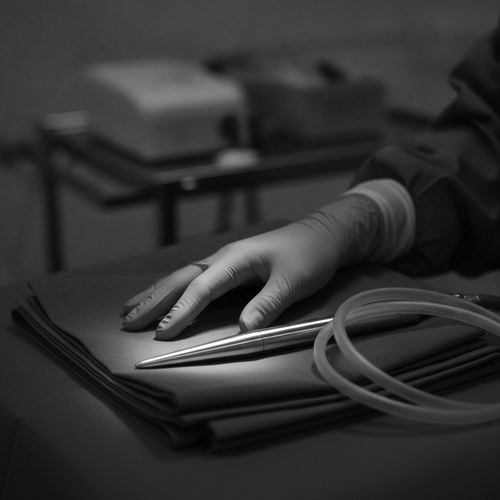
Black and white photo of a gloved surgeon's hand beside a slim handpiece on a surgical drape. Renuvion J-Plasma commentary by Dr. Frank Agullo, MD, FACS.

If you ask a plastic surgeon which part of liposuction is the hard part, and he answers you honestly, he will not tell you it is the fat.

I started using Renuvion J-Plasma in 2019. I was one of the very early adopters, and I saw a missing need after liposuction, which was skin tightening. We were able to perform liposuction effectively, but after deflating the subcutaneous tissue layer, many patients were left with loose skin, which required surgical excision. When we began using Renuvion, we noticed that the tissues would contract, and oftentimes the surgical excision of excess skin was not necessary anymore.

Read that last part again, because it is the whole reason I am writing this. Not that the skin looked somewhat better. The excision was not necessary anymore. A second operation, and a permanent scar, came off the table.

What It Is Doing Under There

This is the explanation I give in clinic, and I have never seen a reason to keep a simpler version for patients and a smarter one for colleagues.

Renuvion J-Plasma activates helium plasma and radiofrequency in the subcutaneous layers, making the connective tissue underneath shrink and contract, resulting in skin tightening and a smoother result. The helium plasma is important because it keeps the temperatures cool, which avoids burning.

That last sentence is where the engineering lives. Radiofrequency by itself will contract tissue. Radiofrequency by itself, at the wrong settings, will also cook it, and our literature has documented what that looks like. The helium is what lets the energy arrive hot and get out fast. The handpiece goes in through the same access sites the liposuction cannula already made, so nothing new is cut and nothing new is closed.

How Much I Use It

We use Renuvion J-Plasma almost every day, performing more than ten to twenty Renuvion cases per week. I am among the ten highest users in the world, according to Apyx, the company that manufactures the device.

I put that near the top rather than the bottom for a reason. When a surgeon speaks well of a device, you are entitled to know how far into it he already is before you weigh anything else he tells you. I am very far into this one.

The Huber Paper

Apyx circulated a study through its clinical newsletter this spring. I read manufacturer mailings the way most of us do, with a raised eyebrow, because the company sending the envelope has an obvious interest in what I conclude. This one held up.

Huber, Bittencourt, Koteski and colleagues published it in Plastic and Reconstructive Surgery Global Open in March 2026. They reviewed 113 consecutive patients from one surgeon’s practice, treated between October 2021 and October 2023. Seventy-three had power-assisted liposuction alone, and forty had power-assisted liposuction followed by Renuvion J-Plasma. Past the twelve-month mark, they went back and asked the patients themselves, using BODY-Q, a validated instrument rather than a satisfaction form somebody drew up in a marketing meeting.

Outcome (greater than 12 months) Liposuction alone Liposuction plus Renuvion J-Plasma
BODY-Q appraisal of excess skin 73.8 87.8
Same score, liposuction-only subgroup 64.0 92.8
BODY-Q abdominal appearance, no abdominoplasty 45.0 68.8
Surgical revision rate 37.5 percent 12 percent
Abdominoplasty rate 67.1 percent 30 percent
Complication rate 2.7 percent 2.5 percent

The revision row is the one that stopped me. Thirty-seven and a half percent down to twelve. Any surgeon who has had to bring a patient back for a skin excision that neither of them wanted knows that the distance between those two numbers is not measured in questionnaire points.

The complication row matters too, more quietly. Adding energy under the skin did not add risk here, 2.5 percent against 2.7 percent, and no complication was attributed to the device.

The caveat, which the newsletter was not built to emphasize, so I will. Retrospective, not randomized, one surgeon. The authors say so themselves. It is a strong signal that happens to match what I watch happen in my operating room every week, and a strong signal is not proof. I would rather hand you that limitation myself than have you find it in the discussion section and wonder why I skipped it.

Where I Use It, and Where I Stop

I prefer to use Renuvion J-Plasma in the abdomen, the flanks, the upper back, the lateral chest, and around the knees. We also use it on the arms and thighs. I prefer not to use it in overly thin skin. If I encounter overly thin skin, I transition to BodyTite.

There is a sweet spot in using J-Plasma, where more passes and more energy are not going to give you any further results. So being accurate in the number of passes and the energy for each area is extremely important to get the most benefit with the least risk.

That is the sentence I would put on the wall of every practice that just bought one of these. The dose does not scale in a straight line. Past a point you are collecting risk and buying nothing with it, and the device will happily let you keep going, because it has no way of telling you that what you have already done is enough. That judgment belongs to the surgeon.

The Unpopular Part

The most important thing is really knowing the limitations, and knowing that J-Plasma will not tighten extremely loose skin after pregnancy or massive weight loss. It is very powerful in contracting the skin, and it often keeps patients away from needing a brachioplasty or excision of back rolls.

Both halves of that are true at once, and the industry has a habit of quoting whichever half suits it that quarter. It really is strong enough to spare somebody an arm lift or an excision of the back rolls, and those are not small scars to spare a person. It is also nowhere near strong enough to replace a tummy tuck in a patient who needs one. Stretch marks it does nothing for at all, because a stretch mark is a tear in the dermis, and contracting the tissue under a tear does not repair the tear.

So here is the candidate, exactly as I describe him or her in the room.

In the right patient, one who does not have a lot of skin laxity or stretch marks and no rectus diastasis, the Renuvion J-Plasma can help keep patients away from an abdominoplasty and let them have just liposuction.

Three conditions, and all three are required. If the rectus muscles have separated, the abdomen is pushing forward because the wall came apart, and energy delivered into the fat layer above that wall does nothing about it.

Recovery Does Not Change

I lead with this now, because patients assume the opposite.

It is important to know that Renuvion J-Plasma is not going to increase recovery times. The recovery itself and the protocol are the same with or without Renuvion J-Plasma when you have liposuction. We still use the garments, and we still use lymphatic massages.

You are not buying downtime here. You are buying a better envelope at the end of the downtime you had already agreed to. The skin also keeps contracting for months after you go home, which is why judging an abdomen at six weeks is a mistake, and why I spend part of nearly every week talking somebody down off that ledge.

Why I Am the One Saying This

I am double board-certified by the American Board of Plastic Surgery and the American Board of Surgery, I completed my plastic surgery fellowship at Mayo Clinic, and I have taught as a Clinical Associate Professor of Plastic Surgery at Texas Tech University Health Sciences Center Paul L. Foster School of Medicine since 2011. Castle Connolly has named me a Top Doctor for thirteen consecutive years.

None of that is why I trust this device. Seven years of using it almost daily is why. The credentials are why I am comfortable telling you where it fails.

#StayBeautiful

Ready To Talk?

If someone has told you that you will need a tummy tuck no matter what, it is worth a second opinion before you accept a scar you cannot undo. Call the office at (915) 590-7900, text 1-866-814-0038, or book a consultation at agulloplasticsurgery.com/appointments. You can also read more about liposuction at Southwest Plastic Surgery.

Follow along at @RealDrWorldWide on Instagram, TikTok, and Snapchat, @Agullo on X, or @AgulloPlasticSurgery on Facebook.