Take Them Out, Swap Them, or Go Smaller: A Straight Talk on Implant Removal

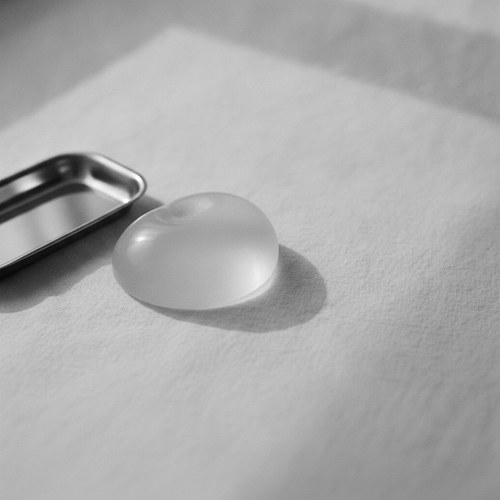
Black and white editorial portrait illustrating a breast implant removal and exchange consultation. Surgical commentary by Dr. Frank Agullo, MD, FACS.

Ten years ago, nearly everyone in my consultation chair wanted bigger. Now? Half of them want the reverse.

The pattern is consistent. A decade or more with the same implants. A late-night thread, a video, a friend who has felt off lately. And then the question, which I think deserves a real answer rather than a brochure. Should these come out?

Let me give you the version I give in the room, with nothing dressed up.

The Honest Truth About Breast Implant Illness

First thing I tell women. If you have carried your implants for years and felt fine the whole time, the odds are you will keep feeling fine. This is rare.

I have done thousands of augmentations. Out of all of them, maybe ten or twelve women have come back asking me to take the implants out because they felt the implants were the problem. When we removed them, most felt better.

I will not oversell that result, though. Plenty of the time, honestly, we cannot separate the implant from everything else going on. Aches. Fatigue. The fog that arrives in your forties no matter what is or is not sitting in your chest. When you have implants, they make a convenient suspect. The research is still catching up, so I am not going to hand you a certainty the science has not earned.

And I am not in the business of talking you out of removal either. My only job is making sure you decide with the whole picture, not the cropped one you found online at midnight.

Textured Implants Are a Different Conversation

This one I weigh differently. Textured implants, the kind with a rougher shell, have been associated in some patients with a specific type of lymphoma. Low risk, roughly one in a few thousand, and tied to that textured surface rather than to smooth implants.

So if you are carrying textured implants and feel perfectly fine, swapping them for smooth is still a reasonable move. My philosophy here is not complicated. When a problem can be sidestepped, I would rather sidestep it than wait around to find out. A breast augmentation revision is exactly the operation that does it.

What Removal Actually Does to Your Shape

Now the part nobody loves hearing. Pull out an implant of any real size and you will drop a cup size or more, and yes, things sag. That implant was propping up volume your skin stretched to hold over the years. Remove the prop and the skin does not spring back to where it started.

Which is why removal by itself is rarely the whole story. To look good afterward, most women need a breast lift in the same operation, raising and tightening everything into place.

Want a little fullness up top still? We have moves for that. I will not add fat to the breast during the removal itself, because the empty pocket needs to close off first. Come back a few months later feeling too flat, and fat grafting can put a little body back without committing you to another implant.

Going Smaller Instead of Going Without

A lot of women land right here, and I love this option.

We take out the big old implant, perform a lift, and drop in a small one, sometimes just 150 or 200 cc, purely to hold a bit of cleavage and shape. A small implant behaves more predictably than fat. Reliable size. It does not shift every time the scale goes up or down on you.

Path What You Gain What You Trade
Remove only Implant gone, simplest plan More sag, a cup size or more lost
Remove plus lift Tighter, lifted shape A lift scar, longer operation
Remove, lift, downsize Lifted shape with a little fullness on top A small implant stays in
Remove, lift, fat later Soft, natural touch of volume Staged over a few months

Are the Newer Implants Safer?

The Motiva implants I place now run a rupture rate under half a percent and a capsular contracture rate also around half a percent. Set that beside the ten to fifteen percent we used to see with older devices and you understand why I stopped telling patients they have to swap every ten years.

These could go a very long time. I often add an internal bra, a mesh that holds everything in place so the result holds too. Patients here in El Paso and across the border read about the same options on our breast lift page.

Get the Imaging First

Often, yes. A new firmness, a shooting or stabbing sensation, or just plain uncertainty about whether the implant is intact, any of those earns an ultrasound so we can look at the shell and rule out a rupture. If we need more detail, we step up to an MRI.

Sometimes that little stab is nothing more than the implant tickling a nerve. Harmless. I would still rather confirm it than guess at it.

The Credential Behind the Caution

I am double board-certified by the American Board of Plastic Surgery and the American Board of Surgery, a Mayo Clinic plastic surgery fellowship alum, and a Castle Connolly Top Doctor thirteen years running. Removal and exchange asks more of a surgeon than a first-time augmentation does, because the tissue has been operated on once already. That is the whole reason I insist on examining you, reading your imaging, and being honest about how your shape will shift before either of us commits to anything.

Ready to Talk?

If you are weighing whether to remove, exchange, or downsize, come let me take a look and we will build the plan around what you actually want.

For the patient-facing version of this conversation, see the companion post on agulloplasticsurgery.com. For the El Paso treatment menu, see the version on swplasticsurgery.com.

Call (915) 590-7900, text 1-866-814-0038, or book online at agulloplasticsurgery.com. #StayBeautiful.

@RealDrWorldWide on Instagram, TikTok, and Snapchat, @Agullo on X, or @AgulloPlasticSurgery on Facebook.

When the Implant Rides High and Hard: A Surgeon’s Take on Revision and Capsular Contracture

Black and white study of a woman's torso in soft light, hand resting near the collarbone. Breast implant revision commentary by Dr. Frank Agullo, MD, FACS.

A large part of my week is not first-time augmentation. It is revision.

Women come in years after surgery done somewhere else, and they describe the same handful of things. One breast riding high. A firmness that crept in. A sense that the implant has wandered off where it should be. Or simply, it has been ten years and they want a change.

These are not vanity complaints. They are mechanical problems with mechanical fixes, and they deserve a straight answer rather than a shrug.

What That High, Hard Lump Usually Is

When the description is one side that sits high and feels firm, almost like a lump, it is usually a capsular contracture.

Here is what is happening. Whenever we place an implant, the body forms a capsule of scar tissue around it. That is normal and even helpful, because it keeps the implant in place. But sometimes that capsule, driven by inflammation or an old low-grade infection, tightens and hardens around the implant. It squeezes the implant up and in, and the breast goes firm.

If it hurts, the contracture is more severe. No pain is actually a good sign. And it surprises people that this can show up long after the original surgery, sometimes many years later, but it does.

How I Actually Fix It

The repair is more than swapping the implant. I go in, remove the hardened capsule, take out the old implant, and place a new one.

When I do that and switch the patient to a Motiva implant, the risk of contracture recurring drops below one percent. The nano-surface on these implants provokes a much lower inflammatory response, which is the whole reason the recurrence rate falls so far.

To lower it further, I will often place a mesh, an internal bra layer of support, over the area. With that combination, recurrence approaches zero. And if you want to change size while we are in there, we usually can, through the same incision.

Revision Decisions at a Glance

What You Notice What It Often Means The Usual Move
One side high and firm Capsular contracture Remove capsule, exchange implant, often add mesh
Implants past ten years Older-generation wear Exchange to Motiva, reassess size and position
New, fast asymmetry over weeks Worth imaging Ultrasound or MRI, then a plan
Several prior surgeries Disturbed tissue planes Careful planning, honest expectations

“Should I Just Swap Old Implants?”

If you are at the ten-year mark with older-generation implants, an exchange is reasonable, and it is a good moment to reassess size and position at the same time. I often move patients from an older implant to a Motiva, which lasts much longer and carries far less contracture risk.

“I Have Had Several Surgeries Already. Is It Too Late?”

No. I see patients whose first operation was decades ago with several since. More history does not mean nothing can be done. It means I plan carefully and stay honest with you about what is realistic. Revision is harder than a first augmentation because the tissue planes are already disturbed, which is exactly why it should be planned, not rushed.

Why the Implant Surface Is the Whole Story

When patients ask why a Motiva exchange drops the recurrence rate so far, I bring it back to one thing: the surface. The Motiva implants I use have a nano-surface called SmoothSilk, which produces the lowest inflammatory response of any implant I know of. Capsular contracture is fundamentally an inflammatory problem. The capsule hardens because the body keeps reacting to the implant. When the implant barely provokes a reaction, the capsule that forms stays soft and thin.

That is the mechanism behind a sub-one-percent recurrence rate, and it is why I rarely reach for an older-generation implant during a revision. There is no reason to put back the kind of implant that contributed to the problem.

A Revision Is Often an Upgrade

Patients arrive bracing for damage control, and they are surprised when I tell them a revision is frequently a chance to end up better than the original. The new implants are soft, the gummy bear type, and they move with the body and settle into a natural teardrop when you stand. So while we are correcting the contracture, we can also correct a size you never loved, a position that sat too high, or an asymmetry that was there from day one. The same incision usually does all of it.

On Imaging, and Doing More at Once

If you are feeling a change, an ultrasound or MRI helps me confirm whether the implants are intact and whether what you feel is a contracture, scar, or something that needs more attention. I review your imaging before I commit to a plan.

A firm, high, or newly asymmetric implant, especially a change over a few weeks, is worth coming in for. And if you also want to refine your waistline, we can add liposuction and use J-Plasma to tighten the skin in the same setting, so it is one recovery instead of two.

Why I Take Revision Seriously

I am a double board-certified plastic surgeon with a Mayo Clinic plastic surgery fellowship, and I have been a Castle Connolly Top Doctor for thirteen consecutive years. Revision rewards a surgeon who slows down. I want to examine you and review your imaging before I promise anything, because the tissue tells me more than a photo ever will.

See the Patient-Facing Versions

For the patient-facing walkthrough, see the companion post on agulloplasticsurgery.com. For the practice overview, see the version on swplasticsurgery.com.

Ready to Talk?

If something feels high, hard, or out of place, do not sit on it. Come let me take a look.

Call the office at (915) 590-7900, text 1-866-814-0038, or book online at agulloplasticsurgery.com. #StayBeautiful.

@RealDrWorldWide on Instagram, TikTok, and Snapchat, @Agullo on X, or @AgulloPlasticSurgery on Facebook.