The Fat Is Not Rotting: What 33,000 Searches a Month Get Wrong About the BBL

Black and white photograph of a woman seen from behind in a fitted garment, holding a phone at an angle with the screen unreadable. Illustrative image, not a patient. Commentary on the "BBL smell" search term by Frank Agullo, MD, FACS.

I browse the search metrics for my practice site on occasion, and one statistic never fails to catch my eye. Roughly 33,000 searches a month are done for “bbl smell.” Not “bbl safety.” Not “bbl recovery.” BBL. Smell.

I have a strange tug of war with myself about ranking for it.

The term became an infamous joke a while back, complete with the hashtag, the reaction videos and a few celebrities getting a laugh out of it on air, and somewhere in that explosion it hardened into something that sounds medical enough to be credible. The fat is rotting, went the theory. They cut out fat, stuff it into a butt, the fat dies, and it causes a stink you can smell on the bus.

I was a founding vice president of the World Association of Gluteal Surgeons and became its president a couple of years later, so a good part of my career has centered on this single procedure. Of all the things I am sure about related to the BBL, this is the one I am surest of: the fat is not rotting.

A search term is not a symptom

Nobody gets to 33,000 searches a month on a complication rate. It reached that level of notoriety because culture put it there. The BBL exploded, a lot of it was performed inexpensively and in volume, and many patients were left with a garment, a pillow and minimal instruction on the critical second week. Some of those patients noticed an odor, and the internet amplified the message.

That is the intriguing part for me, more so than the odor. Anyway, I already composed the full explainer for my practice site, and the hygiene protocol lives here. This column is neither. It is about the query.

What walks in the door

When a patient presents believing she smells, in the order I see things, it typically looks like this.

Most commonly, the garment. The patient has been wearing it round the clock for a week and a half straight. Sweat builds between garment and skin, a little lymphatic fluid is still weeping through the port incisions, and all of it has been cooped up under fabric the entire time. That is a laundry issue dressed up as medical history, not a BBL issue.

Occasionally, a seroma. That is a fluid collection in one of the liposuction sites, and it may smell when it starts draining. A quick drainage in the office normally remedies it.

Now and then, a stitch. A suture works its way out from under a scab, and the patient reads online that it must be dead fat. Our nurse practitioner runs into this one on the follow-up calls all the time: “Sometimes it could be the suture, sometimes it could be a scab. If the scab looks like it’s coming, you could ask your massage therapist, because sometimes you might have a little suture underneath it and it just needs to be removed so that way it could completely heal.”

Infrequently, it is an infection. I said this in a Q&A on recovery a couple of weeks ago and I will say it again here, because it is the honest answer: “Usually, it’s a very straightforward procedure with very low complication rates. But we’re always vigilant for any signs of infection, like redness, purulent discharge, pain in one area that continues to increase, or fluid buildups in the areas of liposuction, which could be seromas.”

Did you notice what is not on that list by itself? Smell.

The nurse practitioner has the best way of handling these calls, a simple test I definitely did not come up with: “As long as it’s not red, it’s not draining, it doesn’t smell foul, then it’s not an infection. It just means it’s healing from the inside out.”

Red. Draining. Foul. You need all three. A sniff coming off the compression garment on day ten does not make that list. It is a straightforward reminder that the garment needs washing.

What the search term really represents

This is where my personal opinion comes in, and it may not thrill my colleagues.

I believe “bbl smell” has far more to say about the sale of the operation than about the procedure itself. Someone is selling high volume at rock bottom prices. Patients often do not meet their surgeon until the morning of surgery, if at all. They get a pamphlet at discharge and zero plan. Nobody referred them to a lymphatic drainage therapist, nobody handed them a backup garment, and there is no number to call on day ten. Their only recourse is the comment section, full of other women with the identical issue, and not one of them has a surgeon available either.

Run enough patients through that model and some will smell something in week two with nowhere to take it. Thus a search query, which morphs into a joke. What disturbs me about the gag is that the butt of the joke ends up being the patient. The responsibility rests on whoever sent her home with that little guidance.

The BBL in the videos is not the one I do

I use ultrasound guidance for the fat grafting, which lets me place the fat only in the subcutaneous layer, never into the muscle. That single change is the biggest safety advance this operation has had, and championing standards like it across borders is the reason the gluteal surgeons’ association exists. I also keep the volume conservative, enough to alter the shape without taxing the surrounding tissue past its capacity. Fat grafted gradually into the correct layer with blood supply on all sides survives. Fat forced into areas the tissue cannot support does not, and the “necrosis” stories people have seen are a direct result of the latter, not the former.

This holds true for my standard Brazilian Butt Lift and for the Supercharged BBL, where I keep the grafting at the same reasonable level and add an intramuscular implant instead of depending on fat alone for projection.

Then there are all the extras the lower-tier version neglects. My patients go home with a garment plan that keeps one in the wash and one on the body, Hibiclens, a bidet on the shopping list, lymphatic drainage booked two to three times a week for the first month, and calls from a nurse practitioner who has handled every conceivable version of the second week. That is not a handout. It is a program, it costs me something to run, and it is precisely why the BBL I perform does not cause an odor. I am not backing down on this. It does not happen.

If anything, the surprise tends to go the other way. From the same Q&A: “Most patients are surprised that the procedure itself and recovery are easier than they thought.”

If you Googled it late at night

Wash the garment. Rinse rather than wipe. Keep your scheduled massages. The smell you may encounter in week two is almost certainly fabric, a hot day and the healing process. Then try the red, draining, foul test. All three present, call your surgeon right away. None, well, it is time to wash the garment.

One final thought. If the surgeon you are considering cannot tell you who will answer your call on day ten, that is your odor. Move on.

I am double board-certified, fellowship-trained at Mayo Clinic, and a Clinical Associate Professor of Plastic Surgery at Texas Tech University Health Sciences Center. Castle Connolly has recognized me as a Top Doctor for 13 consecutive years. I helped start the World Association of Gluteal Surgeons because this operation needed a standard, and 33,000 searches a month is what it looks like when the standard is not met.

Ready to Talk?

If the Brazilian Butt Lift has crossed your mind and you want the version that includes a dedicated recovery program, the first step is a consultation. Call (915) 590-7900, text 1-866-814-0038, or book online at agulloplasticsurgery.com. #StayBeautiful

@RealDrWorldWide on Instagram, TikTok, and Snapchat, @Agullo on X, or @AgulloPlasticSurgery on Facebook.

Why I Put a Probe on the Skin Before Every Fat Injection

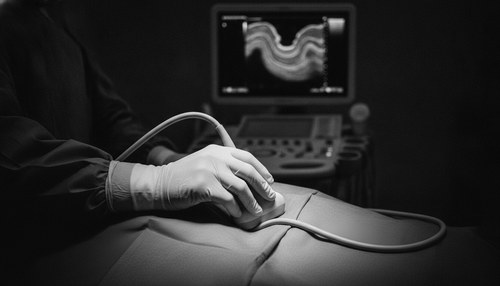
Black and white photograph of a surgeon's gloved hands holding an ultrasound probe against a draped surgical field during gluteal fat grafting. Commentary by Frank Agullo, MD, FACS.

For a stretch of years, the Brazilian butt lift carried the highest death rate of any operation in aesthetic surgery. That statistic was real, and it was earned.

It was also, it turns out, about one centimeter of tissue.

“There have been no cases of fat embolus when fat has only been injected in the subcutaneous fat. The only cases of fat embolism have all had intramuscular fat injections.”

Read that twice. Not most cases. All of them. The complication that made this operation infamous does not happen in the fat layer. It happens when a cannula ends up in muscle, where the large gluteal veins run, and fat enters the circulation and travels to the lungs.

So the entire safety problem reduces to a question of where the tip of the instrument is. And the tip of the instrument is somewhere you cannot see.

Unless you look.

“The ultrasound shows us exactly where the tip of the cannula is while we’re injecting fat into the buttock. Ideally, the cannula should be injecting fat into the deep fat layer above the muscle. We inject some fat in the superficial fat layer for shaping, but the bulk of the volume is injected in that deep compartment.

“By visualizing exactly where we’re at, we’re avoiding intramuscular or deeper injections, which can cause fat embolism, a very severe complication. That’s the importance of the ultrasound. It makes the procedure safer by knowing exactly where you’re at at all times.”

My protocol has not changed much in years, because it was already built around that idea.

“We continued using blunt tips with cannulas larger than 4 millimeters. We avoided injections into the muscle. We used ultrasound to visualize the location of the tip of the cannula while injecting, making sure not to perform any intramuscular injections. I always use an upward-angled cannula, and the patient is positioned in a jackknife type position.”

Now, the part I want any prospective patient to actually use.

“The most important thing is whether the surgeon is using ultrasound or not. No matter the experience level of the surgeon, there’s always a risk that you can misjudge and be in the wrong plane, and this is completely avoidable with direct visualization.”

Experience is not a substitute for looking. I have done a great many of these and I still put the probe on the skin, because a surgeon’s sense of depth is an estimate and a screen is a measurement.

Two groups where that gap matters most:

“That’s especially true of male patients, who have a very thin fat layer, and also massive weight loss patients, who have a very thin fat layer, so they’re at higher risk for intramuscular injections.”

When there is barely any fat between skin and muscle, the margin for error shrinks to almost nothing. Those are exactly the patients most likely to be told the operation is simple.

I spent my terms as vice president and then president of the World Association of Gluteal Surgeons pushing on this.

“I think the biggest achievement of WAGS while I was Vice President and President was educating patients and surgeons, both members and non-members, about safety. Also incorporating ultrasound into the BBL procedure, and creating a course and a certification for using ultrasound for Brazilian butt lifts. We also showed that the BBL can be performed safely.”

Ask your surgeon one question. Do you use ultrasound during the fat injection?

There is no good answer other than yes.

Call (915) 590-7900, text 1-866-814-0038, or book at agulloplasticsurgery.com. #StayBeautiful

Jingle Bells, Your Butt Smells: A Surgeon’s Protocol for the BBL Recovery Nobody Talks About

Jingle Bells, Your Butt Smells: A Surgeon's Protocol for the BBL Recovery Nobody Talks About. Dr. Frank Agullo, MD, FACS, double board-certified plastic surgeon at Southwest Plastic Surgery in El Paso, Texas.

Australia’s GP-trade journal, Medical Republic, opened a piece on me last month with the line above, and I will admit to laughing out loud when the alert hit my phone. The piece, titled “Jingle bells, your butt smells,” reprinted the four-bullet post-operative hygiene protocol I wrote for Brazilian Butt Lift patients, credited me as a founding vice-president of the World Association of Gluteal Surgeons, and pushed the conversation out of the back rooms of the practice and into the GP literature halfway around the world.

The reason it traveled is that the topic genuinely is one of the least discussed parts of BBL recovery. The reason I wrote the protocol down in the first place is that nearly every BBL patient in my practice eventually asks me a quieter version of the same question. So here is the longer surgeon-to-surgeon version of the protocol, with the clinical reasoning behind each step.

What the Inside of a Fresh BBL Looks Like at Week Two

A BBL is two operations done together. A liposuction harvest from the donor sites, which can include the abdomen, the flanks, the back, the lower back, the inner thighs, and any other compartment from which the fat has been planned. And a structured gluteal injection, in which the harvested and processed fat is distributed in the subcutaneous compartment of the gluteal region using anatomic, low-pressure cannula technique that respects the safe planes.

By week two, the patient is in the compression garment most of the day. She is sleeping prone or side-lying. She is restricted from sitting in the conventional way. Sweating is increased because the garment is occlusive. Lymphatic fluid is weeping slowly through the small liposuction port incisions. The perineum and the intergluteal cleft are spending most of the day inside a humid, occluded, bacterially friendly environment.

That environment, without disciplined hygiene, produces three predictable problems. A surface odor. A surface skin breakdown. And, in the worst case, a low-grade bacterial colonization of an incision that should have closed cleanly. The patient experiences all three as a single, embarrassing question she does not want to ask out loud, and the answer to that question is a protocol she can run at home.

The Four-Part Protocol, With the Why

Chlorhexidine (Hibiclens) as a Body Wash, Days One Through Twenty-One

Hibiclens is a chlorhexidine gluconate antibacterial wash widely used in pre-operative skin preparation. It has a meaningful residual antibacterial effect on the skin after rinsing, which means the protective effect carries past the shower into the hours when the patient is back in the compression garment. For BBL patients, the perineum and intergluteal cleft are the highest-risk zones in the first two weeks, and a daily Hibiclens wash to that area measurably reduces the bacterial load on the skin without requiring a prescription.

Above the neck, normal soap. Off the eyes, the ears, and any frankly broken or rashy skin. In the small subset with a chlorhexidine sensitivity, substitute a different antibacterial wash, but in my practice the substitution is rare and the protocol holds.

Bidet for the Perineum and the Intergluteal Cleft

Toilet paper after a BBL is abrasive, leaves residue, and tends to drag through tissue that has been freshly operated on. A bidet (full installed unit, sprayer attachment, or a peri-bottle, in that order of luxury) rinses without abrading. The compression garment then goes back on over genuinely clean tissue. Dry gently with a soft towel after the rinse. The same hardware that fifty percent of new mothers swear by after a vaginal delivery serves the same function after a BBL.

Two Compression Garments in Rotation, Washed Daily

This is the change with the largest single effect on odor and on incision-site comfort. Own two garments. Wear one. Wash one. Rotate every twenty-four hours. Cold to warm wash with a gentle detergent. No fabric softener. Flat air dry. Dryer heat tends to break down the medical-grade fabric over time. Patients who try to run a single garment for the entire six weeks discover that the inside of the garment is doing a lot of the work the protocol is supposed to be preventing.

Post-Operative Manual Lymphatic Drainage by an Experienced Therapist

Two to three sessions a week for the first two weeks, weekly through week six, tapering through week twelve. The technique mobilizes lymphatic fluid out of the donor sites and the gluteal compartment along the body’s natural drainage pathways. The recognized benefits, less swelling, faster bruise resolution, less fibrosis, better contour at six weeks, are the headline reasons. The hygiene-related benefit, which is less discussed but real, is that a well-drained donor site is a less hospitable environment for low-grade skin colonization than a poorly drained one.

The Protocol at a Glance

Part What When Why
Hibiclens body wash Chlorhexidine wash, body, not face Days 1 through 21 Residual antibacterial effect on the high-risk skin
Bidet Rinse perineum and intergluteal cleft Every bathroom use Cleans without abrading, no residue under garment
Two-garment rotation Wear one, wash one, swap daily Six weeks Removes the humid environment from inside the garment
Lymphatic drainage Trained therapist, structured cadence Weeks 1 through 12 Less swelling, less fibrosis, less substrate to colonize

Why the World Association of Gluteal Surgeons Exists

I serve as a founding vice-president of the World Association of Gluteal Surgeons. The organization was founded because the BBL became, very rapidly, one of the most commonly performed aesthetic body procedures in the world, and the field needed an organized peer body that could push safety standards, training standards, and post-operative care standards across borders. The hygiene protocol is one of a series of standards that exist because the early operation, while transformative, was also producing avoidable post-operative problems that better technique and better aftercare could prevent.

Ultrasound-guided injection has been the largest single safety advance in BBL technique in the past five years. The hygiene protocol is one of the largest single comfort-and-infection advances in BBL aftercare. Neither is exotic. Both are now table stakes.

What This Protocol Does Not Replace

It does not replace the antibiotic course if one has been prescribed. It does not replace the surgical follow-up cadence. It does not replace the position restrictions and the activity restrictions of the early weeks. And it does not replace a phone call to the operating surgeon if any of the warning signs appear: a fever above 100.4 F, focal redness, swelling, increasing pain, or a frank wound discharge. The protocol is the layer on top of the surgical plan that quietly prevents the problems nobody wants to discuss out loud. The surgical plan, the follow-up, and the patient’s communication with the operating surgeon are still primary.

How I Built the Protocol

I built the protocol the same way every honest piece of clinical guidance gets built. By doing a high volume of the operation, by listening to the patients who came to follow-up visits, and by writing down the steps that, repeated reliably, eliminated the problems they kept describing. By the time the Medical Republic piece picked it up, the protocol had been in my recovery handout for years and the GP author had simply found that handout via the BBL recovery post on my practice site.

It is short. It is repeatable. It costs almost nothing in dollars. And it does as much work as any peri-operative antibiotic in keeping a BBL recovery on the curve the patient expected when she scheduled the operation.

Ready to Talk?

If a BBL is on your mind and you want to know what a serious recovery plan looks like before you book the operation, the first step is a consultation. The protocol is part of the plan from the beginning, not a handout at discharge.

For the clinical patient-facing version, see What Nobody Tells You About BBL Recovery on agulloplasticsurgery.com. For the practice-program version with the in-house recovery support, see The BBL Recovery Program at Southwest Plastic Surgery. If you got here by searching the phrase itself, the causes-and-prevention explainer is BBL Smell: Is It Real?, and my take on why 33,000 people a month search it is The Fat Is Not Rotting.

Call (915) 590-7900, text 1-866-814-0038, or book online at agulloplasticsurgery.com. #StayBeautiful.

@RealDrWorldWide on Instagram, TikTok, and Snapchat, @Agullo on X, or @AgulloPlasticSurgery on Facebook.
Preservation, Not Minimalism: I Wrote a Manifesto for Connectively

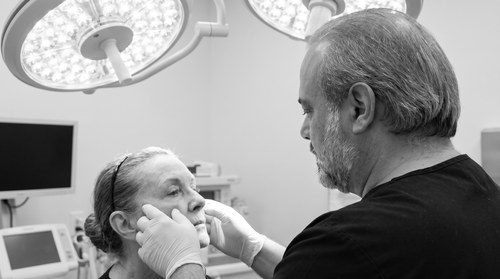
Dr. Frank Agullo, MD, FACS, double board-certified plastic surgeon in El Paso, Texas, in black scrubs in the operating room examining a facelift candidate as part of the preservation-era technique described in his bylined Connectively article.

Preservation, Not Minimalism: I Wrote a Manifesto for Connectively

I keep hearing the same thing in consults. “Doctor, plastic surgery is going smaller now, right? Less volume. Subtler results.”

Half true. Mostly misleading.

Connectively just published my bylined piece on this, and I wanted to push back on the frame in my own voice here too. Volume has not gone anywhere. Patients in my OR this month still wanted fuller breasts. Fuller hips. I still placed implants. I still grafted hundreds of cc of fat per side.

What changed in the last decade is what we refuse to damage when we add that volume.

The Old Bargain

For thirty years, adding volume came with a quiet compromise we did not really put into words for patients.

Breast augmentation, the way I was first taught to do it in training, meant a wide pocket dissection. That meant cutting through the suspensory ligaments of the breast. Those are the fibers that hold the breast up against gravity. We took them down to make room for the implant and we did not think twice about it. The implant looked great at six months. At year five, the breast started to bottom out, and by year ten the patient was back asking what happened.

Gluteal fat grafting in its early era was a free pass. Pre-2015, the field grafted into and through planes that we now know are dangerous. Plenty of surgeons added beautiful volume. A subset of patients did not survive it. The complication that killed people was fat embolism, and the cause was depth, not volume.

Facelifts of that era depended on tension. We pulled skin tight over tissue that had already failed structurally. At one year the patient looked rested. At ten years the patient looked pulled. The lateral sweep. The wind-tunnel mouth. That look did not come from “too much” facelift. It came from a facelift that was working only at the surface.

We did not really articulate any of that to patients at the time. Two reasons. The long-term follow-up data on these trade-offs was incomplete, and in some cases still is. And we did not have reliable alternatives. So we delivered volume, and the side effects came due fifteen years later in someone else’s consult room.

I had the luxury, during my Mayo Clinic plastic surgery fellowship, of seeing both eras in the same hospital. The old habits and the new evidence in the same hallway. That bothered me then. It still drives how I plan a case now. So does the Ponytail Academy training I did later, intermediate course in Pittsburgh, advanced course in Santa Monica, which gave me a deep plane facelift approach that holds at year ten the way an earlier-era SMAS tightening simply does not. Thirteen consecutive Castle Connolly Top Doctor years (2014 through 2026) is a long enough patient sample to feel honest about that claim.

What Preservation Actually Looks Like in My OR

The word “preservation” gets used loosely. So let me show you what it actually means at a case-planning level, by procedure.

Breast Augmentation

I am using ergonomic, lighter implants now (Motiva is the line I use most, see my Motiva Preserve post for what the recovery actually looks like). They project differently, with less weight per cc on the native tissue. That alone lets me use a slightly smaller implant for the same on-camera result.

My pocket dissection is narrower. The suspensory ligaments of the breast, particularly the inframammary ligament along the fold, are preserved instead of divided. The dual-plane release is precise rather than broad. The implant sits where I put it and stays there, because the soft tissue scaffold underneath it is still intact.

My patient leaves the OR with a result that looks finished on day one. The deeper test is what the breast looks like at year five and year ten. That is what preservation buys.

Gluteal Fat Grafting

If you are a regular reader, you know I do not graft above three or four hundred cc per side without a reason. The reason for me is not volume restraint. It is plane discipline.

Every BBL I do is ultrasound-guided. The probe sits on the buttock while I am cannulating. I can see the fascia. I can see the cannula. I can see the plane I am working in, in real time. That is not optional anymore. That is the standard.

Three hundred, four hundred, five hundred cc per side is achievable safely now in carefully selected patients with the right anatomy. Volumes that fifteen years ago carried a risk profile I would not accept. The volume number is not the safety story. The plane is the safety story.

This is the era I trained into. I sit on safety task forces for the Aesthetic Society and the conversation is no longer whether to use ultrasound. It is which probe and how to teach it.

Facial Volume

Here is where most patients have the wrong mental model entirely.

The patient sits down and tells me, “I do not want to look puffy. I do not want filler face.” Good. Neither do I. So I am going to put more volume in your face than you think, just not where you are picturing it.

Aging is not a wrinkle problem. Aging is a volume-loss problem. Deep facial fat compartments empty out over decades. Bone resorbs. The midface loses structural support. The skin you can see is the last thing to fail, and tightening it without restoring what collapsed underneath is the wind-tunnel facelift I described above.

A preservationist face today gets more volume, placed deeper, in the compartments that actually emptied. Buccal extension. Deep medial cheek. Pyriform aperture. Done correctly, the patient does not look “added to.” They look like themselves, ten years younger, because the architecture is back. I cover the technique side of this in my Deep Plane and Ponytail Lift post on this same site.

The Face Volume Surprise

I want to sit with this one for a paragraph because it is the most counterintuitive part of the whole conversation.

Filler trends pushed in the opposite direction. We watched a decade of overfilled, surface-level work go viral. Patients walked into my office showing me Instagram screenshots of what they did not want. Reasonable.

The correction was not less volume. It was deeper volume.

Volume placed superficially, in the wrong compartment, without regard for architecture, gives the puffed, frozen, unnatural read everyone fears. Same patient, same milliliter count, placed in the deep medial cheek and along the bony pyriform: that patient looks rested, not filled. The volume restored structure. It did not distort it.

This is also why I keep telling patients that fillers, used the wrong way, are a tax. You pay every nine to eighteen months, and you slowly add surface volume in places that should not carry it. A correctly planned surgical fat graft, deep, compartment by compartment, lasts years and does the architectural job instead of the cosmetic one.

What To Ask At Your Consult

If you take one practical thing from this piece, take this. The question to bring to a consultation is no longer “How much volume can I get?”

The better one is “What do I want preserved?”

For a breast augmentation: ask the surgeon how wide the pocket dissection is, and how they handle the inframammary ligament.

For a gluteal fat graft: ask whether ultrasound guidance is used intraoperatively, and which plane they graft into.

For a facelift or facial volume restoration: ask which compartments they target, and at what depth.

A surgeon who answers in those terms is operating in the modern framework. A surgeon who answers only with the volume number, with no thought to what is preserved underneath, is using a thirty-year-old playbook on a 2026 patient.

I wrote the full version of all of this for Connectively, with examples and the broader case the field needs to make to patients. You can read it here.

Volume was never the issue. It never was. What we have learned, sometimes the painful way, is that volume and preservation are not in opposition. The craft is knowing precisely where to put what you add, and what you refuse to damage to get there.

That is the shift worth paying attention to.

Ready to Talk?

If you want to have this conversation in person, my office line is (915) 590-7900 and our text consult line is 1-866-814-0038. Book online at agulloplasticsurgery.com. Follow along at @RealDrWorldWide on Instagram, TikTok, and Snapchat, @Agullo on X, and @AgulloPlasticSurgery on Facebook.

#StayBeautiful