Nobody studies bottoming out, double bubble, lateral slide, waterfall, or capsule before breast augmentation. They study them afterward, at 2am, on a forum, with a photo of their own chest open in a separate tab.
And by the time those patients get to me on RealSelf, they’ve already picked one of the words for themselves. Sometimes it’s the right one.
Five RealSelf Q&As from this year, paraphrased and de-identified. My answers, lightly edited for the page.
“Have my implants bottomed out again? My nipples look high now.”
Answered on RealSelf, Jun 2026.
Bottoming out and high nipples are the same thing. When the implant bottoms out and moves below the breast fold it takes the volume with it and this will make your nipple/areola complex appear higher than expected. I can see this in your side picture as well with most of the volume sitting low and the nipple sitting high. Going from 200 and 250 cc implants to 320 and 350 cc implants likely added more weight to an already weakened lower pole that bottomed out in the past and this allowed the breast fold to stretch down again.
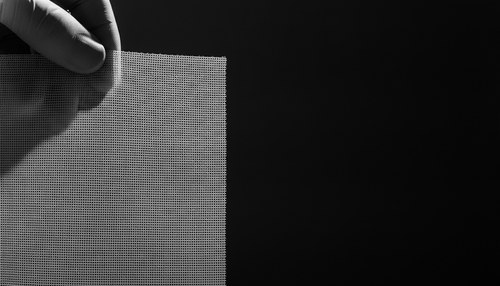
In order to correct this issue it would require going back in and performing a breast fold plication (capsulorrhaphy) to tighten up the pocket and move the implant back up to the appropriate position. I would perform this with mesh support (GalaFlex or dermal matrix) considering your breast pocket/tissue has already bottomed out in the past. I would also discuss maintaining your implant size or potentially going slightly smaller to take as much stress off of the breast fold plication as possible. A lift revision, without moving the nipple is likely necessary.
“Six months after augmentation with a small lift, what has gone wrong?”
Answered on RealSelf, May 2026.
The deformity you have developed is called a “waterfall” deformity. The implant position looks good. It’s your breast tissue that has fallen off of the implant, which you are feeling when you lay on your side. The small areola lift that you had will not adequately address your breast tissue falling off of the implant. The suture spitting is a wound healing issue that is separate from your deformity.
Revision surgery could help improve your waterfall deformity. Based on the degree of your deformity and amount of extra skin a Benelli/donut lift revision (larger than what you have already had) or more likely a traditional vertical/anchor lift revision may be performed to help move your breast tissue back up on top of your implant. I will often use a mesh product (GalaFlex Lite) to place over the top of the implant to try and maintain the position of the implant. You are healed enough (6 months) to consider revision surgery.
“My implants have slid out to the sides. Is that my chest or the surgery?”
Answered on RealSelf, May 2026.
I realize you are concerned about lateral slide, however it appears that you actually have 2 different issues going on. First you have a wider chest wall. The second issue is most likely an overly dissected implant pocket laterally by your original surgeon.
With wider chest walls there is more surface area for the implant to slide onto. I’m actually reassured with your photos that you have good cleavage formation when standing which suggests to me that your anatomy is likely not the issue here. Instead I’m concerned that you have some lateral slide of the implant where the implant is migrating too far laterally in the implant pocket causing a larger gap between the breasts. In this scenario I would consider revision surgery with a capsulorraphy using permanent sutures to plicate the implant pocket medially. This would likely also require a mesh material (P4HB or GalaFlex) to help support the capsule contract medially over time. If the implant profile/base width is too wide this may also need to be addressed at time of revision by exchanging for a smaller implant. Subfascial placement may also help with patients that have wider chest walls, however it’s likely in your scenario that addressing the implant pocket would be the main procedure needed to improve this.
It’s good to hear you have no pain at 2 years post-op. And aesthetically this issue can be improved.
“I want more upper fullness. Can I avoid a lift?”
Answered on RealSelf, Jun 2026.
It’s good that 2 out of 3 of your doctors in person do not think you need a lift as I would side with their comments over mine since mine would be based off of educated guessing through photos. I do agree that your upper poles are flat, this can happen with saline implants placed above the muscle that have been in for 14 years. I do think that your nipple areola complex is positioned a little low and there is breast tissue hanging below the nipple areola complex. Whether you need a lift or not will really depend on how high your nipple sits in relationship to your breast fold. Yours appears to be right on the fold. If it’s lower than this then getting larger implants would just end up giving you more ptotic breasts with a larger implant that the breast tissue slides off of and more tissue below the nipple, ie “waterfall” effect. I think you could do well with a small circumareolar lift.
As far as getting fullness I think a cohesive gel implant with a higher profile would help here more than deciding if its above or below the muscle. I understand you do not want it below the muscle as you are active and do not like the way it moves when you contract your pec. You can get fullness above the muscle you just will sacrifice a little coverage and accept a little more palpable/visible implant edge.
“My implants look like disks on my chest. What makes them look natural?”
Answered on RealSelf, May 2026.
From your photos yes you do look a bit like there are disks sitting on your chest. This can happen with subfascial placement since the implant is placed above the pec muscle, it can’t slip underneath like a submuscular implant. Combined with your previous lollipop incision and thinner tissue in the upper breast I can see how this may occur. I don’t think this will change over time.
If I was operating I would perform a:
-
Medial capsulorrhaphy, this is basically using permanent sutures to narrow the inside aspect of the implant pocket so the implants can’t migrate medially
-
Lateral implant pocket release, this would allow the implant to fall more laterally on the chest wall
-
I would recommend a smaller implant size with a width smaller than the ergo mini 220 and a lower profile implant so that you don’t flatten out as much when you lay down
-
Fat grafting, using lipofilling to the upper pole to help hide the implant contour especially superior medially. This can help camouflage the implant in patients with thinner tissues.
It would all be done in one surgery. You should discuss all of this with your surgeon.
Depending on if your skin envelope continues to thin out you should discuss possibly converting to a dual plane as well. Don’t pass on the lipofilling. It’s not a lot of fat, but it can make a world of difference.
The rule
- The implant pocket is key, support the pocket with mesh if necessary. Don’t believe tissue that has been expanded can be trusted to not do so again.
- The implant is the last thing I change, not the first!
- A lift is a lift… it’s just not called a “fold revision.”
Ten of these, with the full table, are on my surgical site.
Why choose Dr. Agullo
I am certified by the American Board of Plastic Surgery and the American Board of Surgery, completed my plastic surgery fellowship at the Mayo Clinic, and serve as Clinical Associate Professor of Plastic Surgery at Texas Tech University Health Sciences Center. Castle Connolly has listed me as a Top Doctor every year from 2014 through 2026. Breast revision is a large part of my practice, and most of it is other people’s augmentations.
Ready to talk?
Call (915) 590-7900, text 1-866-814-0038, or book online at agulloplasticsurgery.com/appointments. More of my answers are on RealSelf. #StayBeautiful
Find me at @RealDrWorldWide on Instagram, TikTok, and Snapchat, @Agullo on X, or @AgulloPlasticSurgery on Facebook.