Kris Jenner at 18 Months: What a Facelift Looks Like When It Has Settled

Black and white photograph of a woman in a long hooded evening cape seen from behind on a stone staircase at night, a line of camera flashes ahead of her, no face. Illustrative image, not a patient. Commentary by Frank Agullo, MD, FACS.

Rome, Saturday night, the All’s Fair premiere. Kris Jenner, 70, in a hooded cape that once belonged to Elizabeth Taylor. Hola says she stole the show and puts the facelift at “last year.” Call it eighteen months.

In April the internet said the lift was slipping. I wrote that one. This is the sequel. No diagnosis, just the clock.

The Honeymoon Is Not the Result

NewBeauty asked me about her in Boston. I told them “two, three months is kind of the honeymoon period for the facelift. That’s when she started posting and announcing that she had the facelift.”

“But on top of that, she had plenty of filters. Those looked amazing. They looked almost unrealistic, which they were.”

“And then when finally a year later we see a picture of her that, you know, they caught without her even being able to pose, you really see the real person.”

Why Month 18 Is the Honest Before-and-After

What my patients hear from us, in order.

“It does take patience because you’ll be swollen. You’ll have bruising. It takes a couple of weeks for people to be comfortable with other people seeing them. So, usually, two weeks, and then if you have any very special events, usually it takes six weeks to really look your best.”

Our pre-op nurse, before every facelift: “For the face procedure recovery, that one is more like a psychological healing. The reason why, because the face is something that we can’t hide. When we do our body, we just put the garment and loose clothes and nobody notices. The face we can’t. So the majority of our patients, around week 3 to 4, they’re regretting what they did. I like to let you know, because once you remember what I tell you when you’re healing, you’re like, okay, she did tell me.”

“You might be one of the lucky ones that don’t swell up a lot, you might be one of the not so lucky that swell up a lot. It varies per patient. Just remember, if you’re very, very swollen, you’re not gonna stay like that.”

“After surgery, firm or hard areas are fibrosis and edema, a normal part of healing. I have patients massage these areas, a lot, and I tell them it keeps getting softer over about three months. It is a lot better at three months than at three weeks.”

Our nurse practitioner, when one side looks different: “You’re always gonna have that one side that’s gonna be a little different than the other depending on the asymmetry of your face. But then again, it’s just so premature right now, because everything’s very swollen, everything’s very irritated. They just removed sutures, so it’s gonna look very red. So we have to let it heal, let the swelling continue to subside.”

Six weeks for an event. Three months for the firmness. A year for the swelling. Eighteen months, nothing left to hide behind.

What Holds and What Drifts

At 18 months Usually holds Usually drifts
Neck and jawline Platysma repair, the cleaned jawline. The deepest work goes last. Neck skin texture, which the lift never treated.
Midface and cheeks The malar fat pad, if it was released and moved as one piece. The midface, if the operation only pulled on the side of the face.
Volume Fat grafts that survived the first six months. Nothing, unless weight changes.
Skin Nothing the lift did. Sun damage, fine lines, pigment.
Scars Faded to a fine line. The earlobe, if closed under tension.

On volume: “Even though we know the patient is going to keep fifty to eighty percent of the volume, that percentage is quite unpredictable, so we are always overfilling.” And: “The good thing is that whatever does stay is going to be quite permanent, and of course maintaining your weight is going to help with that. We know that with aging, fat will decrease in the face regardless, so it is a procedure that we probably have to repeat in the future.”

On weight, from a read I did on another face this fall: “as surgeons we know that 10 or 15 pounds makes a huge difference in the face, whether you gain it or lose it.” And “A facelift will change the position of the tissues,” not the amount of them.

On the midface, the technique question I raised in April is answered at eighteen months, not at eight weeks. More in the facelift you can’t see. A premiere is still a premiere, lighting and glam included; I have not examined her.

A Seventy-Year-Old Face Sets Its Own Terms

“So we have to have realistic expectations, especially when you’re a lot older.”

As I put it in Boston, “if you operate on somebody that’s 30 or 40, it’s not the same as somebody that’s 70 or 80.”

“I think the deep plane lift and the endoscopic deep plane lift are great procedures, which create very natural and long-lasting results, and we’re seeing patients completely avoid the noninvasive procedures and go straight to the surgical procedures early on.”

“I think patients are becoming a lot more willing to undergo facial procedures, including facelifts, because the results now are actually natural and do not change their overall appearance. So they still have a self identity after these procedures and they’re recognizable; they’re just looking ten to fifteen years younger.”

What I Add So the Result Keeps Holding

“In my practice, I’ve really seen a huge increase in face procedures, specifically the deep plane face lift and deep plane neck lift, as well as the total endoscopic deep plane face lift, otherwise known as the ponytail lift. These face lifts are often combined with facial fat grafting, upper and lower eyelid surgery, microneedling with radiofrequency or laser resurfacing, sometimes an upper lip lift, fat transfer to the lips, and earlobe reduction.”

“With most facelift procedures we also do fat grafting. We usually recommend Morpheus8 with Iriescence PDGF, or the Sciton MicroLaserPeel with Profractional, depending on your skin type. We can also use exosomes or nanofat.”

The ten-year version: mother or daughter. Reading a face from photos without diagnosing anyone: Kristen Wiig. The surgical timeline is on agulloplasticsurgery.com; the maintenance version is on the Southwest Plastic Surgery post.

Why Choose Dr. Agullo

Dr. Agullo is certified by the American Board of Plastic Surgery and the American Board of Surgery, completed his plastic surgery fellowship at the Mayo Clinic, and serves as Clinical Associate Professor of Plastic Surgery at Texas Tech University Health Sciences Center. He trained in the endoscopic deep plane lift at the Ponytail Academy in Pittsburgh (intermediate) and Santa Monica (advanced). He has been a Castle Connolly Top Doctor for thirteen consecutive years, 2014 through 2026. His twelve-month photos are the real photos, usually in black and white.

Ready to Talk?

Bring a photo from ten years ago and one that bothers you now. I will tell you what a lift would move, what it would not, and what month eighteen looks like.

Call (915) 590-7900, text 1-866-814-0038, or book online at agulloplasticsurgery.com. #StayBeautiful

Find me at @RealDrWorldWide on Instagram, TikTok, and Snapchat, @Agullo on X, or @AgulloPlasticSurgery on Facebook.


Your Face Is a Lab Test: What the Harvard Selfie Model Reads, and What a Surgeon Can and Cannot Reset

Black and white photograph of a slim woman in a tailored blazer standing at a tall dark window, seen from behind, a phone face down on a small side table, hard single-source side light, no face. Illustrative image, not a patient. Commentary by Frank Agullo, MD, FACS.

Harvard built a model that reads biological age from a selfie and predicts who survives cancer treatment. The Lancet Digital Health, this week; the Boston Globe has the numbers; three to ten selfies at faceage.bwh.harvard.edu gets you one.

I have read faces for a living for nearly twenty years. The machine and I agree.

What the Model Found

More than 40 million training faces. About 38,000 patients. Look five years older than your age: 21 percent higher risk of death, adjusted for age, sex and cancer type. Where it looks: the folds beside the nose, the forehead, the temples. Smokers read oldest. Makeup, lighting, pose: nothing. Most plastic surgery: nothing.

The Temples

“The biggest surprise patients see is the change in their face. The face doesn’t have a lot of fat, but the fat it does have is the good fat, the baby fat, what makes you look young. In the face you see the loss of the fat under the eyes, the temporal areas, temporal wasting, the buccal fat. We see the face just melt down because it’s lost all that volume. That’s usually the first thing they notice in the early stages of the weight loss.”

“I think fat grafting has been rising for many years. It’s an essential component of almost all facial procedures. I incorporate fat grafting into lower eyelid surgery, I incorporate it into all my facelifts, and I incorporate it in any facial procedure where the patient has lost a considerable amount of weight. So the GLP-1 wave has certainly increased the demand, but just normal aging is comprised of loss of fat and volume in the face, as well as skin laxity and quality.”

The model stares at the temples. So do I.

The Skin

“If you compare the two time frames and look at the brows, they sit in the same position. They have not been lifted. The excess upper eyelid skin remains. The volume of the cheeks is still in the same place, and the jawline is still sharp. If you look at other photos around the March timeline, it almost seems like she had lost too much weight, and that may have helped make her appear older. In the latest photos, it seems like she gained some of that weight back, which of course fills the face and makes it look younger.”

My Kristen Wiig read, last week. Skin and volume, not surgery.

“We’re having less fat consumption, and fat is an emollient that helps with barriers in the cell membranes. We’re taking less protein, which generates collagen. And we’re usually taking a lot less fluid, so we’re dehydrated. All three decrease the moisture in the skin, which makes it look older a lot quicker. The topicals have two functions: barrier and attracting moisture, and then the antioxidants, which keep the skin looking younger, and retinoids, which can speed up turnover.”

The Cigarette

“Any type of nicotine is the same, and this is something patients don’t realize. They think that because we say smoking, we just want them to stop smoking. But any other form, like Zyn or dip or vaping, the patches and the gum, they all have nicotine. They have the same effect, which is they constrict the small capillaries that carry the nutrients and the growth factors and cells to the scar area to repair and heal.”

“If I know a patient is smoking, I will refuse to do most procedures, but especially any facelift or neck lift, any breast lift or breast reduction, and tummy tucks. All these procedures rely on flaps and capillary blood flow.”

Clamp the capillaries for twenty years and the skin shows it. Nicotine and surgery has the rule.

What Surgery Resets, and What It Does Not

“The most interesting thing about a face lift procedure is that it can make you look ten to fifteen years younger. Of course, that depends on the age at which you get the procedure. If you get it at forty, you’re probably going to look like you’re in your early thirties, or even late twenties. But time keeps moving forward, so if we repeat the procedure ten years later, we take you back to that earlier stage of yourself. Now you’re in your fifties, looking like you’re in your thirties.”

“The reason we’re seeing this increase exponentially is that patients are noticing signs of facial aging earlier, or they’ve been on GLP-1s and have had accelerated aging from fat loss in the face and skin sagging.”

“Preferably I want the patient to have lost the weight that they had planned and be weight stable after any facelift procedure. The reason being that oftentimes patients after a facelift tend to lose further weight. And of course, if we lose the volume, then we will have some aging. As the face deflates, the skin tends to sag.”

Most plastic surgery did not move the number. Not surprised. A lift moves tissue back. The model reads what the tissue is made of: fat in the temples, collagen in the skin, the blood a cigarette shut off. Fat grafting, skin care, no nicotine. The lift alone leaves those alone.

I can make you look younger. I cannot make you be younger. The photo knows the difference now.

Longer reads: face after weight loss, where the cream stops, mother or daughter. Surgical version: agulloplasticsurgery.com. Skin version: the Southwest Plastic Surgery post.

Why Choose Dr. Agullo

Dr. Agullo is certified by the American Board of Plastic Surgery and the American Board of Surgery, completed his plastic surgery fellowship at the Mayo Clinic, and serves as Clinical Associate Professor of Plastic Surgery at Texas Tech University Health Sciences Center. He has been a Castle Connolly Top Doctor for thirteen consecutive years, 2014 through 2026. Fat grafting is part of every facelift he performs.

Ready to Talk?

Upload the selfies if you like. Then bring the number to me and we will talk about which part of it is volume, which part is skin, and which part is a habit.

Call (915) 590-7900, text 1-866-814-0038, or book online at agulloplasticsurgery.com. #StayBeautiful

Find me at @RealDrWorldWide on Instagram, TikTok, and Snapchat, @Agullo on X, or @AgulloPlasticSurgery on Facebook.

The Facelift Patient Ozempic Sent Me: Thirty-Eight, Sixty Pounds Lighter, and Early

Black and white photograph of a slim woman in a tailored blazer seen from behind in a dark consultation room, a hand mirror face down on the desk in front of her, hard side light, face not visible. Illustrative image, not a patient. Commentary by Frank Agullo, MD, FACS.

Plastic Surgery Practice says the facelift patient is getting younger and the GLP-1 is why. I did not need the article. I needed a bigger schedule.

The Numbers

“About 30 percent of my patients involve a patient who has lost weight on GLP-1s. Before the GLP-1 era, my post-bariatric weight loss surgery practice was about 10 percent.”

“The most common procedure after GLP-1 weight loss right now is a deep plane facelift, a deep neck lift, and/or an endoscopic deep plane facelift, also known as the ponytail lift. This is surprising, because in the post-bariatric patients the most common procedure was a lower body lift, which addressed the abdomen, the buttock and the thighs.”

“The face and neck is the first thing. We’re seeing a lot more since Ozempic started. I’m almost doing three or four every week now. You lose the volume, and of course you’ve already stressed out the skin.”

I wrote up the consult share here.

What I Tell Her First

“Preferably I want the patient to have lost the weight that they had planned and be weight stable after any facelift procedure. The reason being that oftentimes patients after a facelift tend to lose further weight. And of course, if we lose the volume, then we will have some aging. As the face deflates, the skin tends to sag. So we would lose a lot of the benefit of having done the facelift if the patient continues to lose weight.”

Wait. Not forever. Until the scale stops.

What I Tell Her Second

“Fat is the best filler for a deflated face. A deflated face has lost fat. And what we do when we do fat grafting is replace the fat in those spaces. So it’s like with like.”

“Many people are using other fillers like Sculptra. But we have to keep in mind that these fillers create scar tissue and fibrosis, which may make the facelift procedure more difficult. It creates collagen through an inflammatory reaction.”

The filler she got to bridge the wait can make the lift harder. Fat versus filler, the long version.

Which Lift

“The differentiator is how much excess skin there is. If there’s substantial excess skin, then we do a deep plane open facelift with an incision in front of the ear. If there’s not a lot of excess skin, we can get away with doing everything through the incisions behind the hairline. Nevertheless, a full facelift is always going to have the endoscopic portion of the forehead and brows.”

“I think the deep plane lift and the endoscopic deep plane lift are great procedures, which create very natural and long-lasting results, and we’re seeing patients completely avoid the noninvasive procedures and go straight to the surgical procedures early on.”

Early. That is the word the magazine and I agree on. At thirty-eight with good skin and an early jowl, it is usually the ponytail lift, nothing in front of the ear.

What the younger patient says (typical, not a real patient) What I hear
I look tired since I lost the weight Volume. Fat first.
My jawline is gone Early laxity. Ponytail lift once the weight is stable.
My neck is loose Real excess skin. Deep plane with neck lift.
Can filler hold me over Small corrections only. Not the bridge.

Restoration

“More mature patients, and weight loss patients, especially the GLP-1 patients, are looking for a type of restoration. I still feel that the overall majority of patients would like to obtain a better version of themselves, even a better version of themselves before they had their changes through weight loss, aging or pregnancy.”

The surgical version, with the table by skin and weight, is on agulloplasticsurgery.com. The fat-first version is on the Southwest Plastic Surgery post. Earlier: the face after weight loss.

Why Choose Dr. Agullo

Double board-certified, by the American Board of Plastic Surgery and the American Board of Surgery. Mayo Clinic plastic surgery fellowship. Clinical Associate Professor of Plastic Surgery at Texas Tech University Health Sciences Center. Castle Connolly Top Doctor for 13 consecutive years. Ponytail Academy courses in Pittsburgh and Santa Monica.

Ready to Talk?

Lost the weight, lost the face? Come before the filler. (915) 590-7900, text 1-866-814-0038, or book at agulloplasticsurgery.com/appointments. #StayBeautiful

@RealDrWorldWide on Instagram, TikTok, and Snapchat, @Agullo on X, or @AgulloPlasticSurgery on Facebook.

Salma Hayek, the “Surgical Scars” Reel, and What a Facelift Scar Actually Looks Like

Salma Hayek on the red carpet in September 2025, long dark hair in a high half ponytail, drop diamond earrings, photographed at a three-quarter angle. Commentary by Frank Agullo, MD, FACS.

Allure, last year. Salma Hayek: no plastic surgery, no filler. Hair pulled back, ear out, see for yourself.

Salma Hayek on the red carpet in September 2025, long dark hair in a high half ponytail, drop diamond earrings, photographed at a three-quarter angle. Commentary by Frank Agullo, MD, FACS.
Salma Hayek at the Kering Foundation Caring for Women Dinner in New York, September 11, 2025. Photo: lev radin/Shutterstock, editorial use.

This week, a reel. A doctor, her photos side by side, a finger on “surgical scars.” Millions of views.

I have not examined her. Neither has he. What I can show you is my own incision map.

Where the Scar Goes

“In your case, you do have a lot of loose skin. So we would put a scar here. It would go here behind the tragus. And then it would continue behind the ear. Really, once the scar is healed, you really can’t see it.”

“The scar’s gonna be here, so they’re gonna be behind the hair, so you’re not gonna see those. But you are gonna have one scar here, and then it’s gonna go behind the ear, and hug in the hairline. So everything hides really, really well. I can’t do it without any scars in front of the ear. I’m afraid, because we do have to lift significantly, you’re gonna have these wrinkles here if I don’t take out your skin.”

Behind the tragus. Around the lobe. Into the hairline. That is the map.

“Those hide really well, and they’re very hard to see afterwards.”

The Facelift With No Scar in Front of the Ear

“So the ponytail, I make the incision here and here. And I’m still able to pull here, and I’m able to pull here, but without putting a scar in front of the ear. So that’s really nice.”

“So we do the ponytail endoscopic. There’s no scar in front of the ear. And you get the same result, but no scar.”

“The differentiator is how much excess skin there is. If there’s substantial excess skin, then we do a deep plane open facelift with an incision in front of the ear. If there’s not a lot of excess skin, we can get away with doing everything through the incisions behind the hairline. Nevertheless, a full facelift is always going to have the endoscopic portion of the forehead and brows.”

No scar in front of the ear proves nothing. The facelift you cannot see explains.

By the ear in a photo What it can be
A fine line in front of the ear A well-placed facelift scar, a skin crease, the tragus shadow, or compression from a camera angle
Nothing in front of the ear No surgery, a ponytail lift through the hairline, or a scar tucked behind the tragus
A notch or pulled earlobe A lift closed under tension, usually an older technique
Hair over the ear A hairstyle

How I Actually Read a Face

“A facelift will change the position of the tissues, and what we’re seeing on her is a change in the volume or amount of tissue.”

Position, volume, skin. Not shadows by an ear. Same method as Kristen Wiig yesterday and Kris Jenner before that.

Why ‘No Surgery’ Can Be True

“I don’t think this is surgical. It is quite clear that she’s had surgery in the past, but not in this recent transition.”

Different actress, same lesson. A denial is not proof. A reel is not an exam.

The incision map, drawn out, is on agulloplasticsurgery.com. The no-incision version is on the Southwest Plastic Surgery post.

Why Choose Dr. Agullo

Double board-certified, by the American Board of Plastic Surgery and the American Board of Surgery. Mayo Clinic plastic surgery fellowship. Clinical Associate Professor of Plastic Surgery at Texas Tech University Health Sciences Center. Castle Connolly Top Doctor for 13 consecutive years. Ponytail Academy courses in Pittsburgh and Santa Monica.

Ready to Talk?

Pull your hair back. I will show you where the scar would go, and where it would not. (915) 590-7900, text 1-866-814-0038, or book at agulloplasticsurgery.com/appointments. #StayBeautiful

@RealDrWorldWide on Instagram, TikTok, and Snapchat, @Agullo on X, or @AgulloPlasticSurgery on Facebook.

Mother or Daughter? The Facelift That Is Almost Ten Years Old

Black and white composite portrait joining half of a mother's face and half of her daughter's face down the midline, both with long wavy hair. The mother had a facelift with Frank Agullo, MD, FACS almost ten years earlier. Shared with permission.

Mother or daughter?

“Mom is 23 years older than her daughter, and I performed her facelift almost 10 years ago!”

I posted the two halves on Instagram this morning and asked one question. Left or right?

“A great facelift isn’t about looking different. It’s about looking like a younger version of yourself, even years later!”

Not Pulled. Moved.

“It’s still a deep plane facelift, so I am pulling the deeper structures. We’re not pulling on the skin, that’s what gives that pulled look.”

A pulled face would give the game away in a second. A moved one does not.

“It’s still going to be you. It’s going to be completely you, just a younger version. I’m sure if you look at your older photos, your cheeks were up a little bit higher, you didn’t have this fullness here, and your brows were probably up a little bit higher too. So it is just setting the clock back.”

Ten Years On

“It lasts about seven to ten years.” Then the clock runs again, from the new starting line.

“You’re 52, and we go back ten years. So you’re going to look like you’re 40. And then you’re going to start over. So you keep aging, and then in about ten years we would do a touch up, and we bring you back ten years. So you’re still 40. So in your sixties, you’re going to look 40.”

“We kind of lock in the younger age, and then ten years go by, and we do a touch-up, and we get you back to that. It’s a good idea, because if we do it when you’re seventy years old, we can only make you look sixty.”

Lock in your younger self.

Guess

Left or right? Answer on the post. The full version, with how long a deep plane lift lasts and why patients now do it earlier, is on agulloplasticsurgery.com.

Why Choose Dr. Agullo

Double board-certified, by the American Board of Plastic Surgery and the American Board of Surgery. Mayo Clinic plastic surgery fellowship. Clinical Associate Professor of Plastic Surgery at Texas Tech University Health Sciences Center. Castle Connolly Top Doctor for 13 consecutive years.

Ready to Talk?

Twenty-three years apart. You still have to guess.

Call the office at (915) 590-7900, text us at 1-866-814-0038, or book a consultation at agulloplasticsurgery.com/appointments. #StayBeautiful

@RealDrWorldWide on Instagram, TikTok, and Snapchat, @Agullo on X, or @AgulloPlasticSurgery on Facebook.

The Price Nobody Prints: What a Facelift Costs and Why

Black and white profile portrait of a woman in her fifties, jawline and neck lit as a single architectural line.

Search “facelift cost” and you get a national average, a range so wide it is useless, and eleven pages of practices inviting you to call for pricing.

Call for pricing. As though the number were a trade secret rather than the single most common question in aesthetic surgery.

I publish mine. Not because I am cheaper (I am not) but because the alternative is a consultation that opens with sticker shock.

The Numbers, Since You Asked

The full range is $15,000 to $75,000, depending on what combination the result actually requires. The tiers underneath it, published on the fees page:

Procedure Starting Fee
Mid facelift (mini or S-lift) $15,000
Lower facelift (lower face and neck) $19,500
Full facelift $25,750
Endoscopic facelift (the ponytail lift) $30,000
Neck lift alone $15,000

“Those prices are minimums, and they include anesthesia, the surgical facility, medical tests, garments, and recovery products. Because pricing does change, please confirm current pricing at agulloplasticsurgery.com/fees, which is the page we keep updated.

A final quote is only given after a consultation, and it will include everything.”

Two quotes that look thousands apart are frequently the same operation described differently.

The Naming Problem

Deep plane. Extended deep plane. Endoscopic deep plane. Ponytail lift. MACS. SMAS plication.

Patients arrive fluent in this vocabulary and convinced the terminology sets the price. Mostly it does not. Deep plane, extended deep plane, SMAS plication: all map onto the tiers above.

The ponytail lift is the exception. It takes a little bit longer, and it always requires fat grafting in every case, so the graft is bundled rather than optional. Operative time and a second procedure, not a demand premium.

What decides technique is anatomy:

“The differentiator is how much excess skin there is. If there’s substantial excess skin, then we do a deep plane open facelift with an incision in front of the ear. If there’s not a lot of excess skin, we can get away with doing everything through the incisions behind the hairline. Nevertheless, a full facelift is always going to have the endoscopic portion of the forehead and brows.”

Why the First Hour Costs the Most

The economics patients never get told:

“Combining does change the total, but usually in your favor compared to doing things separately. The first hour of operating room and anesthesia time is the most expensive, because of the equipment and the setup, and you only incur that once instead of two or three times. The same goes for medications, moisturizer, scar cream, and lymphatic massages, you only pay for those once.

That said, each additional procedure adds surgical time, and pricing reflects the time and the complexity of the combination. Adding eyelids, a lip lift, an earlobe reduction, fat grafting, or a skin resurfacing treatment will increase the total.”

Not a discount. Arithmetic.

What I Am Actually Charging For

The version patients think and rarely ask:

“Cost varies with the doctor’s experience. Surgeons in high demand consistently deliver good results in a safe environment with top-quality products, and that increases cost. I allow sufficient operating room time to work in a paced fashion, for safety. Low-cost surgeries get compressed to cut anesthesia and operating room fees.

Our patients get direct nurse access 24 hours a day, and all surgeries are done in an accredited surgical center.”

Pace is not a luxury. Compressed surgery is what makes a low quote possible.

What I tell every patient shopping on price:

“I always feel like when things are too good to be true, they usually are. If a price seems far below what everyone else is charging, you have to ask what’s being cut, the surgeon’s experience, the accreditation of the facility, the type of anesthesia, or the follow-up care.”

It is always one of those four.

What Goes With the Lift

“With most facelift procedures we also do fat grafting. We usually recommend Morpheus8 with Iriescence PDGF, or the Sciton MicroLaserPeel with Profractional, depending on your skin type. We can also use exosomes or nanofat. We recommend ELIXIR MD, which is LED light therapy, for almost double the speed of recovery. And a lot of patients will require an upper blepharoplasty, a lower blepharoplasty, a lip lift, or an earlobe reduction. Those all do increase the cost.”

Lifting tissue that has lost volume gives you a tighter version of a deflated face.

Patients Are Arriving Earlier

“I think the deep plane lift and the endoscopic deep plane lift are great procedures, which create very natural and long-lasting results, and we’re seeing patients completely avoid the noninvasive procedures and go straight to the surgical procedures early on.”

They watch the results hold, and they come earlier. I think they are right.

Paying for It

“Patients can finance through PatientFi, AlphaEon, Cherry, or CareCredit. We also offer direct financing through the practice, where you make payments directly to us ahead of your surgery. That lets you schedule the procedure out for the time you need, and make the payments periodically at your convenience.

Beyond that, patients can pay by credit card or cash, or arrange financing through their own bank or another institution.”

Where I Trained on This

Double board-certified. Mayo Clinic plastic surgery fellowship. Clinical Associate Professor of Plastic Surgery at Texas Tech University Health Sciences Center Paul L. Foster School of Medicine. Castle Connolly Top Doctor thirteen consecutive years. Endoscopic deep plane training at the Ponytail Academy in Pittsburgh, then the advanced course in Santa Monica.

The full clinical detail, including what each tier covers and how the add-ons price, is in the clinical breakdown on agulloplasticsurgery.com.

Ready to Talk?

Come with a budget and a question and leave with a real number that includes everything. Call (915) 590-7900, text 1-866-814-0038, or book online. #StayBeautiful

@RealDrWorldWide on Instagram, TikTok, and Snapchat, @Agullo on X, or @AgulloPlasticSurgery on Facebook.

The Facelift With No Visible Scar: Deep Plane, the Neck, and Why I Dissolve Old Filler

Black and white profile portrait of a woman with hair pulled back into a ponytail, jawline catching the light. Ponytail deep plane facelift commentary by Dr. Frank Agullo, MD, FACS.

Most facial consultations begin with the same small gesture. Someone lifts the skin at their cheeks in the mirror, watches the jawline snap into place, and says, “I just want this back.”

Underneath that gesture is almost always the same set of problems. Jowls. A heavy neck. A lower face that sags when they smile. And, increasingly, a face tired of being chased with filler.

Here is how I talk about the fix, candidly.

A Facelift You Cannot See the Scars From

For the right candidate, I use a facelift with no visible scars. The incisions hide in the hairline, which is why it is called a ponytail facelift, and a good portion of the lift is done endoscopically.

It brings the brow up just slightly and lifts the cheek, so that when you smile the lower face softens instead of dropping. You can still wear your hair up.

“Is This Just Pulling the Skin Tight?”

No, and that is the entire point. It is a deep plane facelift, which means I reposition the deeper tissues rather than pulling on skin. That is what makes it look natural and last. You do not end up looking pulled or windswept, because the tension lives in the deep layer, not in your skin.

What the Neck Actually Needs

For the neck, I place a small incision under the chin and behind the ear. Through that I can remove a little of the gland and the deeper fat and build a tight, youthful jawline.

Taking out the deeper fat matters for the long run. Even if your weight changes later, the result will not blur as much, because the fat that tends to come back is more superficial.

And no, most people do not need a chin implant. If you already have a strong chin, the neck lift alone makes it look more pronounced and sharper, because right now it is getting lost.

My Strong Opinion on Old Filler

This is where I will not hedge. Chasing facial aging with more and more filler eventually stops helping and starts distorting, especially stacked over high cheekbones. Old filler often does not fully dissolve. It migrates.

So during the facelift, I can place medication to dissolve some of that old filler, which leaves us working with your own tissues instead of building on top of someone else’s product. I would rather reposition your own anatomy than keep adding to it.

The Add-Ons That Travel With a Facelift

Concern What I Often Add
High forehead, hairline sits high Hairline-lowering incision to move the scalp forward, hair transplant later
Hollow folds, tired upper-eye shadow A little fat grafting, often sparing you an upper eyelid surgery
Old filler over the cheeks Medication to dissolve it during surgery
Slow bruising and swelling ElixirMD LED therapy starting day seven

On the forehead, the rule of thirds says it should measure about the same as the length of your nose. If your hairline sits high, I can make an incision at the hairline and move the scalp forward to close that distance, with a tiny scar in front, and refine it later with a hair transplant. It can be done at the same sitting as the facelift.

For the eyes, I almost always add a little fat to the folds and sometimes the upper eyelid hollows. The fat is permanent and very natural. It is alive, so it shifts a touch with weight, but it erases the tired shadow so you look awake, and it often keeps you away from a separate upper eyelid surgery.

What Recovery Is Really Like

The good news about facial surgery is that it does not really hurt. The pain level is close to zero. What you deal with is swelling and bruising.

Plan on a couple of weeks before you are comfortable being seen, and about six weeks to be ready for a special event. Most people return to work after two weeks, sometimes with a little makeup. We also offer an LED therapy called ElixirMD starting seven days after surgery that roughly doubles the speed of recovery, and Morpheus8 microneedling can refine skin quality later.

Who I Think Is a Candidate

I am candid in the room about who this is for. The ponytail deep plane facelift is for the patient who has real structural change, jowls, a softening jawline, a lower face that drops with a smile, not for someone whose only complaint is fine surface lines that a good skincare plan and a laser would handle. It is ideal for a patient who wants to keep wearing their hair up and who refuses the visible incisions in front of the ears. Healthy patients who do not smoke heal the cleanest, and I will tell a smoker to stop well before I will operate.

The other thing I look for is the neck. So often the neck is the tell, and a beautiful cheek lift over an untreated neck looks unfinished. When I assess a face, I plan the cheek, the jawline, and the neck as one unit, because that is how they age and that is how they should be corrected.

Why I Chose This Approach

I completed my plastic surgery fellowship at the Mayo Clinic and I teach facial surgery as a Clinical Associate Professor of Plastic Surgery at Texas Tech University Health Sciences Center Paul L. Foster School of Medicine. I trained for the deep plane and ponytail technique at the Ponytail Academy in Pittsburgh and Santa Monica. I chose this approach because it lasts and because it looks like you, not like surgery.

See the Patient-Facing Versions

For the patient-facing walkthrough, see the companion post on agulloplasticsurgery.com. For the treatment menu, see the version on swplasticsurgery.com.

Ready to Talk?

If you are pulling your cheeks up in the mirror, that is your sign to come in.

Call the office at (915) 590-7900, text 1-866-814-0038, or book online at agulloplasticsurgery.com. #StayBeautiful.

@RealDrWorldWide on Instagram, TikTok, and Snapchat, @Agullo on X, or @AgulloPlasticSurgery on Facebook.
The Field Is Diverging From Thread Lifts: A Surgeon’s Read on Nonsurgical Lifting in 2026

Black and white editorial portrait of a woman in profile in soft side light, jaw and cheek defined. Nonsurgical lifting commentary by Dr. Frank Agullo, MD, FACS.

There is a growing demand for lifting and contouring of the face without surgery. This actually also extends to the breast, body, even the buttocks. I think the growing demand has accelerated due to GLP-1 treatments, where patients undergo rapid weight loss and the appearance of aging shows up much more accelerated. There is also a tendency for maintenance early on, in order to avoid bigger procedures later.

I want to lay out where I think these technologies actually earn their place, and where the field is quietly moving on.

Start With What Aging Actually Is

As we know, aging is a combination of two things: skin laxity and volume loss. In weight loss patients, the skin has already been stretched out. The volume loss shows up as aging. Added to that, the skin that had previously been stretched out is now sagging, so the aging shows up much, much faster than in regular patients.

That is why the GLP-1 patient is changing how this conversation goes. The clock runs faster on them, and the early-maintenance mindset has become the norm rather than the exception.

The Volume Tools, Old and New

We’ve been using fillers underneath the eyes and the temples for quite a long time. The newer volume replacement materials include Sculptra, which is a biostimulator. After it is injected, the body tries to absorb the material and thus produces collagen.

The more exciting category is biostimulating and regenerative. PRP, protein-rich plasma, and PDGF, the platelet-derived growth factor. PDGF has not been cleared for injection, although some practitioners are using it off-label, but it is a great adjunct to any procedure that performs microneedling or resurfacing. It regenerates the tissues quicker, and with the growth factor we get a younger appearance and more protection of collagen.

Lipoderma is one of the newest available fillers. It is a donor-derived fat graft, which has a framework that allows the ingrowth of your own fat cells. This is a more permanent solution, more natural and more like the actual fat that we have in our face, rather than scar tissue or collagen. Tiger Aesthetics is going to come out next year with a similar product called Derma Clay, for the face and hands. They currently have one called Aloe Clay, which we use in the breast and buttock as a natural donor fat graft filler. That filler is more coarse, so it does not work well on the face.

The Tightening Tools

For skin tightening, the best therapies at the moment are radiofrequency. The use of Morpheus8, which is microneedling with radiofrequency, is one of the most sought-after treatments in our practice. We also use FaceTite in the face, which is a more invasive radiofrequency treatment that treats under the skin and above it, and is usually combined with even liposuction of the neck.

We haven’t seen a lot of new technologies in laser, but the fractionated lasers are still the most used. One has to be careful with skin types, as darker skin types tend to create hyperpigmentation or scarring.

Why I Have Almost Left Thread Lifts Behind

I think thread lifts had a peak in the last two years, but patients have found that they’re really not long-lasting. The threads can behave differently on one side of the face than the other and do create asymmetries. Sometimes these threads are not completely absorbed by the body and can be palpated, or give other problems. We’ve really almost diverged away from thread lifts, and we’ve started to do more minimally invasive surgical procedures instead.

That is the quiet shift in the field worth naming out loud. The threads promised a surgical result without surgery, and they did not deliver it consistently enough to keep.

Set the Expectations Honestly

All these treatments are good in the early stages of aging, or weight-loss-related aging, and they usually give subtle improvements. They can correct specific areas like temporal wasting, hollowness underneath the eyes, or nasolabial lines. The longevity depends on the therapy. Regular fillers can last up to a year. Sculptra tends to last longer, as the collagen generated stays around. The new regenerative treatments, like Lipoderma, or in the future Derma Clay, will be longer-lasting, if not permanent. But aging continues once we set the clock back, even in surgical procedures.

The expectations have to be toned down in nonsurgical procedures and well communicated to the patient. This is true especially with skin tightening using radiofrequency. A lot of the tightening is going to depend on the patient’s own response and cannot be foreseen. Every patient reacts differently and gets different tightening results.

The Test That Sends a Patient to Surgery

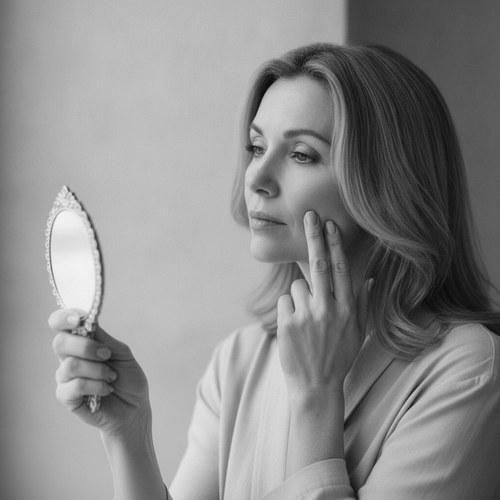
Here is my rule of thumb. If the patient is consulting with me and they reach up to their face and pull with their fingers upwards, bringing their brows and cheeks and jowls up, or even tightening their neck back, that’s a sign the patient needs a surgical procedure and not a noninvasive one.

The deep plane lift and the endoscopic deep plane lift are great procedures, which create very natural and long-lasting results. We’re seeing patients completely avoid the noninvasive procedures and go straight to the surgical procedures early on. I trained the deep plane facelift the long way, through the Ponytail Academy intermediate course in Pittsburgh and the advanced course in Santa Monica, after a Mayo Clinic fellowship. The patients who skip straight to it are usually the ones who already did the mirror test on themselves.

The Credential Behind the Opinion

Double board-certified by the American Board of Plastic Surgery and the American Board of Surgery, American College of Surgeons Fellow, Mayo Clinic plastic surgery fellowship, Clinical Associate Professor of Plastic Surgery at Texas Tech University Health Sciences Center Paul L. Foster School of Medicine, and Castle Connolly Top Doctor for thirteen consecutive years. I do both the injectables and the surgery, which is exactly why I can tell you when the injectable is the wrong answer.

Ready to Talk?

If you want the honest read on which side of the line your face is on, that is a consultation, not a sales pitch.

For the patient-facing clinical guide and the mirror test in detail, see the companion post on agulloplasticsurgery.com. For the MedSpa-to-surgery continuum, see the version on swplasticsurgery.com.

Call (915) 590-7900, text 1-866-814-0038, or book online at agulloplasticsurgery.com. #StayBeautiful.

@RealDrWorldWide on Instagram, TikTok, and Snapchat, @Agullo on X, or @AgulloPlasticSurgery on Facebook.

The Lower Third Tells the Story: A Surgeon’s Read on the Part of the Face Everyone Misses

The Lower Third Tells the Story: A Surgeon's Read on the Part of the Face Everyone Misses. Dr. Frank Agullo, MD, FACS, double board-certified plastic surgeon at Southwest Plastic Surgery in El Paso, Texas.

A UK paper called me on a Friday afternoon last week for a quote on a public figure whose face had been the subject of a thousand “what did she have done” comments online. The reporter wanted a technical read. She had already spoken to a colleague of mine, Dr. Douglas, who had focused on the lower half of the face. She wanted to know whether I agreed.

I did. Not because I had any inside knowledge of the patient. Because the lower third of that face was the part of the face that had changed, and the change was readable from the photographs.

Every plastic surgeon has had this exact conversation a thousand times in private, across a desk, with a real patient sitting on the other side of the desk asking about a feature that is not actually the feature that needs the work. The features the patient points to are almost always the upper or middle third. The eyes. The brows. The cheekbones. The features the surgeon wants to talk about are almost always in the lower third. The jawline. The cheek pad. The perioral region. The chin.

So let me write the long version of why. Not for the celebrity story. For the patient.

The Three Thirds, and What Lives in the Lower One

The face divides into three horizontal thirds. Upper, hairline to brow. Middle, brow to base of nose. Lower, base of nose to chin. Each third ages on its own clock. Each third answers to different operations. Each third tells the surgeon something different.

The lower third holds the jawline border, the jowl, the prejowl sulcus, the labio-mandibular fold, the marionette region, the corner of the mouth, the perioral skin, the chin, the submental fat pad, the platysma, and the cervicomental angle. The cheek pad, anatomically a midface structure, drops down into the lower third as the supporting ligaments lengthen and is therefore best read together with what is happening below it.

The lower third is the integrator. Almost every change in the upper and middle thirds eventually shows up in the lower third. Volume loss in the midface drops into the marionette region. Skin laxity above the jaw drops into the jowl. Loss of mandibular definition takes the line that the eye reads as “young” and erases it. A small chin makes the whole lower face look heavier than it is.

The features a patient points to in the mirror are the noise. The lower third is the signal.

The Five-Minute Read Across the Desk

When I sit across from a new patient, the read happens in the first five minutes, before the patient has finished telling me what she came in for. The order goes roughly as follows.

The mandibular border, angle to chin. Clean line, or interrupted by a jowl that has migrated forward and down over the bone.

The cheek pad position. Sitting high on the zygoma, or slid forward and down into the upper lower third.

The perioral region. Lip volume, vermilion border, philtrum, upper lip length, dental show in repose, dental show in animation, corner of the mouth, marionette.

The chin and the cervicomental angle. Projection in profile. Submental fullness or laxity. Platysma. The line between face and neck.

That read is what shapes the next forty minutes of the consultation. If the patient came in to discuss her cheekbones and the read says the lower face has dropped, we are going to spend the next forty minutes on the lower face, because that is the conversation that produces a plan that matches her actual face.

The Five Forces That Change the Lower Third

There are five primary drivers of change in the lower third, and most patients have more than one of them in play.

Bone resorption. The mandible and the maxilla both lose bone with age. The lower jaw narrows. The chin recedes a few millimeters. The soft tissue above the bone has more space to drift.

Ligament lengthening. The retaining ligaments that hold the cheek pad to the zygoma and the jowl out of the mandibular border lengthen over decades. The soft tissue slides down the rails.

Volume loss. Deep fat compartments shrink unevenly. The midface flattens. The nasolabial fold deepens. The corner of the mouth turns down because the structures behind it have lost volume, not because the patient is unhappy.

Skin laxity. Collagen and elastin both decline. The dermis thins. The skin loses its grip on the underlying structures and starts to read the shape of whatever has moved.

Weight change and prior treatment. Significant weight loss, especially the rapid loss now common with the GLP-1 medications, can age a lower third by a decade in eighteen months. Years of poorly placed filler can create a lower face that reads heavier than it would have aged on its own. I see both of these often enough now that they deserve their own line in the read.

The Operation That Addresses the Lower Third Best in 2026

For most patients with a dropped cheek pad, an early jowl, and a marionette region that has lost its definition, the right operation in 2026 is a deep plane facelift. The deep plane lifts the cheek pad back to the zygoma, repositions the jowl behind the mandibular border, and restores the line that the eye reads as “young.” It does not stretch the skin to do the work. It moves the deeper structures back to where they used to live and lets the skin redrape.

I trained the deep plane facelift the long way around. Mayo Clinic plastic surgery fellowship, then the Ponytail Academy intermediate course in Pittsburgh and the advanced course in Santa Monica, then years of doing the operation. The “facelift won” debate is over. The debate now is how deep, how wide, on whom, and through which access. The answers depend on the lower third.

Why Editorial Reads of Public Figures Are Almost Always Wrong

When a paper or a website asks a surgeon to read a public figure’s face, the answer is usually written in the form of “she had X.” Filler, threads, deep plane, deep neck lift, buccal fat removal, chin implant. The shortcut sells better than the longer answer.

The longer answer is that the change you are reading on a public figure’s face is almost never one thing. It is almost always a combination of things, layered over years, sometimes with a real operation in there, sometimes without, sometimes with a weight change or a hormonal change or a hair change that contributes more than any procedure on the list. Telling the difference from a press photograph is hard. Telling the difference from across a desk in a consultation room, with the patient’s photographs from a decade earlier and the chance to put hands on the face, is easy.

That is why I take the call from a reporter when one comes, and that is why I am careful with my answer. The technical read is fair game. The diagnosis of “she had X” is not.

What I Will Not Do

I will not chase the cheekbone with filler in a face whose lower third has dropped. That makes the lower face look heavier, not the upper face younger.

I will not place a filler pillow under a marionette fold that needs the jowl repositioned.

I will not augment a chin that needs the soft tissue above it moved, not added underneath.

I will not perform a facelift on a patient whose ligaments are still intact and whose lower face is still well-defined, because that patient does not need one yet.

The honest consultation starts with the honest read. The honest read starts with the lower third.

Ready to Talk?

If a facial procedure is on your mind and you are not sure where the conversation should start, the conversation should start with the lower third. We will read it across the desk, set it next to the rest of your face, and build a plan that matches the face in front of me, not the feature you walked in to ask about.

For the clinical patient-facing version of this conversation, see The Lower Third Tells the Story: How a Surgeon Reads a Jawline on agulloplasticsurgery.com. For the practice-program version that lays out the surgical and non-surgical continuum at Southwest Plastic Surgery, see The Lower Face Program at Southwest Plastic Surgery.

Call (915) 590-7900, text 1-866-814-0038, or book online at agulloplasticsurgery.com. #StayBeautiful.

@RealDrWorldWide on Instagram, TikTok, and Snapchat, @Agullo on X, or @AgulloPlasticSurgery on Facebook.
Preservation, Not Minimalism: I Wrote a Manifesto for Connectively

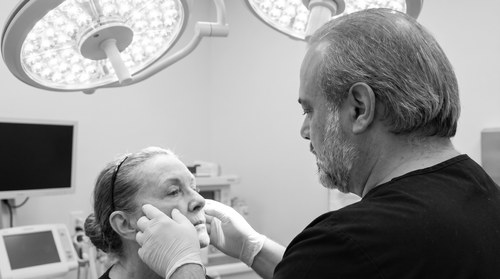
Dr. Frank Agullo, MD, FACS, double board-certified plastic surgeon in El Paso, Texas, in black scrubs in the operating room examining a facelift candidate as part of the preservation-era technique described in his bylined Connectively article.

Preservation, Not Minimalism: I Wrote a Manifesto for Connectively

I keep hearing the same thing in consults. “Doctor, plastic surgery is going smaller now, right? Less volume. Subtler results.”

Half true. Mostly misleading.

Connectively just published my bylined piece on this, and I wanted to push back on the frame in my own voice here too. Volume has not gone anywhere. Patients in my OR this month still wanted fuller breasts. Fuller hips. I still placed implants. I still grafted hundreds of cc of fat per side.

What changed in the last decade is what we refuse to damage when we add that volume.

The Old Bargain

For thirty years, adding volume came with a quiet compromise we did not really put into words for patients.

Breast augmentation, the way I was first taught to do it in training, meant a wide pocket dissection. That meant cutting through the suspensory ligaments of the breast. Those are the fibers that hold the breast up against gravity. We took them down to make room for the implant and we did not think twice about it. The implant looked great at six months. At year five, the breast started to bottom out, and by year ten the patient was back asking what happened.

Gluteal fat grafting in its early era was a free pass. Pre-2015, the field grafted into and through planes that we now know are dangerous. Plenty of surgeons added beautiful volume. A subset of patients did not survive it. The complication that killed people was fat embolism, and the cause was depth, not volume.

Facelifts of that era depended on tension. We pulled skin tight over tissue that had already failed structurally. At one year the patient looked rested. At ten years the patient looked pulled. The lateral sweep. The wind-tunnel mouth. That look did not come from “too much” facelift. It came from a facelift that was working only at the surface.

We did not really articulate any of that to patients at the time. Two reasons. The long-term follow-up data on these trade-offs was incomplete, and in some cases still is. And we did not have reliable alternatives. So we delivered volume, and the side effects came due fifteen years later in someone else’s consult room.

I had the luxury, during my Mayo Clinic plastic surgery fellowship, of seeing both eras in the same hospital. The old habits and the new evidence in the same hallway. That bothered me then. It still drives how I plan a case now. So does the Ponytail Academy training I did later, intermediate course in Pittsburgh, advanced course in Santa Monica, which gave me a deep plane facelift approach that holds at year ten the way an earlier-era SMAS tightening simply does not. Thirteen consecutive Castle Connolly Top Doctor years (2014 through 2026) is a long enough patient sample to feel honest about that claim.

What Preservation Actually Looks Like in My OR

The word “preservation” gets used loosely. So let me show you what it actually means at a case-planning level, by procedure.

Breast Augmentation

I am using ergonomic, lighter implants now (Motiva is the line I use most, see my Motiva Preserve post for what the recovery actually looks like). They project differently, with less weight per cc on the native tissue. That alone lets me use a slightly smaller implant for the same on-camera result.

My pocket dissection is narrower. The suspensory ligaments of the breast, particularly the inframammary ligament along the fold, are preserved instead of divided. The dual-plane release is precise rather than broad. The implant sits where I put it and stays there, because the soft tissue scaffold underneath it is still intact.

My patient leaves the OR with a result that looks finished on day one. The deeper test is what the breast looks like at year five and year ten. That is what preservation buys.

Gluteal Fat Grafting

If you are a regular reader, you know I do not graft above three or four hundred cc per side without a reason. The reason for me is not volume restraint. It is plane discipline.

Every BBL I do is ultrasound-guided. The probe sits on the buttock while I am cannulating. I can see the fascia. I can see the cannula. I can see the plane I am working in, in real time. That is not optional anymore. That is the standard.

Three hundred, four hundred, five hundred cc per side is achievable safely now in carefully selected patients with the right anatomy. Volumes that fifteen years ago carried a risk profile I would not accept. The volume number is not the safety story. The plane is the safety story.

This is the era I trained into. I sit on safety task forces for the Aesthetic Society and the conversation is no longer whether to use ultrasound. It is which probe and how to teach it.

Facial Volume

Here is where most patients have the wrong mental model entirely.

The patient sits down and tells me, “I do not want to look puffy. I do not want filler face.” Good. Neither do I. So I am going to put more volume in your face than you think, just not where you are picturing it.

Aging is not a wrinkle problem. Aging is a volume-loss problem. Deep facial fat compartments empty out over decades. Bone resorbs. The midface loses structural support. The skin you can see is the last thing to fail, and tightening it without restoring what collapsed underneath is the wind-tunnel facelift I described above.

A preservationist face today gets more volume, placed deeper, in the compartments that actually emptied. Buccal extension. Deep medial cheek. Pyriform aperture. Done correctly, the patient does not look “added to.” They look like themselves, ten years younger, because the architecture is back. I cover the technique side of this in my Deep Plane and Ponytail Lift post on this same site.

The Face Volume Surprise

I want to sit with this one for a paragraph because it is the most counterintuitive part of the whole conversation.

Filler trends pushed in the opposite direction. We watched a decade of overfilled, surface-level work go viral. Patients walked into my office showing me Instagram screenshots of what they did not want. Reasonable.

The correction was not less volume. It was deeper volume.

Volume placed superficially, in the wrong compartment, without regard for architecture, gives the puffed, frozen, unnatural read everyone fears. Same patient, same milliliter count, placed in the deep medial cheek and along the bony pyriform: that patient looks rested, not filled. The volume restored structure. It did not distort it.

This is also why I keep telling patients that fillers, used the wrong way, are a tax. You pay every nine to eighteen months, and you slowly add surface volume in places that should not carry it. A correctly planned surgical fat graft, deep, compartment by compartment, lasts years and does the architectural job instead of the cosmetic one.

What To Ask At Your Consult

If you take one practical thing from this piece, take this. The question to bring to a consultation is no longer “How much volume can I get?”

The better one is “What do I want preserved?”

For a breast augmentation: ask the surgeon how wide the pocket dissection is, and how they handle the inframammary ligament.

For a gluteal fat graft: ask whether ultrasound guidance is used intraoperatively, and which plane they graft into.

For a facelift or facial volume restoration: ask which compartments they target, and at what depth.

A surgeon who answers in those terms is operating in the modern framework. A surgeon who answers only with the volume number, with no thought to what is preserved underneath, is using a thirty-year-old playbook on a 2026 patient.

I wrote the full version of all of this for Connectively, with examples and the broader case the field needs to make to patients. You can read it here.

Volume was never the issue. It never was. What we have learned, sometimes the painful way, is that volume and preservation are not in opposition. The craft is knowing precisely where to put what you add, and what you refuse to damage to get there.

That is the shift worth paying attention to.

Ready to Talk?

If you want to have this conversation in person, my office line is (915) 590-7900 and our text consult line is 1-866-814-0038. Book online at agulloplasticsurgery.com. Follow along at @RealDrWorldWide on Instagram, TikTok, and Snapchat, @Agullo on X, and @AgulloPlasticSurgery on Facebook.

#StayBeautiful