They Counted Everything Except the One Thing Everybody Gets

Black and white torn-paper collage of two cut-out portraits with engraved magnolia beside a large numeral reading 50 percent.

My specialty publishes procedure counts every year. This year there is no count for neuromodulators and no count for fillers, which together are most of what gets done to faces in this country.

The reason given: the “dynamic nature of the minimally invasive treatment market.” They ranked by share instead. Neuromodulators about half. HA fillers 30 percent.

What I said about it

“I am surprised that they weren’t able to give us exact numbers from the numbers reported by surgeons, but still had a percentage.”

“Again, I’m surprised that we couldn’t get an exact count of the amount of fillers when we could still get an exact count of the amount of botulinum toxin and many other procedures.”

“I think the truth is that fillers have decreased considerably compared to other procedures, botulinum toxin still being number one. In my practice, I’ve seen more than a twenty to thirty percent decrease in the use of fillers, and a shift toward biostimulators and donor fat grafts instead.”

Who gets nervous when filler declines

“There has been such a decrease in the use of fillers that manufacturers and even med spas have become worried, as this is really the only thing they provide, since they do not have a way to provide surgical procedures, which are becoming far more common than hyaluronic acid fillers.”

If injectables are the only thing you sell, injectables are the only thing you can recommend. Read that as a comment on menus, not on people.

Botulinum toxin is the exception

“Yes, botulinum toxin is half of all minimally invasive treatments. I think it’s probably more than half in reality in our practice. This doesn’t mean that it’s the safest bet; it means that it’s something that’s tried and proven. It really is a maintenance therapy.”

“I myself get botulinum toxin in the forehead, crow’s feet, and glabella lines every three to four months, just to maintain the wrinkle free appearance with a dose that still lets me express my face without looking abnormal.”

“Patients really like the results, and that’s why they keep coming back to get the botulinum toxin injections.”

The part that actually bothers me

A market nobody can count is a market nobody can regulate. And these estimates only ever covered board-certified plastic surgeons, so everything injected outside that group was never in the table to begin with.

Fillers are also losing ground to fat, which is its own story.

More on how we approach this at Southwest Plastic Surgery in El Paso.

Call (915) 590-7900 or text 1-866-814-0038.

#StayBeautiful


Source: ASPS 2025 Procedural Statistics Report, minimally invasive section. Commentary from Dr. Agullo’s 2026-09-07 dictation.

Playboy Called About Penile Filler. The Story Is the Combination.

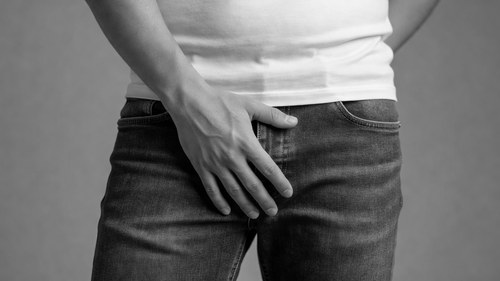
Greyscale cropped study of a man in a white t-shirt and jeans, one hand resting at his hip and groin, landscape orientation, for an editorial on men's aesthetic injectables

Playboy ran a piece on August 11 called The Penis Has Entered Its Filler Era. Rachel Khona wrote it, four of us were quoted, and the magazine had room for one line from me on rising demand.

Here is the version with the rest of it.

Four Complaints, One Name

“I see many men come in for male enhancement. Some are looking for increased girth, some want increased length, others are more concerned with treating erectile dysfunction, and a good number are interested in increasing libido and sexual drive. Today, we have many options that we can use to treat these patients, and these procedures have a very high satisfaction rate.”

Four motivations, not one. Sorting out which one a man actually walked in with is most of the work.

What Filler Does

“Any patient looking for increased girth of the penis is a good candidate for hyaluronic acid, or filler. Contraindications include any open wounds, skin irritation, and sometimes previous scarring from other procedures. I find most men are good candidates, as long as you have the right expectations, that is, there’s an improvement in girth and a slight improvement in length at rest.”

On duration:

“Most hyaluronic acid filler procedures will last at least a year, sometimes more. There are more permanent solutions, such as Lipoderma, which is a donor fat graft, or Bellafill.”

Candidacy here is almost never limited by anatomy. It is limited by expectation.

What the P-Shot Does

“The P-Shot is the injection of platelet-rich plasma into the corpora cavernosa and the tip of the penis. It will increase sensation and sexual arousal. It’s an infusion of growth factors into the penis. It can help with erectile dysfunction and increase libido and sensation.”

I have offered PRP in this area for over ten years. I describe the mechanism as proposed rather than proven, and I say the same thing to patients.

What Bocox Does

“Bocox is a term used for injections of botulinum toxin, Botox, Dysport, or Jeuveau, into the corpora cavernosa. It’s like a long-term Viagra or Cialis, which lasts between three and four months. It relaxes the smooth muscle of the cavernosal arteries, creating harder erections and a slight increase in length of about one centimeter, longer penis length at rest, and many men use it to treat flaccid erections.”

Why the Combination Is the Story

“Yes, it is important to note that in many men we combine all the procedures.”

Filler is volume. The P-Shot is biology. Bocox is hemodynamics. A man with three components to his complaint gets all three.

Which means three clocks running at once:

“The P-Shot is usually done once or twice per year, and Bocox is usually recommended every three to four months depending on how long it lasts on each individual.”

Filler sits at a year or more. Lay that out at the first visit or the patient discovers it piecemeal and feels like the goalposts moved.

Where the Risk Actually Lives

“These procedures are overall low risk, and the main risk comes from using non-FDA-approved substances, or injections by non-licensed providers. The main risks are infection, bumps and nodules, and bruising. All of these can be prevented by an experienced provider.”

I have made this same argument about at-home injectables, about jaw shapers, and about hand filler. The pattern does not change by anatomy. The treatment is rarely the danger. The syringe holder and the contents are.

Why Now

“The demand for both is up as men are more self-aware of the treatments and options available.”

Nothing changed technically. Awareness did, and Playboy running the piece at all is part of that shift rather than separate from it.


Frank Agullo, MD, FACS. Double board-certified by the American Board of Plastic Surgery and the American Board of Surgery, plastic surgery fellowship at Mayo Clinic, Clinical Associate Professor of Plastic Surgery at Texas Tech University Health Sciences Center Paul L. Foster School of Medicine.

Consults at Southwest Plastic Surgery in El Paso. Call (915) 590-7900 or text 1-866-814-0038. Full list of male procedures on the practice site.

#StayBeautiful

The Many Uses of Botox: A Surgeon’s Tour From the Well-Established to the Experimental

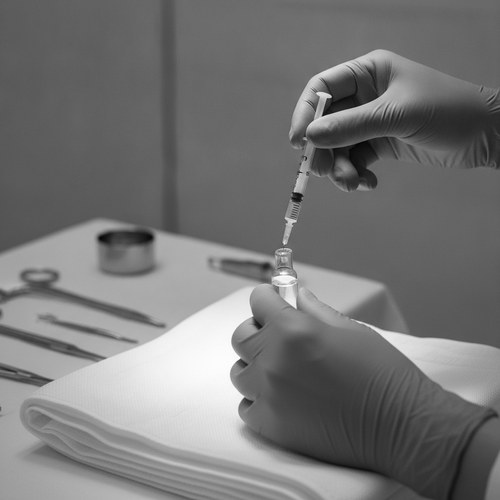
Black and white editorial close-up of a fine syringe held in gloved hands in soft side light. The many uses of botulinum toxin, by Dr. Frank Agullo, MD, FACS.

Before we talk about the different uses of Botox, which is a very exciting topic, it’s important to understand how botulinum toxin works. In essence, it inhibits the release of acetylcholine, which is the chemical signal that nerves send to the tissue on the other side. In the traditional use of botulinum toxin for the prevention of wrinkles, the nerves are sending acetylcholine to the muscles to contract the muscle, and the botulinum toxin is preventing that release so that the muscle doesn’t contract and create a wrinkle. In the same fashion, it can work on other targets, like sweat glands.

Once you understand that one mechanism, the whole long list of uses makes sense. So here is the tour, from the well-established to the experimental.

Excessive Sweating

Botulinum toxin can be used for excessive sweating, in medical terms, hyperhidrosis. This is what a fitness audience tends to care the most about. The FDA has actually approved botulinum toxin for excessive underarm sweating. In this case, the toxin is injected into the skin every half an inch to cover the area of the sweat glands that produce the sweat. A single underarm treatment usually lasts anywhere between four to six months, and it does have to be repeated.

Off-label, we can use it in the same fashion for sweaty palms, the soles of the feet, a sweaty scalp, and even the forehead. It doesn’t change how much you’re going to sweat in other places that aren’t treated, but it is very effective. I’ve had patients whose excessive sweating is disabling, and for them these treatments are life-changing.

Chronic Migraine and Headaches

The FDA has approved the treatment of chronic migraines and headaches with botulinum toxin for more than fifteen years now. There is a very specific protocol, and it consists of about thirty injection points in the forehead, scalp, and neck. This is considered a preventative treatment, which means it prevents the onset of new headaches. It would not cure an active headache at the time of injection.

I’ve had a lot of patients who just routinely get botulinum toxin for cosmetic reasons, to prevent wrinkles in the forehead, crow’s feet, and glabella, and they tell me that they’ve had fewer headaches since they started using the botulinum toxin.

Jaw Clenching, Tics, and Symmetry

Botulinum toxin is also used for jaw clenching and teeth grinding. It’s injected into the masseter muscle, which decreases the strength of the bite. As a side effect, it can be used to slim a heavy jawline by decreasing the size of the masseter muscle, creating that shadow effect that a lot of women aspire to.

It can also be used for spasms or continuous nervous tics around the eyes, to soften them. We use it often in patients with facial nerve palsy to create more symmetry between the non-paralyzed and paralyzed sides. It can be used in neck muscle spasms and even in overactive bladders.

The Less Traditional Uses

Less traditional uses of Botox include TrapTox, which is injected into the trapezius muscle, and sometimes it’s called the Barbie. It reduces the mass of the trapezius muscle, which creates a more slender neck, and a longer, more slender neck. Some people use it for comfort in this area, as they feel they carry significant stress in their shoulders, and this can help alleviate that.

We use it around the mouth to correct gummy smiles. We inject it into the muscles that elevate the upper lip excessively, and it reduces the gum show, or gingival show, when smiling. Another area where it’s injected into muscles to decrease their mass is the calf muscles, which is very common in the Asian population. It can also be used to treat the pebbly chin, or orange peel appearance of the chin. Relaxing the mentalis muscle smooths this area of skin.

The Skin Itself

There are applications where we do microdroplets of botulinum toxin over the skin. These are very superficial injections, and overall they decrease oil production and smooth out the skin over time. It’s something we’ve noticed just in treating patients aesthetically for the prevention of frown lines and wrinkles, that the area where the Botox is injected, the skin quality improves over time and looks younger. It is also used for rosacea flushing, where microdroplets are injected into the skin to decrease facial flushing and redness, which is considered off-label. It pairs naturally with skin-quality work like microneedling.

The Experimental Frontier

Depression is actually being studied at the moment, but some studies already suggest that relaxing the glabellar frown muscles influences emotional feedback mechanisms and pathways in a way that improves depression. It’s not FDA-approved for depression, but it remains an active area of research.

There is a nonstandard indication where botulinum toxin can be injected into the clitoris, which relaxes the capillaries and promotes engorgement during sexual stimulation, which can increase sensitivity. In the same manner, it can be injected around the vagina to prevent vaginismus, sexual pain, and pelvic floor spasms. And some physicians actually use it in places you would never imagine, like the vocal cords, the salivary glands to decrease saliva production, the pelvic floor for problems in women, and the hands for circulation disorders.

One of the side effects of injecting into areas for decreased sweat production is that there’s also a decrease in body odor production, since the smell is produced by the same glands that produce the excessive sweat.

The Credential Behind the Opinion

Double board-certified by the American Board of Plastic Surgery and the American Board of Surgery, American College of Surgeons Fellow, Mayo Clinic plastic surgery fellowship, Clinical Associate Professor of Plastic Surgery at Texas Tech University Health Sciences Center Paul L. Foster School of Medicine, and Castle Connolly Top Doctor for thirteen consecutive years. The reason I keep a long mental map of these uses is that the same molecule, in the right hands and the right plane, solves a surprising range of problems.

Ready to Talk?

If a use on this list speaks to something you have lived with, the conversation is worth having.

For the patient-facing clinical guide, see the companion post on agulloplasticsurgery.com. For the MedSpa toxin menu at the practice, see the version on swplasticsurgery.com.

Call (915) 590-7900, text 1-866-814-0038, or book online at agulloplasticsurgery.com. #StayBeautiful.

@RealDrWorldWide on Instagram, TikTok, and Snapchat, @Agullo on X, or @AgulloPlasticSurgery on Facebook.