The Skin Was Always the Problem: Seven Years of Renuvion J-Plasma

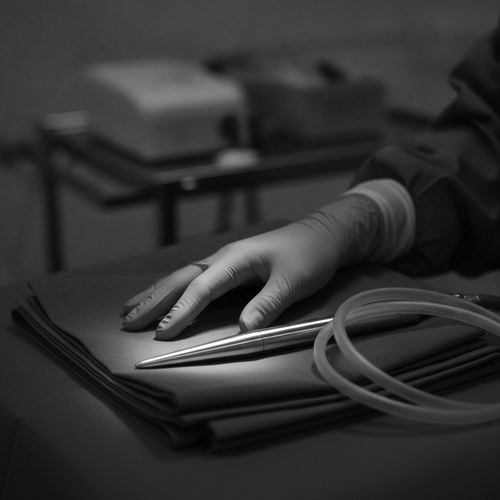
Black and white photo of a gloved surgeon's hand beside a slim handpiece on a surgical drape. Renuvion J-Plasma commentary by Dr. Frank Agullo, MD, FACS.

If you ask a plastic surgeon which part of liposuction is the hard part, and he answers you honestly, he will not tell you it is the fat.

I started using Renuvion J-Plasma in 2019. I was one of the very early adopters, and I saw a missing need after liposuction, which was skin tightening. We were able to perform liposuction effectively, but after deflating the subcutaneous tissue layer, many patients were left with loose skin, which required surgical excision. When we began using Renuvion, we noticed that the tissues would contract, and oftentimes the surgical excision of excess skin was not necessary anymore.

Read that last part again, because it is the whole reason I am writing this. Not that the skin looked somewhat better. The excision was not necessary anymore. A second operation, and a permanent scar, came off the table.

What It Is Doing Under There

This is the explanation I give in clinic, and I have never seen a reason to keep a simpler version for patients and a smarter one for colleagues.

Renuvion J-Plasma activates helium plasma and radiofrequency in the subcutaneous layers, making the connective tissue underneath shrink and contract, resulting in skin tightening and a smoother result. The helium plasma is important because it keeps the temperatures cool, which avoids burning.

That last sentence is where the engineering lives. Radiofrequency by itself will contract tissue. Radiofrequency by itself, at the wrong settings, will also cook it, and our literature has documented what that looks like. The helium is what lets the energy arrive hot and get out fast. The handpiece goes in through the same access sites the liposuction cannula already made, so nothing new is cut and nothing new is closed.

How Much I Use It

We use Renuvion J-Plasma almost every day, performing more than ten to twenty Renuvion cases per week. I am among the ten highest users in the world, according to Apyx, the company that manufactures the device.

I put that near the top rather than the bottom for a reason. When a surgeon speaks well of a device, you are entitled to know how far into it he already is before you weigh anything else he tells you. I am very far into this one.

The Huber Paper

Apyx circulated a study through its clinical newsletter this spring. I read manufacturer mailings the way most of us do, with a raised eyebrow, because the company sending the envelope has an obvious interest in what I conclude. This one held up.

Huber, Bittencourt, Koteski and colleagues published it in Plastic and Reconstructive Surgery Global Open in March 2026. They reviewed 113 consecutive patients from one surgeon’s practice, treated between October 2021 and October 2023. Seventy-three had power-assisted liposuction alone, and forty had power-assisted liposuction followed by Renuvion J-Plasma. Past the twelve-month mark, they went back and asked the patients themselves, using BODY-Q, a validated instrument rather than a satisfaction form somebody drew up in a marketing meeting.

Outcome (greater than 12 months) Liposuction alone Liposuction plus Renuvion J-Plasma
BODY-Q appraisal of excess skin 73.8 87.8
Same score, liposuction-only subgroup 64.0 92.8
BODY-Q abdominal appearance, no abdominoplasty 45.0 68.8
Surgical revision rate 37.5 percent 12 percent
Abdominoplasty rate 67.1 percent 30 percent
Complication rate 2.7 percent 2.5 percent

The revision row is the one that stopped me. Thirty-seven and a half percent down to twelve. Any surgeon who has had to bring a patient back for a skin excision that neither of them wanted knows that the distance between those two numbers is not measured in questionnaire points.

The complication row matters too, more quietly. Adding energy under the skin did not add risk here, 2.5 percent against 2.7 percent, and no complication was attributed to the device.

The caveat, which the newsletter was not built to emphasize, so I will. Retrospective, not randomized, one surgeon. The authors say so themselves. It is a strong signal that happens to match what I watch happen in my operating room every week, and a strong signal is not proof. I would rather hand you that limitation myself than have you find it in the discussion section and wonder why I skipped it.

Where I Use It, and Where I Stop

I prefer to use Renuvion J-Plasma in the abdomen, the flanks, the upper back, the lateral chest, and around the knees. We also use it on the arms and thighs. I prefer not to use it in overly thin skin. If I encounter overly thin skin, I transition to BodyTite.

There is a sweet spot in using J-Plasma, where more passes and more energy are not going to give you any further results. So being accurate in the number of passes and the energy for each area is extremely important to get the most benefit with the least risk.

That is the sentence I would put on the wall of every practice that just bought one of these. The dose does not scale in a straight line. Past a point you are collecting risk and buying nothing with it, and the device will happily let you keep going, because it has no way of telling you that what you have already done is enough. That judgment belongs to the surgeon.

The Unpopular Part

The most important thing is really knowing the limitations, and knowing that J-Plasma will not tighten extremely loose skin after pregnancy or massive weight loss. It is very powerful in contracting the skin, and it often keeps patients away from needing a brachioplasty or excision of back rolls.

Both halves of that are true at once, and the industry has a habit of quoting whichever half suits it that quarter. It really is strong enough to spare somebody an arm lift or an excision of the back rolls, and those are not small scars to spare a person. It is also nowhere near strong enough to replace a tummy tuck in a patient who needs one. Stretch marks it does nothing for at all, because a stretch mark is a tear in the dermis, and contracting the tissue under a tear does not repair the tear.

So here is the candidate, exactly as I describe him or her in the room.

In the right patient, one who does not have a lot of skin laxity or stretch marks and no rectus diastasis, the Renuvion J-Plasma can help keep patients away from an abdominoplasty and let them have just liposuction.

Three conditions, and all three are required. If the rectus muscles have separated, the abdomen is pushing forward because the wall came apart, and energy delivered into the fat layer above that wall does nothing about it.

Recovery Does Not Change

I lead with this now, because patients assume the opposite.

It is important to know that Renuvion J-Plasma is not going to increase recovery times. The recovery itself and the protocol are the same with or without Renuvion J-Plasma when you have liposuction. We still use the garments, and we still use lymphatic massages.

You are not buying downtime here. You are buying a better envelope at the end of the downtime you had already agreed to. The skin also keeps contracting for months after you go home, which is why judging an abdomen at six weeks is a mistake, and why I spend part of nearly every week talking somebody down off that ledge.

Why I Am the One Saying This

I am double board-certified by the American Board of Plastic Surgery and the American Board of Surgery, I completed my plastic surgery fellowship at Mayo Clinic, and I have taught as a Clinical Associate Professor of Plastic Surgery at Texas Tech University Health Sciences Center Paul L. Foster School of Medicine since 2011. Castle Connolly has named me a Top Doctor for thirteen consecutive years.

None of that is why I trust this device. Seven years of using it almost daily is why. The credentials are why I am comfortable telling you where it fails.

#StayBeautiful

Ready To Talk?

If someone has told you that you will need a tummy tuck no matter what, it is worth a second opinion before you accept a scar you cannot undo. Call the office at (915) 590-7900, text 1-866-814-0038, or book a consultation at agulloplasticsurgery.com/appointments. You can also read more about liposuction at Southwest Plastic Surgery.

Follow along at @RealDrWorldWide on Instagram, TikTok, and Snapchat, @Agullo on X, or @AgulloPlasticSurgery on Facebook.
The Skin Was Always the Problem: Seven Years of Renuvion J-Plasma

Black and white photo of a gloved surgeon's hand beside a slim handpiece on a surgical drape. Renuvion J-Plasma commentary by Dr. Frank Agullo, MD, FACS.

If you ask a plastic surgeon which part of liposuction is the hard part, and he answers you honestly, he will not tell you it is the fat.

I started using Renuvion J-Plasma in 2019. I was one of the very early adopters, and I saw a missing need after liposuction, which was skin tightening. We were able to perform liposuction effectively, but after deflating the subcutaneous tissue layer, many patients were left with loose skin, which required surgical excision. When we began using Renuvion, we noticed that the tissues would contract, and oftentimes the surgical excision of excess skin was not necessary anymore.

Read that last part again, because it is the whole reason I am writing this. Not that the skin looked somewhat better. The excision was not necessary anymore. A second operation, and a permanent scar, came off the table.

What It Is Doing Under There

This is the explanation I give in clinic, and I have never seen a reason to keep a simpler version for patients and a smarter one for colleagues.

Renuvion J-Plasma activates helium plasma and radiofrequency in the subcutaneous layers, making the connective tissue underneath shrink and contract, resulting in skin tightening and a smoother result. The helium plasma is important because it keeps the temperatures cool, which avoids burning.

That last sentence is where the engineering lives. Radiofrequency by itself will contract tissue. Radiofrequency by itself, at the wrong settings, will also cook it, and our literature has documented what that looks like. The helium is what lets the energy arrive hot and get out fast. The handpiece goes in through the same access sites the liposuction cannula already made, so nothing new is cut and nothing new is closed.

How Much I Use It

We use Renuvion J-Plasma almost every day, performing more than ten to twenty Renuvion cases per week. I am among the ten highest users in the world, according to Apyx, the company that manufactures the device.

I put that near the top rather than the bottom for a reason. When a surgeon speaks well of a device, you are entitled to know how far into it he already is before you weigh anything else he tells you. I am very far into this one.

The Huber Paper

Apyx circulated a study through its clinical newsletter this spring. I read manufacturer mailings the way most of us do, with a raised eyebrow, because the company sending the envelope has an obvious interest in what I conclude. This one held up.

Huber, Bittencourt, Koteski and colleagues published it in Plastic and Reconstructive Surgery Global Open in March 2026. They reviewed 113 consecutive patients from one surgeon’s practice, treated between October 2021 and October 2023. Seventy-three had power-assisted liposuction alone, and forty had power-assisted liposuction followed by Renuvion J-Plasma. Past the twelve-month mark, they went back and asked the patients themselves, using BODY-Q, a validated instrument rather than a satisfaction form somebody drew up in a marketing meeting.

Outcome (greater than 12 months) Liposuction alone Liposuction plus Renuvion J-Plasma
BODY-Q appraisal of excess skin 73.8 87.8
Same score, liposuction-only subgroup 64.0 92.8
BODY-Q abdominal appearance, no abdominoplasty 45.0 68.8
Surgical revision rate 37.5 percent 12 percent
Abdominoplasty rate 67.1 percent 30 percent
Complication rate 2.7 percent 2.5 percent

The revision row is the one that stopped me. Thirty-seven and a half percent down to twelve. Any surgeon who has had to bring a patient back for a skin excision that neither of them wanted knows that the distance between those two numbers is not measured in questionnaire points.

The complication row matters too, more quietly. Adding energy under the skin did not add risk here, 2.5 percent against 2.7 percent, and no complication was attributed to the device.

The caveat, which the newsletter was not built to emphasize, so I will. Retrospective, not randomized, one surgeon. The authors say so themselves. It is a strong signal that happens to match what I watch happen in my operating room every week, and a strong signal is not proof. I would rather hand you that limitation myself than have you find it in the discussion section and wonder why I skipped it.

Where I Use It, and Where I Stop

I prefer to use Renuvion J-Plasma in the abdomen, the flanks, the upper back, the lateral chest, and around the knees. We also use it on the arms and thighs. I prefer not to use it in overly thin skin. If I encounter overly thin skin, I transition to BodyTite.

There is a sweet spot in using J-Plasma, where more passes and more energy are not going to give you any further results. So being accurate in the number of passes and the energy for each area is extremely important to get the most benefit with the least risk.

That is the sentence I would put on the wall of every practice that just bought one of these. The dose does not scale in a straight line. Past a point you are collecting risk and buying nothing with it, and the device will happily let you keep going, because it has no way of telling you that what you have already done is enough. That judgment belongs to the surgeon.

The Unpopular Part

The most important thing is really knowing the limitations, and knowing that J-Plasma will not tighten extremely loose skin after pregnancy or massive weight loss. It is very powerful in contracting the skin, and it often keeps patients away from needing a brachioplasty or excision of back rolls.

Both halves of that are true at once, and the industry has a habit of quoting whichever half suits it that quarter. It really is strong enough to spare somebody an arm lift or an excision of the back rolls, and those are not small scars to spare a person. It is also nowhere near strong enough to replace a tummy tuck in a patient who needs one. Stretch marks it does nothing for at all, because a stretch mark is a tear in the dermis, and contracting the tissue under a tear does not repair the tear.

So here is the candidate, exactly as I describe him or her in the room.

In the right patient, one who does not have a lot of skin laxity or stretch marks and no rectus diastasis, the Renuvion J-Plasma can help keep patients away from an abdominoplasty and let them have just liposuction.

Three conditions, and all three are required. If the rectus muscles have separated, the abdomen is pushing forward because the wall came apart, and energy delivered into the fat layer above that wall does nothing about it.

Recovery Does Not Change

I lead with this now, because patients assume the opposite.

It is important to know that Renuvion J-Plasma is not going to increase recovery times. The recovery itself and the protocol are the same with or without Renuvion J-Plasma when you have liposuction. We still use the garments, and we still use lymphatic massages.

You are not buying downtime here. You are buying a better envelope at the end of the downtime you had already agreed to. The skin also keeps contracting for months after you go home, which is why judging an abdomen at six weeks is a mistake, and why I spend part of nearly every week talking somebody down off that ledge.

Why I Am the One Saying This

I am double board-certified by the American Board of Plastic Surgery and the American Board of Surgery, I completed my plastic surgery fellowship at Mayo Clinic, and I have taught as a Clinical Associate Professor of Plastic Surgery at Texas Tech University Health Sciences Center Paul L. Foster School of Medicine since 2011. Castle Connolly has named me a Top Doctor for thirteen consecutive years.

None of that is why I trust this device. Seven years of using it almost daily is why. The credentials are why I am comfortable telling you where it fails.

#StayBeautiful

Ready To Talk?

If someone has told you that you will need a tummy tuck no matter what, it is worth a second opinion before you accept a scar you cannot undo. Call the office at (915) 590-7900, text 1-866-814-0038, or book a consultation at agulloplasticsurgery.com/appointments. You can also read more about liposuction at Southwest Plastic Surgery.

Follow along at @RealDrWorldWide on Instagram, TikTok, and Snapchat, @Agullo on X, or @AgulloPlasticSurgery on Facebook.

The Tell on a Bad Lipo: Why Liposuction 360 Lives or Dies on Judgment

Black and white editorial study of a contoured midsection. Liposuction 360 and fat transfer read by Dr. Frank Agullo, MD, FACS.

You can spot a bad liposuction from across a room. The contour is wrong. The waist has a divot where it should have a curve, the belly button sits at a strange angle, and there is that scooped, hollow look that says someone took out too much. That is the result patients are terrified of when they sit down across from me, and they are right to be.

Here is the thing nobody selling you a discount lipo wants to say out loud. The procedure is not hard to perform. It is hard to perform with restraint.

I do a lot of these. Counting by treated areas, I do roughly ten thousand a year. Counting by patients, somewhere between five and six hundred. That volume teaches you one lesson over and over: the smooth result and the lumpy one separate on judgment, not effort.

What Liposuction 360 Actually Treats

Three-sixty is exactly what it sounds like. We treat the full abdomen including the waistline, a little blending into the mons, the lateral chest, the upper and lower back, and the flanks. We are sculpting all the way around the trunk rather than flattening one panel of it.

For arms, the approach is essentially circumferential too. The goal is a contour that reads from every angle, not just head-on in a mirror.

The Real Skill Is Knowing When to Stop

The over-done look comes from one mistake: removing too much fat. You have to leave enough healthy fat behind so the result still looks like a body and not a deflated balloon. A bad lipo announces itself. The contour is irregular, the belly button looks off, and you can tell at a glance that someone had work done.

I tighten the skin with J-Plasma so the surface smooths back down over what is left. How much it tightens depends on how your skin responds, and I will not promise you a number I cannot control.

How I Keep It Smooth Afterward

Two things prevent the lumps and fibrosis people dread, and neither is glamorous.

First, lymphatic massage. We have an in-house tech, and I want you in two or three times a week for about four weeks. That breaks up fibrosis before it sets. Second, I leave a small drain in the abdomen, so when you do those massages, any trapped fluid comes out fast. Lumpiness almost always traces back to fluid getting stuck, so draining it early is the cheapest insurance you can buy.

“Will Lipo Fix the Bulge When I Relax?”

Often, no, and I will tell you that to your face. What I can remove is what we can pinch. If you have a bulge that appears when your muscles relax, that is usually the muscles themselves separating, and the only thing that repairs separated muscle is a tummy tuck.

A tummy tuck makes the abdomen flat and tight and rebuilds the muscle wall like a built-in corset. It is a bigger improvement than lipo alone, and it comes with a scar. That trade-off is yours to make, but you should make it with the full picture in front of you, not after the fact.

Don’t Throw the Fat Away

This is the decision I push patients hardest on. Once we discard your fat, it is gone, and buying volume back later with a product like Sculptra gets expensive fast.

We do not need to do a dramatic Brazilian Butt Lift to make this worthwhile. Sometimes filling the hip dips is enough to carry a smooth line from waist to hip without adding projection. I tailor it from very subtle to dramatic, working off a photo of the shape you actually like, and I transfer fat with a deliberate overfill because roughly thirty percent reabsorbs. It looks a little full at first, then settles into the result we planned.

Lipo Alone vs. Lipo With a Tummy Tuck

What’s Bothering You The Honest Answer
Pinchable fat, skin that snaps back Liposuction 360
Bulge only when muscles relax Tummy tuck repairs separated muscle
Loose skin after weight loss Tummy tuck or excision, not lipo
Flat tummy plus loss of curve Lipo plus fat transfer to hips

What Recovery Is Really Like

Easier than the videos suggest. I have had liposuction myself, so this is not a guess. The soreness is like going back to the gym after a long layoff: uncomfortable with movement, but tolerable. If you have had a C-section, this is the easier recovery.

You see a difference almost immediately, though you will be swollen. We provide two Marena fajas with clips so we can size you down as the swelling drops, worn for four weeks, off twice a day to shower. You shower the next day, my nurse visits to help with that first one, and most swelling clears by two weeks. Improvement keeps going for up to six months.

Why Volume Sells Liposuction Short

Here is an opinion that costs me the occasional easy sale. Liposuction is not really a fat-removal procedure. It is a contouring procedure, and the difference matters.

If all I did was vacuum out the maximum amount of fat, I could give you a number on a chart and a worse-looking body. The artistry is in what stays: the way the waist still curves, the way the back blends into the flank, the way the line carries from one region to the next without a seam. That is why the fat transfer half of this conversation is not an upsell. Moving a little of your own fat to a hollow can do more for the overall shape than removing another ounce ever would. Subtraction and addition, working together, beat brute-force removal every time.

The Credential Behind the Caution

Double board-certified by the American Board of Plastic Surgery and the American Board of Surgery, Mayo Clinic plastic surgery fellowship, Clinical Associate Professor of Plastic Surgery at Texas Tech University Health Sciences Center Paul L. Foster School of Medicine, and Castle Connolly Top Doctor for thirteen consecutive years. Body contouring is a large part of what I do, and I treat the restraint as seriously as the technique.

Ready to Talk?

If you want contour without the over-done tell, let us map it out together. For the patient-facing walkthrough, see the companion post on agulloplasticsurgery.com. For the recovery and massage menu, see the version on swplasticsurgery.com.

Call (915) 590-7900, text 1-866-814-0038, or book online at agulloplasticsurgery.com. #StayBeautiful.

@RealDrWorldWide on Instagram, TikTok, and Snapchat, @Agullo on X, or @AgulloPlasticSurgery on Facebook.