The Under 25s Are Leaving and the Over 66s Are Arriving

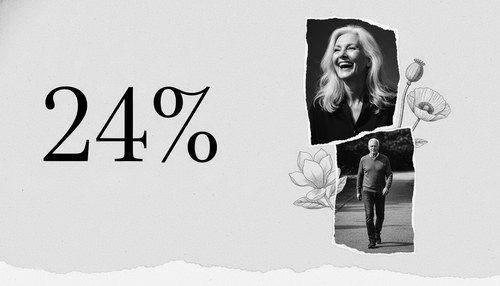
Black and white torn-paper collage of two cut-out portraits of active older adults with engraved magnolia beside a large numeral reading 24 percent.

Patients 66 and older: up 24 percent, the biggest gain of any age band. Patients 18 to 25: down 9 percent. Patients 26 to 35: down 5 percent.

Everyone assumes this field keeps getting younger. Last year it got older.

Why they stopped hesitating

“I’m actually not surprised that patients sixty-six and older grew by the most percentage compared to any other age bracket, growing twenty-four percent. I think patients are becoming a lot more willing to undergo facial procedures, including facelifts, because the results now are actually natural and do not change their overall appearance.”

“So they still have a self identity after these procedures and they’re recognizable; they’re just looking ten to fifteen years younger. And as they see more of these before and afters, they become more confident and less stressed about undergoing these procedures.”

A lot of it is not a first operation

“I think a lot of these patients are undergoing breast augmentation, or rather breast implant exchanges. Let’s say they’ve had the procedure in the past and time has come to do a revision surgery or an exchange. A lot of patients in this age bracket are also wanting to downsize from their previous breast augmentation procedures, as they want smaller breasts to go better with their age.”

Breast augmentation in this group was up 34 percent. Read that number knowing a good share of it is exchange and downsizing.

“A lot of these patients, although they are in this bracket, feel much younger, are active socially, have a significant other, and want to look as young as they feel.”

Arm lift in this group: up 52 percent, the largest single move in the table.

Is there an age where I say no

“There’s not an ultimate age where I would say no. It really depends on how the patient presents themselves, what their desires are, whether these are results that we can deliver, and most importantly, that they have medical clearance, that they’re healthy, that any medical conditions they have are well controlled, that they’re fit for a recovery, and that they have the support necessary to get through it.”

What it is for

“I think it’s true. It’s restoration. It’s getting back to a younger self, or repairing some of the damage done by weight loss. Some patients still come in because they just want to look better, or they feel they have not reached their potential.”

“And in regards to patients doing this to look more competitive at work, I really haven’t had that conversation very often, but I do see where it could come up.”

The most common operation in this age group is eyelid surgery, at 37,862 procedures.

Consultations at Southwest Plastic Surgery in El Paso.

Call (915) 590-7900 or text 1-866-814-0038.

#StayBeautiful


Source: ASPS 2025 Procedural Statistics Report, age tables. Commentary from Dr. Agullo’s 2026-09-07 dictation.
You Feel Fine. Your Eyelids Are Saying Otherwise.

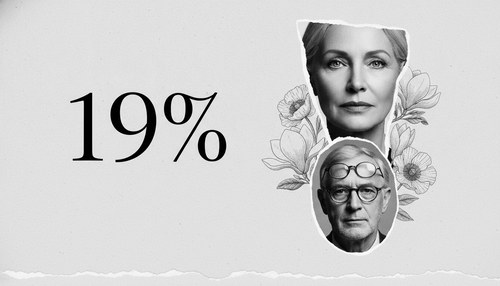
Black and white torn-paper collage of two cut-out portraits cropped close on the upper face with engraved magnolia beside a large numeral reading 19 percent.

Eyelid surgery was up 19 percent last year, the only real mover in the top five and the most popular facial surgery of 2025.

The actual reason people book

“I think the most common reason patients come in is because people are telling them that they look tired, when they’re actually feeling just fine and feel like they have energy. A lot of them feel younger than their actual age, but the eyelids are not helping them send this message out.”

“They look in the mirror and they look at photos, and they can identify the areas that they don’t like. Sometimes they can’t really identify exactly which procedures they need, and of course that’s why we’re there.”

Why the eyes and not something else

“Although these patients may actually require more work for facial aging, including facelifts, the first thing anybody looks at when they see somebody is their eyes. I think that’s what gives us an overall feeling about the patient, and it is the first thing that we will form an opinion on.”

Which lid

“I think the lower eyelids are a lot more common, with people complaining about their lower eyelid bags, and these are maybe slightly younger patients. The older patients are definitely concerned about their upper eyelids, the hooding, and even the visual impairment it’s causing.”

Visual impairment. At a certain point this stops being cosmetic.

Recovery

“The recovery for eyelid surgery is actually quite easy. In my experience with patients, we usually don’t have any pain, but there will be swelling, and there could be bruising around the eyes. If there’s bruising, it can take one to two weeks for the bruising to go down.”

“The upper lid does have a visible scar, which heals quite quickly, and the sutures are absorbable. The lower eyelid surgery does not have any visible scars.”

“Most patients return to work after a week using a little bit of makeup to cover any bruising if necessary. Some patients actually return to work earlier and use thick-rimmed glasses to kind of hide the surgical aspect.”

Why it keeps growing

“The procedures to fix these complaints are usually short, can be performed under local anesthesia or even IV sedation, and have short recovery times. Patients can return to work fast and they heal fast as well, so they see an overall transformation and are quite happy with the results. This is of course noticed by people around them very quickly, and that’s how word of mouth spreads.”

Short, predictable, quickly visible to other people. That combination is why the number moved.

Consultations at Southwest Plastic Surgery in El Paso.

Call (915) 590-7900 or text 1-866-814-0038.

#StayBeautiful


Source: ASPS 2025 Procedural Statistics Report. Commentary from Dr. Agullo’s 2026-09-07 dictation.

They Counted Everything Except the One Thing Everybody Gets

Black and white torn-paper collage of two cut-out portraits with engraved magnolia beside a large numeral reading 50 percent.

My specialty publishes procedure counts every year. This year there is no count for neuromodulators and no count for fillers, which together are most of what gets done to faces in this country.

The reason given: the “dynamic nature of the minimally invasive treatment market.” They ranked by share instead. Neuromodulators about half. HA fillers 30 percent.

What I said about it

“I am surprised that they weren’t able to give us exact numbers from the numbers reported by surgeons, but still had a percentage.”

“Again, I’m surprised that we couldn’t get an exact count of the amount of fillers when we could still get an exact count of the amount of botulinum toxin and many other procedures.”

“I think the truth is that fillers have decreased considerably compared to other procedures, botulinum toxin still being number one. In my practice, I’ve seen more than a twenty to thirty percent decrease in the use of fillers, and a shift toward biostimulators and donor fat grafts instead.”

Who gets nervous when filler declines

“There has been such a decrease in the use of fillers that manufacturers and even med spas have become worried, as this is really the only thing they provide, since they do not have a way to provide surgical procedures, which are becoming far more common than hyaluronic acid fillers.”

If injectables are the only thing you sell, injectables are the only thing you can recommend. Read that as a comment on menus, not on people.

Botulinum toxin is the exception

“Yes, botulinum toxin is half of all minimally invasive treatments. I think it’s probably more than half in reality in our practice. This doesn’t mean that it’s the safest bet; it means that it’s something that’s tried and proven. It really is a maintenance therapy.”

“I myself get botulinum toxin in the forehead, crow’s feet, and glabella lines every three to four months, just to maintain the wrinkle free appearance with a dose that still lets me express my face without looking abnormal.”

“Patients really like the results, and that’s why they keep coming back to get the botulinum toxin injections.”

The part that actually bothers me

A market nobody can count is a market nobody can regulate. And these estimates only ever covered board-certified plastic surgeons, so everything injected outside that group was never in the table to begin with.

Fillers are also losing ground to fat, which is its own story.

More on how we approach this at Southwest Plastic Surgery in El Paso.

Call (915) 590-7900 or text 1-866-814-0038.

#StayBeautiful


Source: ASPS 2025 Procedural Statistics Report, minimally invasive section. Commentary from Dr. Agullo’s 2026-09-07 dictation.

Half of It Might Not Survive, and It Is Still the Better Option

Black and white torn-paper collage of two cut-out portraits with engraved magnolia beside a large numeral reading 39 percent.

Facial fat grafting grew 39 percent last year, the largest jump of anything in my specialty’s annual report. It made no top five list, because those rank by volume.

What is wrong with filler

“I think we have seen that facial fillers have been quite overdone, and patients are really getting away from looking overfilled and want to look more natural. We have seen that these hyaluronic acid fillers may not dissolve completely, and they do tend to migrate. It seems like they create some kind of inflammatory response in some patients, creating nodules or inflammation.”

“And of course, the feel of a filler is not quite like natural fat, which is squishy and soft, something whose borders you wouldn’t be able to identify the way you can with a filler.”

“When patients use fillers, they see that they have to have this redone anywhere from every six months to one year. And what we’re also seeing is that not all of that filler goes away, but it’s migrating and flattening out, so it’s not giving us the volume exactly where we want it.”

The part where I argue against myself

“The main factor that disappoints people with fat injections is that the amount of retention is really unpredictable. Even though we know the patient is going to keep fifty to eighty percent of the volume, that percentage is quite unpredictable, so we are always overfilling. Patients that lose fifty percent of the volume we inject are sometimes disappointed, and we have to go back and inject more fat.”

Fifty to eighty is a wide range to hand somebody.

“The good thing is that whatever does stay is going to be quite permanent, and of course maintaining your weight is going to help with that. We know that with aging, fat will decrease in the face regardless, so it is a procedure that we probably have to repeat in the future.”

The pricing nobody mentions

“We have been using the patient’s own fat, because we have the benefit of using however much volume we really need, as the number of fat CCs does not increase the cost of the procedure, and the patient’s own fat is free.”

Filler is sold by the syringe, every year, forever.

If you want it without the harvest

“For some patients that don’t want as much downtime, we’ve been using Lipoderma, which is a donor fat graft that gives us very similar results to the patient’s own fat grafting.”

alloClae does the same job. On the biostimulator route:

“We have been using Sculptra, but this does create inflammation like scarring and fibrosis.”

It was never only Ozempic

“I think fat grafting has been rising for many years. It’s an essential component of almost all facial procedures. I incorporate fat grafting into lower eyelid surgery, I incorporate it into all my facelifts, and I incorporate it in any facial procedure where the patient has lost a considerable amount of weight.”

“So the GLP-1 wave has certainly increased the demand, but just normal aging is comprised of loss of fat and volume in the face, as well as skin laxity and quality. So just with normal aging there was already a high demand for fat transferred to the face, and now with GLP-1s that demand has increased even further.”

The report says it too: the rise extended beyond GLP-1 patients and was underway before them.

Consultations at Southwest Plastic Surgery in El Paso.

Call (915) 590-7900 or text 1-866-814-0038.

#StayBeautiful


Source: ASPS 2025 Procedural Statistics Report. Commentary from Dr. Agullo’s 2026-09-07 dictation.

Number One Went Down and Nobody Mentioned It

Black and white torn-paper collage of two cut-out portraits with engraved magnolia beside a large numeral five.

Every August my specialty publishes its numbers, and every August the same list goes out. Liposuction is number one. Fifth year in a row.

The part that got left out is that liposuction fell 1 percent. So did most of the list, more or less. Four of the top five barely moved.

Number one is a component, not a request

“Liposuction is certainly the most common procedure in my practice, and the main reason is that it’s part of any body contouring procedure. When I perform a tummy tuck, liposuction is included in the abdomen and the lower back. When I perform an arm lift, I do liposuction first. When I do a thigh lift, I do liposuction first. When we perform many breast procedures, we’re often doing liposuction of the lateral chest, the axilla, or the upper back.”

“On top of that, procedures like the Brazilian butt lift and fat transfer involve taking fat from other areas using liposuction to transfer to the buttock, and even to the breast.”

Count every one of those as a liposuction and of course it wins. That is a counting decision, not a popularity contest.

The one number that moved

Eyelid surgery, up 19 percent, the most popular facial surgery of the year.

“It seems to be the first part of the face that patients notice as they age, especially the upper eyelid skin, which can hang and even rest on the eyelashes, giving the patient the impression of being tired and even making makeup hard to put on.”

“The lower eyelids are also quite popular, as more and more patients with fat loss can see the lower eye bags more easily, along with the tear trough deformity.”

Rank it differently and the list changes completely

“In my practice, I’ve really seen a huge increase in face procedures, specifically the deep plane face lift and deep plane neck lift, as well as the total endoscopic deep plane face lift, otherwise known as the ponytail lift.”

“The reason we’re seeing this increase exponentially is that patients are noticing signs of facial aging earlier, or they’ve been on GLP-1s and have had accelerated aging from fat loss in the face and skin sagging.”

Facelift 13 percent. Neck lift 21. Forehead lift 29. Facial fat grafting 39, the biggest jump of anything in the report. None of it in the top five.

The bit worth stealing

“The most interesting thing about a face lift procedure is that it can make you look ten to fifteen years younger. Of course, that depends on the age at which you get the procedure. If you get it at forty, you’re probably going to look like you’re in your early thirties, or even late twenties. But time keeps moving forward, so if we repeat the procedure ten years later, we take you back to that earlier stage of yourself. Now you’re in your fifties, looking like you’re in your thirties.”

“So the earlier we do the procedure, the sooner we can keep bringing you back to a younger age. That has really changed the game, because these procedures are not as invasive, we don’t have to make as big changes, and we can maintain that youthfulness.”

Wait for one big operation, or start earlier and stay ahead of it. Those are different plans, and the second one is newer than most people realise.

One caveat

These are estimates extrapolated from more than 3,000 board-certified plastic surgeons, not a census, and they count only board-certified plastic surgeons. Everything done outside that group is missing from the table. For a top five list, fine. For anything about safety, that absence is the whole story.

Consultations at Southwest Plastic Surgery in El Paso.

Call (915) 590-7900 or text 1-866-814-0038.

#StayBeautiful


Source: ASPS 2025 Procedural Statistics Report, national table. Commentary from Dr. Agullo’s 2026-09-07 dictation.

The Page Nobody Reads in the Plastic Surgery Statistics

Black and white editorial collage, cut-out portraits with torn paper edges and engraved botanicals.

There is a ritual to this. My specialty publishes its annual numbers, two hundred outlets publish the top five list, and everyone moves on by Thursday.

Liposuction won. It has won five years running. It actually declined 1 percent and still won by a mile.

Now turn to page 26, where the country gets split into regions. On five procedures, my eight-state region went the opposite way from the national number. The one I want to talk about is the nose.

Rhinoplasty fell 5 percent nationally. Here it rose 16.

“This does match what I see. I’ve seen an increase in surgical rhinoplasty procedures in both men and women. In many places, people are turning to injectable fillers for a liquid rhinoplasty, or non-surgical nose job. But many patients have noticed that when this is done, the nose actually becomes bigger, because filler is volume.”

“We’re adding volume to hide the dorsal hump and maybe push the tip up. But with time, the filler flattens out and migrates to the sides, making the nose look wider and the tip more bulbous.”

You are solving a shape complaint with volume, and volume does not stay where you put it.

“For a real reduction, surgical rhinoplasty reshapes the structure of the nose and reduces its size, removing the dorsal hump, refining the tip, and even narrowing the nose, and it can also remove old filler. A surgical rhinoplasty is a permanent procedure.”

Why the top five is a boring list

Four of the five barely moved. The only real mover is eyelid surgery, up 19 percent.

“These are the usual procedures that made the top five, and they really didn’t move much during 2025. I could see that during 2025 there was a bit of a slowdown in plastic surgery procedures, and I think that was due to changes in the economy. But we’re seeing an increase in 2026.”

“Eyelid surgery did blow up a lot, and it’s also a procedure we’ve performed increasingly over the last two years. It seems to be the first part of the face that patients notice as they age, especially the upper eyelid skin, which can hang and even rest on the eyelashes, giving the patient the impression of being tired and even making makeup hard to put on.”

An economic read, not an aesthetic one. That is not in the report either.

What I am actually seeing

“In my practice, I’ve really seen a huge increase in face procedures, specifically the deep plane face lift and deep plane neck lift, as well as the total endoscopic deep plane face lift, otherwise known as the ponytail lift. These face lifts are often combined with facial fat grafting, upper and lower eyelid surgery, microneedling with radiofrequency or laser resurfacing, sometimes an upper lip lift, fat transfer to the lips, and earlobe reduction.”

“The reason we’re seeing this increase exponentially is that patients are noticing signs of facial aging earlier, or they’ve been on GLP-1s and have had accelerated aging from fat loss in the face and skin sagging.”

“The most interesting thing about a face lift procedure is that it can make you look ten to fifteen years younger. Of course, that depends on the age at which you get the procedure. If you get it at forty, you’re probably going to look like you’re in your early thirties, or even late twenties. But time keeps moving forward, so if we repeat the procedure ten years later, we take you back to that earlier stage of yourself. Now you’re in your fifties, looking like you’re in your thirties.”

The honest caveats

Region 4 is eight states, so I cannot tell you what El Paso did. Nobody publishes that.

These count only board-certified plastic surgeons. For the procedures growing fastest, the uncounted volume is the part worth worrying about.

I have written the full regional breakdown, including the one figure in the report I refuse to quote until ASPS explains it.

Ready to talk?

Call (915) 590-7900, text 1-866-814-0038, or book at drworldwide.com.

Follow along @RealDrWorldWide on Instagram, TikTok, and Snapchat, @Agullo on X, or @AgulloPlasticSurgery on Facebook.

#StayBeautiful


Source: ASPS 2025 Procedural Statistics Report. Commentary from Dr. Agullo’s 2026-09-07 dictation.