
Across the Bridge: What I Tell a Patient Pricing Surgery in Juarez

Black and white photograph of four people of different backgrounds standing together against a dark studio wall, faces lit by a single hard light. Illustrative image, not patients. Frank Agullo, MD, FACS.

The International Society of Aesthetic Plastic Surgery says a third of the aesthetic patients in Mexico, 33.3 percent on average, come from another country, and the United States is first among them. Mexico is third in the world in tummy tucks and fourth in breast lifts. Half its procedures happen in a hospital.

I went to medical school in Mexico City. I operate in El Paso. So when a patient asks me about Juarez, I do not flinch.

What I Say

I tell them that they will probably save a lot of money. They should make certain that they are having their procedure in a certified surgery center or hospital. They should also understand that they will have to be crossing the border for continued care and possible complications. There are plenty of great doctors and plastic surgeons in Mexico. Most of the well-experienced and highly regarded plastic surgeons will probably have similar surgeon’s fees. Where the patient will save is in the facility and anesthesia fees, the aftercare supplies, and nursing care.

I always say that if the deal seems too good to be true, it probably is. I also remind them that revision work is far more expensive than having the surgery done correctly the first time.

I Have Been Saying It for a While

In 2013, to a patient with an open wound after a tummy tuck abroad: One of the downsides of medical tourism is not having your doctor available during recovery and post-surgical complications.

In 2016, on buttock implants: If there is one surgery you should take absolutely no risks with, it’s implant buttock augmentation. There are many excellent and experienced doctors in Mexico, but if you choose the right one, you will find that the cost is the same as that of an experienced surgeon in the United States. You must find a surgeon experienced enough to do the intramuscular approach. Any complication will void any possible savings.

The setting numbers and the follow-up plan are in the full post on the Agullo Plastic Surgery site.

Why Me

Double board-certified, Mayo Clinic trained, Clinical Associate Professor of Plastic Surgery at Texas Tech, Castle Connolly Top Doctor 2014 through 2026. Medical degree from Universidad Anahuac, Mexico City. Both sides of the bridge.

Ready to Talk?

Call (915) 590-7900, text 1-866-814-0038, or book online. #StayBeautiful

Find me at @RealDrWorldWide on Instagram, TikTok, and Snapchat, @Agullo on X, or @AgulloPlasticSurgery on Facebook.
The 60-Minute Window: What Actually Happens When At-Home Filler Goes Wrong

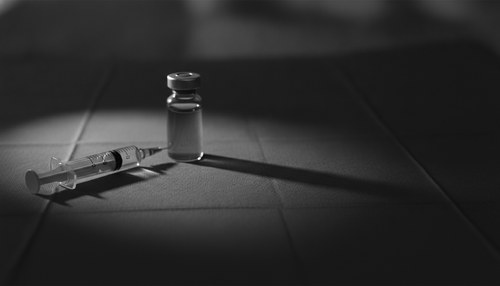
Black and white editorial close-up of a syringe and vial on a sterile surface, illustrating DIY injectables safety commentary by Frank Agullo, MD, FACS.

Daily Mail called last month asking about a Reddit community of 70,000 people trading at-home Botox, filler, and peels. They wanted the clinical reality behind it, and I was the only surgeon they quoted, so I’ll give the fuller version here.

Why Filler Is the Dangerous One

Filler is by far the riskiest thing to do to your own face, because it’s a blind injection into tissue loaded with arteries. You can’t see the vessels you’re threading a needle around. A trained injector knows the danger zones by anatomy, uses technique that reduces the odds of hitting one, and keeps hyaluronidase in the room to dissolve a blockage within minutes if it happens anyway.

Someone injecting alone in a bathroom has none of that. If filler goes into a vessel, it can stop blood flow to skin or to an eye, and that can mean tissue death or permanent vision loss. There’s a window, somewhere around 60 to 90 minutes, where dissolving the blockage can still prevent lasting damage. After that, the odds get much worse. That window is the whole argument for doing this in a place where someone recognizes what’s happening and has the antidote already on the shelf.

Botox Carries a Different Risk

Self-injected Botox isn’t a vascular emergency the way filler is, but it has its own problem: you don’t actually know what’s in the vial. Product bought online is sometimes counterfeit or never went through FDA approval, so you don’t know the real dose or the real substance. Misplaced toxin, from bad dosing or bad placement, causes drooping eyelids, double vision, and trouble swallowing. Those aren’t rare fringe outcomes on the r/DIYaesthetics threads I read for this piece, they’re common enough to be a recurring theme.

Skin Boosters and Microneedling Are Lower Risk, Not No Risk

These sit at the safer end of the spectrum, but “safer” isn’t “safe.” Without sterile technique, both can produce infection, nodules, and permanent scarring. The forum has real examples: a 50 percent glycolic peel that burned for an hour and left white patches, an under-eye toxin injection that caused fluid pooling, a self-described “witch chin” from over-injected chin filler, and a woman who woke with an eye swollen shut after self-injected cheek filler and was told by commenters to go to the emergency room over the risk of blindness.

What a Discounted Vial Is Actually Costing You

Real Botox and filler are expensive to buy wholesale, and a legitimate practice carries real overhead: sterile supplies, trained staff, emergency drugs on hand, and a follow-up visit built into the price. A heavily discounted offshore vial skips all of that, and it comes with no guarantee it’s genuine, sterile, or properly stored. You’re not saving money. You’re paying with risk instead of dollars, and the bill can come due as a trip to the emergency room.

About Dr. Frank Agullo

Frank Agullo, MD, FACS, is double board-certified by the American Board of Plastic Surgery and the American Board of Surgery and a Fellow of the American College of Surgeons. He completed his plastic surgery fellowship at Mayo Clinic and serves as a Clinical Associate Professor of Plastic Surgery at Texas Tech University Health Sciences Center Paul L. Foster School of Medicine. He has been named a Castle Connolly Top Doctor for thirteen consecutive years.

Ready to Talk?

If you’re weighing a discounted vial against an office visit, talk to someone first. It’s a five-minute conversation that can save you a much worse one later.

Call (915) 590-7900, text 1-866-814-0038, or book online at agulloplasticsurgery.com/appointments. #StayBeautiful.

@RealDrWorldWide on Instagram, TikTok, and Snapchat, @Agullo on X, or @AgulloPlasticSurgery on Facebook.


  • Patient-facing version on agulloplasticsurgery.com: “Why At-Home Filler and Botox Are Riskier Than the Price Tag Suggests” (link once live)
  • Practice version on swplasticsurgery.com: “Southwest Plastic Surgery on DIY Injectables” (link once live)
  • Source: Daily Mail, “Inside DIY Aesthetics: The community where women share their at-home Botox ‘hacks’ and horror stories,” Margaret Abrams, July 27, 2026. https://www.dailymail.com/lifestyle/beauty/article-15991213/diy-aesthetics-reddit-home-botox-fillers.html