The Fat I Cannot Remove

Black and white photograph of a flexible tape measure held at the waist, midway between the last rib and the hip bone. Commentary by Frank Agullo, MD, FACS.

BMI is the number I am required to record. It is not the number I use.

“I can have two patients walk in with the same BMI and a completely different body composition and health situation. One can be a former athlete still carrying dense muscle, and the other has lost muscle over the years and replaced it with fat, with visceral fat sitting deep in the abdomen. The visceral fat is really the bad guy, the one that drives up blood pressure, blood sugar, and inflammation.”

BMI was never built for this.

“BMI stands for body mass index, and it measures weight relative to height. That’s really all it measures. It doesn’t know whether the weight is muscle, fat, bone, or fluid, nor does it know where on the body the weight sits.”

“It was never designed as a personal health test, but it ended up being used in medicine because it was a simple calculation.”

Woman’s World asked me last month whether waist-to-height ratio is the better predictor of heart risk.

“Waist-to-height ratio is not really measuring anything new. It measures the same underlying problem more directly. Heart disease tracks with the fat around the organs, and waist circumference gets closer to that than total body weight does. So it’s not that it’s a new body metric. It’s just that we’re setting aside the old one.”

The rule:

“You should keep your waist to less than half your height. A ratio under 0.5 is the goal. 0.5 to 0.6 is where the risks start to rise. Above 0.6 is concerning, and patients should have a full workup with their primary care doctor to check blood pressure, blood sugar, and cholesterol.”

The surgical part, which the health coverage never gets to: liposuction and a tummy tuck work on the fat between the skin and the abdominal wall. Visceral fat sits behind that wall. No cannula reaches it.

This is also the fat that responds.

“It’s usually the first fat to arrive when your habits slip, and the first fat to leave when your habits improve. This is good news, because you can monitor your waist circumference as you’re dieting and often see more change than on the scale, which can be discouraging.”

One more thing, because it catches women off guard:

“Around and after menopause, the drop in estrogen changes where the body stores fat. It moves from the hips and thighs to the abdomen. So your BMI stays the same, but there’s more visceral fat than before, and the waist-to-height ratio rises.”

Get a tape measure. Stand up straight, find the space between your last rib and the top of your hip bone, measure there, snug, breathing normally, without sucking in. Divide by your height.

Under half.

Call (915) 590-7900, text 1-866-814-0038, or book at agulloplasticsurgery.com. #StayBeautiful


Title alternatives (title PICKED 2026-09-09 by blog-publish-driver under the 2026-09-05 standing default; option kept is above)

  1. The Fat I Cannot Remove
  2. BMI Is the Number I Am Required to Record. It Is Not the One I Use.
  3. Keep Your Waist Under Half Your Height
  4. Two Patients, Same BMI, Different Operations

Why I Put a Probe on the Skin Before Every Fat Injection

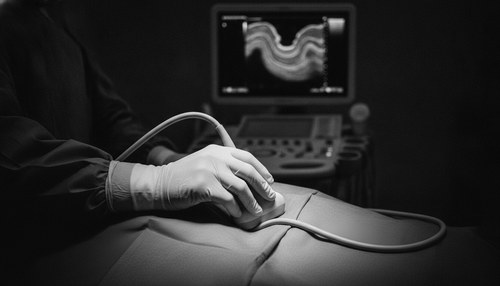
Black and white photograph of a surgeon's gloved hands holding an ultrasound probe against a draped surgical field during gluteal fat grafting. Commentary by Frank Agullo, MD, FACS.

For a stretch of years, the Brazilian butt lift carried the highest death rate of any operation in aesthetic surgery. That statistic was real, and it was earned.

It was also, it turns out, about one centimeter of tissue.

“There have been no cases of fat embolus when fat has only been injected in the subcutaneous fat. The only cases of fat embolism have all had intramuscular fat injections.”

Read that twice. Not most cases. All of them. The complication that made this operation infamous does not happen in the fat layer. It happens when a cannula ends up in muscle, where the large gluteal veins run, and fat enters the circulation and travels to the lungs.

So the entire safety problem reduces to a question of where the tip of the instrument is. And the tip of the instrument is somewhere you cannot see.

Unless you look.

“The ultrasound shows us exactly where the tip of the cannula is while we’re injecting fat into the buttock. Ideally, the cannula should be injecting fat into the deep fat layer above the muscle. We inject some fat in the superficial fat layer for shaping, but the bulk of the volume is injected in that deep compartment.

“By visualizing exactly where we’re at, we’re avoiding intramuscular or deeper injections, which can cause fat embolism, a very severe complication. That’s the importance of the ultrasound. It makes the procedure safer by knowing exactly where you’re at at all times.”

My protocol has not changed much in years, because it was already built around that idea.

“We continued using blunt tips with cannulas larger than 4 millimeters. We avoided injections into the muscle. We used ultrasound to visualize the location of the tip of the cannula while injecting, making sure not to perform any intramuscular injections. I always use an upward-angled cannula, and the patient is positioned in a jackknife type position.”

Now, the part I want any prospective patient to actually use.

“The most important thing is whether the surgeon is using ultrasound or not. No matter the experience level of the surgeon, there’s always a risk that you can misjudge and be in the wrong plane, and this is completely avoidable with direct visualization.”

Experience is not a substitute for looking. I have done a great many of these and I still put the probe on the skin, because a surgeon’s sense of depth is an estimate and a screen is a measurement.

Two groups where that gap matters most:

“That’s especially true of male patients, who have a very thin fat layer, and also massive weight loss patients, who have a very thin fat layer, so they’re at higher risk for intramuscular injections.”

When there is barely any fat between skin and muscle, the margin for error shrinks to almost nothing. Those are exactly the patients most likely to be told the operation is simple.

I spent my terms as vice president and then president of the World Association of Gluteal Surgeons pushing on this.

“I think the biggest achievement of WAGS while I was Vice President and President was educating patients and surgeons, both members and non-members, about safety. Also incorporating ultrasound into the BBL procedure, and creating a course and a certification for using ultrasound for Brazilian butt lifts. We also showed that the BBL can be performed safely.”

Ask your surgeon one question. Do you use ultrasound during the fat injection?

There is no good answer other than yes.

Call (915) 590-7900, text 1-866-814-0038, or book at agulloplasticsurgery.com. #StayBeautiful


Title alternatives (title PICKED 2026-09-09 by blog-publish-driver under the 2026-09-05 standing default; option kept is above)

  1. Every Reported BBL Fat Embolism Had One Thing in Common
  2. One Centimeter of Tissue
  3. Why I Put a Probe on the Skin Before Every Fat Injection
  4. The Operation Was Never the Problem. The Plane Was.

Five Percent Is Not Zero

Black and white photograph of an adult masculine torso showing healed inframammary scars after chest masculinization surgery. Commentary by Frank Agullo, MD, FACS.

“Chest masculinization significantly reduces the risk of breast cancer. It is not a mastectomy. Some breast tissue (around 5%) is left behind. These patients can still develop breast cancer later on. Screening should continue, but it changes. Imaging is often not indicated. Rather, annual chest exams and self-chest exams are the norm.”

That is what I gave MDLinx on August 12, in a piece by Alpana Mohta, MD, about a multicenter cohort in JAMA Network Open. The study followed 112 transgender, nonbinary, and gender-diverse patients who developed breast cancer. Only 51.8 percent had a mammogram in the ten years before diagnosis. And 13.4 percent of those cancers were found by accident, sitting in tissue removed during chest masculinization surgery.

The line I keep coming back to is that barely half of them had ever had a mammogram.

Q: How do you frame breast cancer risk with patients considering chest masculinization?

“I tell my patients that although the risk of breast cancer decreases after chest masculinization, it does not go away 100 percent, because the surgery that we do is for aesthetics, and there is some breast tissue left behind.”

Q: How is the procedure different from an oncologic mastectomy?

“It’s not the same as a full mastectomy for oncologic reasons, but it is a mastectomy. We have to leave some breast tissue behind to avoid contour irregularities, and there’s often some axillary breast tissue that can be left behind.”

They are two operations on the same organ doing different jobs, because the cancer surgeon is chasing margins while I am building a chest my patient has to live in for the next fifty years, which means a thin layer stays behind and the armpit keeps its share as well.

Q: What screening do you recommend after surgery?

“After surgery, patients no longer need to have mammograms done every year. It’s more of a clinical self-exam and yearly exam procedure. Of course, on higher-risk patients, we may modify the screening for higher risk.”

“Higher-risk patients are those with a family history or positive genetic testing.”

A mammogram needs a breast to compress, and there is not enough left for the machine to do anything useful with. Which is why I want the genetic question answered before surgery, not after.

Q: When and how does this conversation happen in your practice?

“This is something that we bring up during consultation and in the post-op visits. We also send the tissue to pathology after the surgery, to make sure that there were no tumors or lesions, and to identify any findings that would indicate a higher risk for the patient.”

Every specimen goes, without exceptions, and that 13.4 percent is the reason why. Those cancers were found because somebody actually looked at the tissue, and in the other version of the story the specimen goes in the bin and the diagnosis waits a few years to introduce itself.

The same article cites a 2025 JAMA Oncology analysis: these patients were roughly 50 percent less likely to receive endocrine therapy and about 80 percent less likely to receive postmastectomy reconstruction than cisgender patients. No surgical technique fixes that one, and my own view is that a clinician who fumbles the terminology but keeps the patient in the room is doing better than one who says nothing at all.

If you have had the surgery, ask what your pathology showed. If you are planning it, ask whether your surgeon sends every specimen.

Ready to Talk?

If you want a straight conversation about chest masculinization, or about what your screening should look like now that you have had it, come see me. Office (915) 590-7900, text 1-866-814-0038, or book at https://www.agulloplasticsurgery.com/appointments/.

#StayBeautiful

@RealDrWorldWide on Instagram, TikTok, and Snapchat, @Agullo on X, or @AgulloPlasticSurgery on Facebook.

Before You Book Surgery Abroad, Ask These Five Questions

Black and white editorial image of a passport and boarding pass beside a stethoscope, illustrating medical tourism safety commentary by Frank Agullo, MD, FACS.

Yahoo Finance called about a piece on Americans flying to South Korea for $312 health screenings that would cost four times as much at home. It was mostly about general checkups, not surgery, but my practice sits forty minutes from Ciudad Juarez, and I see the surgical version of this question constantly. Here’s the fuller answer.

The Price Comparison Is Usually Apples to Oranges

An overseas quote and a domestic quote are rarely measuring the same thing. A US quote tends to fold in the surgical facility, anesthesia, and a defined postoperative period, all bundled into one number. An overseas quote often covers just the operation itself, with everything else priced separately or not mentioned at all. Before you compare two numbers, make sure you know what’s actually inside each one.

The Real Draw Isn’t the Discount

For most patients I talk to, the deciding factor isn’t the price gap. It’s access and speed, being offered an appointment in two weeks instead of five months. That’s a legitimate reason to travel. I’d just rather patients travel with eyes open about what they’re trading for that speed.

The Risk Sits in Aftercare, Not the Operating Table

This is the part that rarely makes it into the pitch. Complications after surgery often surface after you’re already home, and at that point the surgeon who operated is on the other side of a border. The physician picking up your case locally has no operative report, doesn’t know what was actually done inside, and is starting from zero on a case that isn’t routine anymore.

That gap, between when a complication shows up and who’s actually available to manage it, is the real risk in medical tourism. It has nothing to do with the surgeon’s skill and everything to do with distance and timing.

Five Questions Before You Book

Verify the operating surgeon’s individual credentials, not just the clinic’s marketing. Get an itemized quote in writing, so you know what the price actually includes. Confirm in writing who pays if there’s a complication, and what the revision policy is. Line up a physician at home before you travel, so you’re not searching for one mid-crisis. And build in more recovery time before flying home than the clinic recommends, since travel stress on a body still healing is its own risk factor.

None of that is meant to talk anyone out of traveling for care. It’s meant to make sure the trip doesn’t trade a five-month wait for a much worse problem six weeks later.

About Dr. Frank Agullo

Frank Agullo, MD, FACS, is double board-certified by the American Board of Plastic Surgery and the American Board of Surgery and a Fellow of the American College of Surgeons. He completed his plastic surgery fellowship at Mayo Clinic and serves as a Clinical Associate Professor of Plastic Surgery at Texas Tech University Health Sciences Center Paul L. Foster School of Medicine. He has been named a Castle Connolly Top Doctor for thirteen consecutive years, and his El Paso practice regularly treats patients navigating exactly this decision given its proximity to Mexico.

Ready to Talk?

Whether you’re considering surgery here or weighing options abroad, I’ll give you the same honest questions to ask either way.

Call (915) 590-7900, text 1-866-814-0038, or book online at agulloplasticsurgery.com/appointments. #StayBeautiful.

@RealDrWorldWide on Instagram, TikTok, and Snapchat, @Agullo on X, or @AgulloPlasticSurgery on Facebook.


  • Patient-facing version on agulloplasticsurgery.com: “Considering Surgery Abroad? Read This First” (link once live)
  • Practice version on swplasticsurgery.com: “Southwest Plastic Surgery on Medical Tourism” (link once live)
  • Source: Yahoo Finance (syndicated from Moneywise.com), “‘Still worth it’: Why Americans fly to South Korea for $312 healthcare that can cost up to four times more at home,” Victoria Vesovski, August 1, 2026. https://finance.yahoo.com/healthcare/articles/still-worth-why-americans-fly-120000175.html

Sepsis Lives in the Trends: The Boring Signs Are the Ones That Kill

Black and white photograph of a bedside monitor and a clipboard chart in a quiet hospital room. Commentary on postoperative infection by Dr. Frank Agullo, MD, FACS.

What are the earliest signs of infection after surgery? This question was posed to me for the Malpractice Monitor series at MDLinx. My response became the sentence that anchors their article. The boring, early warning signs, the ones easily rationalized and dismissed by medical providers, are the most critical ones to catch.

Here I expand slightly on that quote. The sentence is easily understood and difficult to practice, and its simplicity belies its gravity.

I do not know the facts of the malpractice case or the individuals involved. What I do know is a pattern, one that plays out in hospitals around the country, even at leading institutions.

Every Sign You Can Name Is a Late One

Ask a room full of seasoned clinicians to name the recognizable signs of sepsis and the list is exhaustive. Low blood pressure. Narrowing pulse pressure. Cold, clammy skin. Elevated lactate. An abnormal white cell count. High creatinine.

These are all legitimate. They are also all indicative of a patient who is already ill.

By that point, the window for the easiest intervention has slammed shut. A simple recheck, a phone call, one perfectly timed consultation will not turn the clock back. You are playing catch-up against a destabilizing physiology that moves faster than a hurried clinician.

The early warning signs are subtler. A pulse that sat at 78 yesterday reads 96 in the morning and 108 by evening. A temperature that rises slightly above the patient’s average but is not officially a fever. Urine output that declines inexplicably. Breathing that picks up a little. A patient who is slightly disoriented, a little sluggish, just not himself. After abdominal surgery, pain that increases without resolving, plus new bloating, nausea, or no passage of gas.

Individually, none of these would raise much of an alarm. Taken together and moving consistently in the same direction, they are the whole warning.

That is what I gave MDLinx, and it is what I would emblazon on the ward board of every surgical unit in the country.

The most egregious failure is dismissing a vital sign as a single isolated value rather than reading it as one point on a moving line. Heart rate of 104? Just a number. Heart rate of 82 turning to 91, then 98, then 104 across four sets of vitals? That is a story, and it tells a clear direction.

Our focus narrows to the current number because the current number is the only thing the chart makes easy. The chart is great at providing a value and terrible at providing trajectory. The nurse sees the elevated heart rate. A resident looks. A covering physician looks. One at a time, each person reasonably concludes that 104 is acceptable.

Each of them, individually, is not technically wrong. All of them together are demonstrably wrong.

Fragmented Care Kills the Curve

The problem is not intent or a lack of caring. It is a broken process.

Care is fragmented. At the next shift rotation, the nurse who saw the patient looking sickly at midnight is replaced by the nurse present for rounds at eight in the morning. The surgeon who operated is not always the one rounding afterward. The handoff, which is the critical moment to transfer a patient’s trajectory, often degenerates into a list of tasks.

Handoffs are where the trend dies. “Vitals stable overnight” can be factually accurate and clinically ruinous. Stable from what level? Stable compared with when?

There is no complicated or flashy fix for this. Call the direction out loud. Say instead: “Her heart rate has climbed thirty points since yesterday evening and her urine output is down.” That handoff communicates the trend. The extra five seconds are the price of knowing a patient instead of a chart.

Why I Take This Personally

I completed my general surgery residency at Texas Tech University Health Sciences Center and my plastic surgery fellowship at the Mayo Clinic, and I am board certified in both general surgery and plastic surgery. I trained and worked on wards where perforation, peritonitis, and postoperative sepsis are not abstractions.

The drama of sepsis arrives abruptly in some patients and subtly in others.

It is the subtle ones I still think about.

People assume aesthetic surgeons exist in a pleasant vacuum, far removed from all this. Not true. Infection after an elective operation is rare, and rarity, if anything, makes people less vigilant rather than more. When you expect a clean result every time, your mind subconsciously learns to rationalize the one odd finding. She is tachycardic because she is nervous. He feels warm because the room is too hot. Her pain is up because she missed a dose.

Each of those explanations is usually right. That is exactly what makes them dangerous.

What I Do In My Own Practice

I follow my patients closely and early, and I do not hand them to autopilot. A form gives me a value. A patient standing in front of me gives me a trajectory, and the trajectory is what I need.

My patients can call the office directly and they can text. Send me ten messages that turn out to be nothing so that I do not miss the one that was something. That is not customer service. It is clinical care. The patient is the only person present for every single data point, which makes their trend line the most complete one in the building.

So do not ask “is the pain bad.” Ask “is the pain worse than yesterday.” Do not ask “do you have a fever.” Ask “is your temperature climbing.” I care very little about the number on any given day. I care where it is going.

What a Patient or Family Member Should Escalate On

If someone you love is recovering from surgery, at home or in a hospital bed, be loud about these:

  • Pain that is steadily worsening, or spreading instead of staying focal
  • A heart rate that keeps climbing, even when any single reading looks acceptable
  • A fever, or a temperature whose trend line is heading the wrong way
  • Confusion, abnormal drowsiness, or simply not acting like themselves
  • Passing far less urine than they should
  • Breathing faster or more labored than expected
  • After abdominal surgery, bloating, nausea, vomiting, or an inability to pass gas

You are not trying to be right. Your burden is to be loud.

Use the word trend. Ask what the numbers were last night. Put the direction in front of the team, not just the value. A spouse who says “she has gotten worse every day for three days” has handed over the one piece of information nobody in the institution managed to preserve.

That is not impolite. In the right moment, it is the only actionable thing anyone says all day.

The Point

No one misses sepsis because nobody knows what sepsis looks like. It gets missed because each of the early signs looks uneventful on first pass, each one can be explained away, and the points land on the shoulders of four different people who will only ever know their own piece.

Read the curve. #StayBeautiful.

For the patient-facing version of this post, see the companion on agulloplasticsurgery.com. For the way we follow up with postoperative patients in the practice, see the version on swplasticsurgery.com.

Ready to Talk?

Planning surgery and want the follow-up routine explained to you in detail? Ask. Any surgeon worth choosing will give you an exact answer.

Call (915) 590-7900, text 1-866-814-0038, or book online at agulloplasticsurgery.com.

@RealDrWorldWide on Instagram, TikTok, and Snapchat, @Agullo on X, or @AgulloPlasticSurgery on Facebook.