Traditional Chinese Medicine and Hair Loss: What the Evidence Actually Supports, and What to Be Careful With

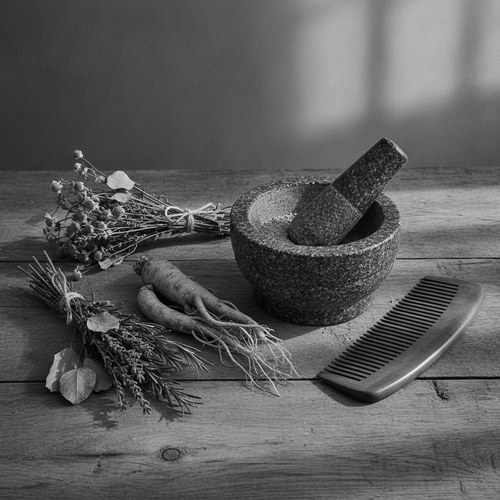
Black and white editorial still of dried botanical herbs beside a mortar in soft side light. Traditional Chinese medicine and hair loss, by Dr. Frank Agullo, MD, FACS.

He shou wu. People take it for their hair, and most of them have no idea it is one of the most reported causes of herbal liver injury in the world.

I get a lot of questions about Chinese medicine for hair. I never dismiss it out of hand, because some of it actually has studies behind it. But the he shou wu story is why I always say the same thing first. All natural does not mean automatically safe. So here is my plain version, the parts that work and the parts to watch.

Before grading any remedy, I want to be precise about what we are even treating. Normal shedding is fifty to a hundred hairs a day. True hair loss is more than that. The hair that grows back comes in thinner, with worse texture and worse density. We call that miniaturization. Here is the part that matters most. A shrunken follicle can still be revived with growth factors, medications, or therapies. A lost follicle cannot be brought back. So any herb that claims to help has to be judged against that line.

So What Is Traditional Chinese Medicine, Really?

It is a compounding of various treatments and diagnostic principles developed in China. Like a lot of Eastern medicine, it treats the body as one connected system and cares a lot about balance across that whole network. Herbs, acupuncture, diet, massage. On hair specifically, the thinking ties hair health to blood circulation and the kidneys. Hair is something you can see, so when it declines, they read that as the person’s vitality declining.

The Herb to Be Careful With

Polygonum multiflorum is a plant used in Chinese medicine to support the health and growth of hair. It can even counteract hair whitening. It acts on three mechanisms at the same time: DHT damage inhibition, cellular protection, and circulatory improvement of the scalp.

Here is the candid part. Most of the studies have been in vitro, which means in the lab, and in animals, and there hasn’t really been a strict comparison against Western medical treatments. There have been some cases of liver damage using this herb. Worldwide, it is one of the most reported causes of herbal liver injury. The risk is higher when using the raw root rather than the processed version. The reaction is really unpredictable. And since this is a dietary supplement, it’s not regulated by the FDA in the same way that traditional medication is.

That is exactly the kind of thing patients need to hear before they order a supplement off the internet because it is natural.

The Ones the Evidence Treats More Kindly

Ginseng is among the most well-known and most extensively researched traditional Chinese medicine herbs. It promotes scalp blood circulation, and the existing research shows promise and encouraging results.

Angelica sinensis was traditionally known as a blood tonic. It is an herb they believe moves blood, or prevents stagnation. Some of the published studies include laboratory research showing anti-inflammatory properties and improved circulatory blood flow.

Scalp acupuncture is the one that interests me most as a surgeon. If we think about it, it almost behaves like microneedling, which we’ve shown scientifically to improve hair growth. It improves the microcirculation of blood flow to the hair follicles.

Scalp massage is perhaps the simplest recommendation, and it has been scientifically proven to work. It improves circulation, which seems to be a recurring theme here, and studies have shown it can increase hair thickness and the number of hairs.

The Recurring Theme

Notice the pattern across the items that hold up. Ginseng, acupuncture, massage, and even the microneedling we do in clinic all improve the same thing, which is scalp circulation. It seems to be a recurring theme, and it is probably why the modern regenerative tools and the older traditions sometimes land in the same place.

The Two Things to Take Away

Well, I think the most important thing to know is that a remedy being all natural does not mean that it is automatically safe. There are dangers, like we spoke about previously with Polygonum multiflorum. And second, the most important thing is to visit a physician for consultation as soon as hair loss begins. This is the time when therapies can be initiated and actually help, and it’s also helpful to rule out any reversible causes.

The Credential Behind the Opinion

Double board-certified by the American Board of Plastic Surgery and the American Board of Surgery, American College of Surgeons Fellow, Mayo Clinic plastic surgery fellowship, member of the International Society of Hair Restoration Surgery, and Castle Connolly Top Doctor for thirteen consecutive years. I am happy to talk about the traditions seriously, and just as happy to tell you which herb has a liver-injury problem.

Ready to Talk?

If you want a read on what is worth trying and what is worth avoiding for your hair, that is a consultation.

For the patient-facing guide to the hair cycle and the five most common causes, see the companion post on agulloplasticsurgery.com. For the scalp-health and hair-restoration program at the practice, see the version on swplasticsurgery.com.

Call (915) 590-7900, text 1-866-814-0038, or book online at agulloplasticsurgery.com. #StayBeautiful.

@RealDrWorldWide on Instagram, TikTok, and Snapchat, @Agullo on X, or @AgulloPlasticSurgery on Facebook.

Traditional Chinese Medicine and Hair Loss: What the Evidence Actually Supports, and What to Be Careful With

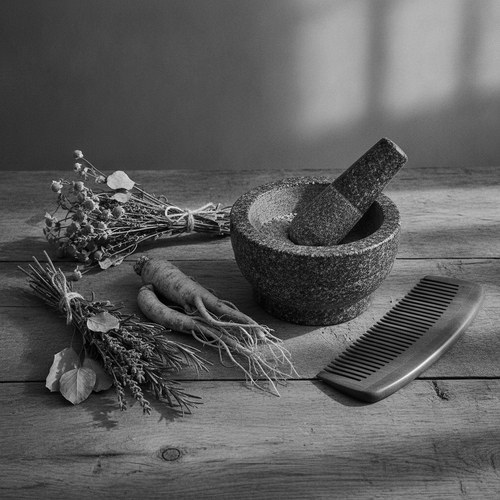
Black and white editorial still of dried botanical herbs beside a mortar in soft side light. Traditional Chinese medicine and hair loss, by Dr. Frank Agullo, MD, FACS.

He shou wu. People take it for their hair, and most of them have no idea it is one of the most reported causes of herbal liver injury in the world.

I get a lot of questions about Chinese medicine for hair. I never dismiss it out of hand, because some of it actually has studies behind it. But the he shou wu story is why I always say the same thing first. All natural does not mean automatically safe. So here is my plain version, the parts that work and the parts to watch.

Before grading any remedy, I want to be precise about what we are even treating. Normal shedding is fifty to a hundred hairs a day. True hair loss is more than that. The hair that grows back comes in thinner, with worse texture and worse density. We call that miniaturization. Here is the part that matters most. A shrunken follicle can still be revived with growth factors, medications, or therapies. A lost follicle cannot be brought back. So any herb that claims to help has to be judged against that line.

So What Is Traditional Chinese Medicine, Really?

It is a compounding of various treatments and diagnostic principles developed in China. Like a lot of Eastern medicine, it treats the body as one connected system and cares a lot about balance across that whole network. Herbs, acupuncture, diet, massage. On hair specifically, the thinking ties hair health to blood circulation and the kidneys. Hair is something you can see, so when it declines, they read that as the person’s vitality declining.

The Herb to Be Careful With

Polygonum multiflorum is a plant used in Chinese medicine to support the health and growth of hair. It can even counteract hair whitening. It acts on three mechanisms at the same time: DHT damage inhibition, cellular protection, and circulatory improvement of the scalp.

Here is the candid part. Most of the studies have been in vitro, which means in the lab, and in animals, and there hasn’t really been a strict comparison against Western medical treatments. There have been some cases of liver damage using this herb. Worldwide, it is one of the most reported causes of herbal liver injury. The risk is higher when using the raw root rather than the processed version. The reaction is really unpredictable. And since this is a dietary supplement, it’s not regulated by the FDA in the same way that traditional medication is.

That is exactly the kind of thing patients need to hear before they order a supplement off the internet because it is natural.

The Ones the Evidence Treats More Kindly

Ginseng is among the most well-known and most extensively researched traditional Chinese medicine herbs. It promotes scalp blood circulation, and the existing research shows promise and encouraging results.

Angelica sinensis was traditionally known as a blood tonic. It is an herb they believe moves blood, or prevents stagnation. Some of the published studies include laboratory research showing anti-inflammatory properties and improved circulatory blood flow.

Scalp acupuncture is the one that interests me most as a surgeon. If we think about it, it almost behaves like microneedling, which we’ve shown scientifically to improve hair growth. It improves the microcirculation of blood flow to the hair follicles.

Scalp massage is perhaps the simplest recommendation, and it has been scientifically proven to work. It improves circulation, which seems to be a recurring theme here, and studies have shown it can increase hair thickness and the number of hairs.

The Recurring Theme

Notice the pattern across the items that hold up. Ginseng, acupuncture, massage, and even the microneedling we do in clinic all improve the same thing, which is scalp circulation. It seems to be a recurring theme, and it is probably why the modern regenerative tools and the older traditions sometimes land in the same place.

The Two Things to Take Away

Well, I think the most important thing to know is that a remedy being all natural does not mean that it is automatically safe. There are dangers, like we spoke about previously with Polygonum multiflorum. And second, the most important thing is to visit a physician for consultation as soon as hair loss begins. This is the time when therapies can be initiated and actually help, and it’s also helpful to rule out any reversible causes.

The Credential Behind the Opinion

Double board-certified by the American Board of Plastic Surgery and the American Board of Surgery, American College of Surgeons Fellow, Mayo Clinic plastic surgery fellowship, member of the International Society of Hair Restoration Surgery, and Castle Connolly Top Doctor for thirteen consecutive years. I am happy to talk about the traditions seriously, and just as happy to tell you which herb has a liver-injury problem.

Ready to Talk?

If you want a read on what is worth trying and what is worth avoiding for your hair, that is a consultation.

For the patient-facing guide to the hair cycle and the five most common causes, see the companion post on agulloplasticsurgery.com. For the scalp-health and hair-restoration program at the practice, see the version on swplasticsurgery.com.

Call (915) 590-7900, text 1-866-814-0038, or book online at agulloplasticsurgery.com. #StayBeautiful.

@RealDrWorldWide on Instagram, TikTok, and Snapchat, @Agullo on X, or @AgulloPlasticSurgery on Facebook.

Fifty Hairs From the Back of My Head: YOU by Acorn and the End of the Exosome Hype Cycle

A vial of personalized YOU by Acorn secretome serum, made from the growth factors and proteins produced by the patient's own hair follicle mesenchymal stem cells, paired with microneedling, Morpheus8, or fractional laser for skin and microneedling for scalp rejuvenation. Reviewed by Dr. Frank Agullo, MD, FACS, double board-certified plastic surgeon in El Paso, Texas.

Fifty Hairs From the Back of My Head: YOU by Acorn and the End of the Exosome Hype Cycle

A few weeks ago I sat in a chair in my own clinic and let one of my team pluck fifty hairs out of the back of my head. Roots and all. Not a transplant. Not a vanity moment. A collection.

Those follicles went to Acorn Biolabs, a Canadian company that runs its lab in California. Forty-five days later a small box came back to me with twelve 2cc vials in it. Mine. Made by my own mesenchymal stem cells while they were stressed in culture for fifteen days. Not the cells themselves. The signal those cells produce when they are working.

A week after the box arrived I added two of those vials onto my own face during a Morpheus8 RF microneedling session in my MedSpa. Seven days later my wife looked at me across the kitchen and said, “What did you do? Your face looks better than it did a week ago.” That was not the Morpheus8 alone. That was the bottle with my name on it, delivered through the channels we had just opened.

What YOU by Acorn Actually Is

Acorn calls it YOU. The brand line is YOU for Skin and YOU for Hair. The technical word for what is inside the bottle is secretome.

A secretome is everything a stem cell secretes when it is in contact with a tissue that is asking for help. Not the cell itself. Not a soup of mystery exosomes. The signaling output. The growth factors, cytokines, proteins, collagens, and yes, the exosomes, in the proportions your own cells produce them.

Worth being precise about this, because patients keep getting it wrong. The bottle does not contain stem cells. The cells are banked separately by Acorn and stored as your property. The bottle contains everything those cells produced when the lab put them to work. Two different products from one collection.

The collection is the part patients always ask about first. Acorn is, by their own description, the first hair follicle stem cell platform of its kind. There are roughly 1,500 to 4,500 mesenchymal stem cells at the base of every one of your hair follicles. Pluck fifty of them from the back of your scalp, where the nerve density is forgiving, and the lab in California has more than enough cells to bank a quarter of them and put the other three quarters to work making your secretome.

The math the lab will tell you is straightforward. Roughly 34 times more concentrated than the best platelet-rich plasma you could draw on your best day. About 5 billion exosomes per vial. No preservatives. Stable refrigerated for 18 months. Pluck to first dose: about 45 days right now.

Where It Sits Next to PRP, PRF, and Exosomes

The regenerative aesthetics shelf is crowded and most of it is hype. Here is how I sort the actual contenders in 2026.

What it is Source Blood draw? Dose consistency Where it fits in 2026
PRP (platelet-rich plasma) Your own blood, single spin Yes Drops with age, varies day to day Reasonable for younger patients with healthy blood. Less predictable as you age.
PRF (platelet-rich fibrin) Your own blood, slower spin Yes A little steadier than PRP Good scaffold for under-eye and orthopedic work. Still less age-dependent than PRP, but not a step change.
Generic donor exosomes Cultured donor stem cell media, vialed and shipped No Manufacturer dependent. Often nothing but the empty carriers. I do not use these. An exosome rubbed on intact skin goes nowhere, and “five trillion exosomes” on a label tells you nothing about what is inside the carriers.
Recombinant pure PDGF (Ariessence) A single recombinant growth factor in HA No Identical dose every kit, single molecule Excellent post-microneedling topical when you want one specific signal at a controlled dose.
YOU by Acorn secretome Your own hair follicle mesenchymal stem cells, expanded and stressed in lab. The bottle is the secretome only, the cells are banked separately. No (one painless follicle pluck) The same biology your body made, concentrated Default when the patient wants the broadest, most personalized regenerative signal we currently know how to deliver, applied through microneedling, Morpheus8, or fractional laser channels.

The table is not exhaustive. But it captures the choices a patient is realistically being offered today.

Why the Exosome Conversation Is Finally Getting Honest

For two years patients have walked into consultations holding bottles of donor-derived exosomes someone sold them. I will say what most of my colleagues already think.

An exosome is a carrier. An empty Easter egg unless you know what is inside it. Most of the donor exosome bottles on the market in 2026 are sold without published assays of payload. Worse, exosome companies are supposed to filter everything but the exosomes out of the product. So even if there is a useful signal floating in the supernatant, it gets discarded before it ships.

YOU by Acorn flips that conversation. The product contains about 5 billion exosomes per vial. It also contains the proteins, the cytokines, the collagens, the growth factors that live alongside them in your own biology. Acorn measures and reports those concentrations. You are getting a controlled, characterized, autologous regenerative signal, not a black box.

That is the difference. And it is why this is the first stem-cell-derived treatment in the United States I have been willing to use on my own face.

What It Can and Cannot Do

I will never tell a patient we can turn back the biological clock. The founder of Acorn, Drew Taylor, says the same thing in the same words, and that is part of why I trust the company.

What we can do is meet your tissue with the youngest version of your own signaling that is still bankable. The first time a patient does a collection, the lab cryopreserves a quarter of the cells. Those cells will sit, frozen, at the age you were when you collected. Every subsequent secretome run draws from that same starting point. Five years from now, ten years from now, your secretome is still being made from the version of you that walked into the room today.

That is the actual longevity claim. Not “younger.” More like a savings account, in cells, that pays out signals every time you make a withdrawal.

How It Gets Delivered

YOU by Acorn is a topical applied through microchannels, not an injectable. The currently approved use is application after microneedling, Morpheus8 RF microneedling, or fractional laser resurfacing on the face, and microneedling on the scalp for hair. The procedure opens thousands of microchannels into the dermis. The secretome is reconstituted with the topical hyaluronic acid that ships with the kit, dropped onto the freshly channeled tissue, and microneedled or rolled in while the channels are still open. The window closes within hours. That is when the signal reaches the compartment that is asking for it.

For face protocols I typically reconstitute two of the 2cc vials per session. For scalp work I run YOU as a microneedled scalp treatment in series. Patients who already trust their PRF or PRP scalp regimen do not have to choose; we layer YOU into their existing schedule for one or two sessions and let them tell us what they prefer.

Who Is the Right Candidate

Anyone scheduled for microneedling, RF microneedling, Morpheus8, fractional laser resurfacing, a medium-depth peel, or a hair restoration protocol who wants the most personalized regenerative topical we currently have. Anyone who has been quietly buying donor exosomes and wants to stop. Anyone who has had inconsistent PRP results and suspects, correctly, that their blood quality is part of the variable. Anyone in their forties, fifties, sixties, even seventies whose PRP drop-off has been measurable to them.

Anyone planning to bank for a family. Acorn’s family plan is two adults and up to four kids on a single banking subscription. The cells are yours, stored as your property, retrievable at any time.

What I Have Done With Mine, Honestly

I treated myself first. That has always been my rule for anything new in the practice. I have been on GLP-1s for the past year, dropped about twenty pounds, and there is no question my skin would have lost more elasticity than it has if I had not been keeping up with my MedSpa protocol. So I scheduled a Morpheus8 session in my own clinic, microneedled two cc of YOU by Acorn into the freshly channeled tissue, and went home. One week later my wife noticed before I did. The Morpheus8 alone is good. The Morpheus8 with YOU was different.

I am telling you the personal experiment because you should know what your surgeon is willing to do to himself before he offers it to you.

Why Choose Dr. Agullo for Regenerative Aesthetics in El Paso?

Double board-certified by the American Board of Plastic Surgery and the American Board of Surgery. Fellow of the American College of Surgeons. Mayo Clinic plastic surgery fellowship. Clinical Associate Professor of Plastic Surgery at Texas Tech University Health Sciences Center. Affiliate Professor at the University of Texas at El Paso. Castle Connolly Top Doctor for thirteen consecutive years. Texas Super Doctors Hall of Fame, 2025. Aesthetic Everything Top Plastic Surgeon, 2026. The Acorn Secretome was named a 2026 NewBeauty Award winner and Acorn was on Fast Company’s list of Most Innovative Companies of 2026, and we are early adopters in West Texas.

We are a clinic and a MedSpa under one roof. Surgery on one side, regenerative aesthetics on the other, the same surgeon planning both. That is not a marketing line. That is the only way the next ten years of this category get done responsibly.

Ready to Talk?

If you are thinking about microneedling, hair restoration, a peel, or a Morpheus8 course, and you want to understand whether banking your stem cells now and running secretome through your protocol makes sense for your skin and your decade, the most useful forty-five minutes of your year is a consultation with the surgeon who would actually plan it. I will tell you whether YOU by Acorn is right for you, whether you are better off with PRP or recombinant pure PDGF for the procedure you are considering, and whether the procedure itself is the one you actually need.

Call (915) 590-7900, text 1-866-814-0038, or book online at agulloplasticsurgery.com. Follow along on social at @RealDrWorldWide on Instagram, TikTok, and Snapchat, @Agullo on X, or @AgulloPlasticSurgery on Facebook. #StayBeautiful

Back Street’s Back!

Of all the performances at the 2018 VMAs, the one we were most excited about was the Back Street Boys! The show came on the 20th anniversary of their first appearance on the VMAs in 1998.  Their songs have remained in loyal fans’ playlists for that entire time.

Truly, though the band went through changes and breaks, they never truly left the entertainment business.  A look through pictures from the last twenty years documents their changing hairstyles and fashions, some more hilarious than others, but those same pictures also document a lack of change in their facial and body appearance. Though their outward look became more defined, svelte, and mature, they don’t actually look any older! How did they do that?

Age Defiance

As performers, the boys of Back Street have access to makeup artists and stylist who keep them looking sharp for the public eye.  Additionally, their shows involve a major dance component, which require regular practice and workouts to perfect. You probably don’t have this kind of resource to dress and prepare you daily, not to mention the need to perform your workouts on perfectly on stage. But you can get the kind of help that helps you look 20 years younger!

Facial, Body, andHair Restoration in El Paso

Dr. Agullo and the team at Southwest Plastic Surgery can keep you looking your best, and when you look great, you also feel great! Whether you need to restore your hairline, fill in the lines or lift your face, or sculpt your body you can trust Dr. Agullo to give you a beautiful look.  Check out our before and after photos and follow us on social media: @RealDrWorldWide on Snapchat and Instagram, @Agullo on Twitter, or @AgulloPlasticSurgery on Facebook.