Preservation, Not Minimalism: I Wrote a Manifesto for Connectively

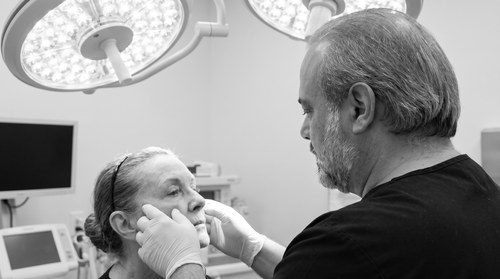
Dr. Frank Agullo, MD, FACS, double board-certified plastic surgeon in El Paso, Texas, in black scrubs in the operating room examining a facelift candidate as part of the preservation-era technique described in his bylined Connectively article.

Preservation, Not Minimalism: I Wrote a Manifesto for Connectively

I keep hearing the same thing in consults. “Doctor, plastic surgery is going smaller now, right? Less volume. Subtler results.”

Half true. Mostly misleading.

Connectively just published my bylined piece on this, and I wanted to push back on the frame in my own voice here too. Volume has not gone anywhere. Patients in my OR this month still wanted fuller breasts. Fuller hips. I still placed implants. I still grafted hundreds of cc of fat per side.

What changed in the last decade is what we refuse to damage when we add that volume.

The Old Bargain

For thirty years, adding volume came with a quiet compromise we did not really put into words for patients.

Breast augmentation, the way I was first taught to do it in training, meant a wide pocket dissection. That meant cutting through the suspensory ligaments of the breast. Those are the fibers that hold the breast up against gravity. We took them down to make room for the implant and we did not think twice about it. The implant looked great at six months. At year five, the breast started to bottom out, and by year ten the patient was back asking what happened.

Gluteal fat grafting in its early era was a free pass. Pre-2015, the field grafted into and through planes that we now know are dangerous. Plenty of surgeons added beautiful volume. A subset of patients did not survive it. The complication that killed people was fat embolism, and the cause was depth, not volume.

Facelifts of that era depended on tension. We pulled skin tight over tissue that had already failed structurally. At one year the patient looked rested. At ten years the patient looked pulled. The lateral sweep. The wind-tunnel mouth. That look did not come from “too much” facelift. It came from a facelift that was working only at the surface.

We did not really articulate any of that to patients at the time. Two reasons. The long-term follow-up data on these trade-offs was incomplete, and in some cases still is. And we did not have reliable alternatives. So we delivered volume, and the side effects came due fifteen years later in someone else’s consult room.

I had the luxury, during my Mayo Clinic plastic surgery fellowship, of seeing both eras in the same hospital. The old habits and the new evidence in the same hallway. That bothered me then. It still drives how I plan a case now. So does the Ponytail Academy training I did later, intermediate course in Pittsburgh, advanced course in Santa Monica, which gave me a deep plane facelift approach that holds at year ten the way an earlier-era SMAS tightening simply does not. Thirteen consecutive Castle Connolly Top Doctor years (2014 through 2026) is a long enough patient sample to feel honest about that claim.

What Preservation Actually Looks Like in My OR

The word “preservation” gets used loosely. So let me show you what it actually means at a case-planning level, by procedure.

Breast Augmentation

I am using ergonomic, lighter implants now (Motiva is the line I use most, see my Motiva Preserve post for what the recovery actually looks like). They project differently, with less weight per cc on the native tissue. That alone lets me use a slightly smaller implant for the same on-camera result.

My pocket dissection is narrower. The suspensory ligaments of the breast, particularly the inframammary ligament along the fold, are preserved instead of divided. The dual-plane release is precise rather than broad. The implant sits where I put it and stays there, because the soft tissue scaffold underneath it is still intact.

My patient leaves the OR with a result that looks finished on day one. The deeper test is what the breast looks like at year five and year ten. That is what preservation buys.

Gluteal Fat Grafting

If you are a regular reader, you know I do not graft above three or four hundred cc per side without a reason. The reason for me is not volume restraint. It is plane discipline.

Every BBL I do is ultrasound-guided. The probe sits on the buttock while I am cannulating. I can see the fascia. I can see the cannula. I can see the plane I am working in, in real time. That is not optional anymore. That is the standard.

Three hundred, four hundred, five hundred cc per side is achievable safely now in carefully selected patients with the right anatomy. Volumes that fifteen years ago carried a risk profile I would not accept. The volume number is not the safety story. The plane is the safety story.

This is the era I trained into. I sit on safety task forces for the Aesthetic Society and the conversation is no longer whether to use ultrasound. It is which probe and how to teach it.

Facial Volume

Here is where most patients have the wrong mental model entirely.

The patient sits down and tells me, “I do not want to look puffy. I do not want filler face.” Good. Neither do I. So I am going to put more volume in your face than you think, just not where you are picturing it.

Aging is not a wrinkle problem. Aging is a volume-loss problem. Deep facial fat compartments empty out over decades. Bone resorbs. The midface loses structural support. The skin you can see is the last thing to fail, and tightening it without restoring what collapsed underneath is the wind-tunnel facelift I described above.

A preservationist face today gets more volume, placed deeper, in the compartments that actually emptied. Buccal extension. Deep medial cheek. Pyriform aperture. Done correctly, the patient does not look “added to.” They look like themselves, ten years younger, because the architecture is back. I cover the technique side of this in my Deep Plane and Ponytail Lift post on this same site.

The Face Volume Surprise

I want to sit with this one for a paragraph because it is the most counterintuitive part of the whole conversation.

Filler trends pushed in the opposite direction. We watched a decade of overfilled, surface-level work go viral. Patients walked into my office showing me Instagram screenshots of what they did not want. Reasonable.

The correction was not less volume. It was deeper volume.

Volume placed superficially, in the wrong compartment, without regard for architecture, gives the puffed, frozen, unnatural read everyone fears. Same patient, same milliliter count, placed in the deep medial cheek and along the bony pyriform: that patient looks rested, not filled. The volume restored structure. It did not distort it.

This is also why I keep telling patients that fillers, used the wrong way, are a tax. You pay every nine to eighteen months, and you slowly add surface volume in places that should not carry it. A correctly planned surgical fat graft, deep, compartment by compartment, lasts years and does the architectural job instead of the cosmetic one.

What To Ask At Your Consult

If you take one practical thing from this piece, take this. The question to bring to a consultation is no longer “How much volume can I get?”

The better one is “What do I want preserved?”

For a breast augmentation: ask the surgeon how wide the pocket dissection is, and how they handle the inframammary ligament.

For a gluteal fat graft: ask whether ultrasound guidance is used intraoperatively, and which plane they graft into.

For a facelift or facial volume restoration: ask which compartments they target, and at what depth.

A surgeon who answers in those terms is operating in the modern framework. A surgeon who answers only with the volume number, with no thought to what is preserved underneath, is using a thirty-year-old playbook on a 2026 patient.

I wrote the full version of all of this for Connectively, with examples and the broader case the field needs to make to patients. You can read it here.

Volume was never the issue. It never was. What we have learned, sometimes the painful way, is that volume and preservation are not in opposition. The craft is knowing precisely where to put what you add, and what you refuse to damage to get there.

That is the shift worth paying attention to.

Ready to Talk?

If you want to have this conversation in person, my office line is (915) 590-7900 and our text consult line is 1-866-814-0038. Book online at agulloplasticsurgery.com. Follow along at @RealDrWorldWide on Instagram, TikTok, and Snapchat, @Agullo on X, and @AgulloPlasticSurgery on Facebook.

#StayBeautiful

Three Days in Boston: A Surgeon’s Read on The Aesthetic Meeting 2026

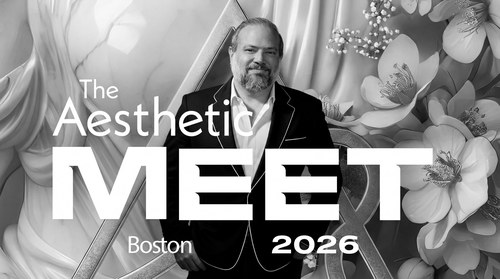
Dr. Frank Agullo, MD, FACS, double board-certified plastic surgeon, at The Aesthetic Meeting 2026 in Boston, in front of the The Aesthetic MEET Boston 2026 floral and gold branded backdrop, where he presented in the practice-management track on AI for reputation management.

Three Days in Boston: A Surgeon’s Read on The Aesthetic Meeting 2026

The Aesthetic Society’s annual meeting wrapped Sunday in Boston after kicking off on Wednesday. The press releases will tout innovation and “the next big thing.” For me, what actually mattered came out of three days of panels, technique sessions, and lobby-bar conversations with surgeons who do this work every week.

I came home with three things: the rise of the deep plane facelift, the evolution of the rules around endoscopic access, and AI. I am saving AI for last because there is the most to unpack there.

The Deep Plane Was the Room

The entire track devoted to deep plane facelifts was the focal point of the face program this year. Full rooms. I would guess that half the attendees already perform deep plane dissections and were present for subtle refinements rather than basic technique. The other half are clearly contemplating the move. Just five years ago, you would find a deep plane discussion running opposite a SMAS plication panel that would pack the bigger convention center room. Now the SMAS panels are the side rooms, empty except for the hardy few who still rely solely on that dissection.

I had several key takeaways from the deep plane content.

The neck content was tighter than I have seen it in years. Speaker after speaker explained the same idea from different perspectives. Durability in the neckline truly comes from the deep neck. The sub-platysmal compartment, the digastric muscles, the submandibular gland, the deep fat. A platysmaplasty alone, done superficial to that compartment, gets you a decent result at three months and a disappointing one at three years. The data on properly executed direct sub-platysmal work, including selective digastric reduction and partial submandibular gland resection in the right anatomy, is solid enough that the focus of the discussion is no longer “should we do it,” but “on whom, and to what extent.”

The midface release content was stronger than last year. The zygomatic ligament releases that I routinely include in my deep plane were thoroughly confirmed by anatomical talks and by ten-year-plus follow-up photos. The newer development this year was a more aggressive discussion around the masseteric ligaments and the platysma-auricular ligament, with several speakers now strongly recommending full versus partial release. It gave me pause. I am hesitant to adopt much more aggressive ligament releases without firsthand dissection experience on cadavers. Boston was a stark reminder to schedule cadaver lab time before I move my own technique to include deeper and wider releases.

The submandibular gland question turned out to be less about whether to reduce the gland and more about where to put the scar. A vocal subset of surgeons is committing to a longer low cervical incision, almost at the neck crease, to give themselves direct line of sight to the gland. I have a hard time with that. The submental incision under the chin hides beautifully in the natural shadow, and that is the access I prefer for partial gland reduction. For hemostasis I use the LigaSure, which most of the room supported. I also keep a cell saver running as a backup. If we have any meaningful blood loss the patient gets her own red cells back instead of someone else’s. It is an inexpensive safety net for an elective operation and there is no good reason not to have one in the corner of the room.

The opinionated take after the weekend. Deep plane has won. The remaining question is not whether to operate beneath the SMAS. It is how deep, how wide and on which patient.

Endoscopic Access Evolved, Rules Solidifying

The endoscopic facelift track ran parallel to the open deep plane sessions, which was the right organization. The fundamental dissection philosophy and tissue manipulation are the same. The problem lies in the access route and the visualization.

I trained for the endoscopic deep plane, the operation often referred to as the Ponytail Lift, at the Ponytail Academy. The intermediate course was in Pittsburgh and the advanced course was in Santa Monica. I came to Boston wanting a clearer picture of which patients are actually good candidates for this approach versus which ones absolutely need the open operation. This year’s meeting delivered.

The endoscopic deep plane facelift is the right operation for the patient who is beginning to experience descent in the midface and brow, still has robust skin elasticity, and has a firm refusal of any pre-auricular scarring. Hairline incisions simply vanish into the temporal and post-tragal tufts. The surgical dissection plane is exactly the same as my workhorse open deep plane. The outcome is a full deep plane lift without any external signs that surgery happened.

Conversely, the endoscopic deep plane is the worst operation for the patient with significant skin laxity, jowl-dominant aging in the lower third of the face, or a long ear-lobe-to-mandible distance that is clearly going to demand open redraping to get a good twelve-month result. A few speakers were refreshing in their blunt honesty. The conversion-to-open rate when you over-select for the endoscopic lift is a real number, and the twelve-month photos show it on their own, whether you present them or not.

The fixation chatter was useful. Endotines and bone-anchored fixation are not the hardline debate they used to be. Most rooms I sat in are converging on suture fixation to the deep temporal fascia for the temporal and lateral fixation in primary cases. For that part of the operation, my hands look like everyone else’s. The midface is where I split off. In my hands, the endoscopic Ponytail Lift with an Endotine Ribbon at the midface delivers a stronger and more durable lift than any suture-only construct I have tried, and Boston did not show me a long-follow-up photo set that gave me a reason to put the Endotine Ribbon away.

There is one more piece of my technique I want to mention here, because patients ask about it on consult. When the face calls for an open deep plane in 2026, I am running a hybrid. The brows, forehead and midface go through Ponytail Lift access, with the Endotine Ribbon midface fixation. The lower face and the deep neck get the open deep plane. The combination, on the right patient, gives me the lift quality of an open deep plane in the lower face with the scar discipline of the Ponytail Lift across the top of the face. Boston did not invent that operation for me. Boston confirmed that the surgeons whose twelve-month photos I trust are quietly doing the same thing.

AI’s Clinical Relevance? Underwhelming.

So, AI.

I went into those sessions wanting to be impressed. A real-world intraoperative ligament mapping tool. A planning system that shaves time off my deep plane markup without introducing risk. A preoperative simulator that produces an outcome image the patient can actually rely on instead of being fooled by. Anything someone is using on a real patient next Tuesday.

Nobody gave that talk. The clinical AI content at this meeting was, in my honest read, half a letdown. A few academic posters on imaging analysis. One talk on AI-assisted aesthetic ranking that was interesting but unusable in clinic. No one stood up and said “I run this tool in my operating room on a real face, here is the workflow, here is the data on outcomes.” That gap is enormous, and it is the gap our specialty needs to close before the marketing copy stops being embarrassing.

The other half of the AI track, though. That was actually useful, and I had a stake in it. I presented in the practice-management track this year on AI for reputation management in plastic surgery. The practice management content was stronger than I expected. So was the patient communication content. So was the lead handling content. A lot of the practical AI work in aesthetic medicine is happening on the patient experience side and the panels reflected that.

AI front-desk coverage and after-hours support are now a real thing. The good tools handle scheduling, qualify inbound leads against the practice’s actual aesthetic criteria, send tailored pre-op and post-op communication, and escalate the unusual cases to a human at the right moment. A handful of practice owners walked through deployment timelines and conversion numbers. The numbers were credible.

EMR-integrated documentation tools (ambient scribes, structured note generators, post-op summary drafting) are not a demo anymore. Surgeons in private practice are running them on real cases. The hours back per surgeon per week are not trivial.

For my practice in El Paso, this is already in place. The chatbot is live on my homepage, picking up the after-hours inbound that used to sit in a queue until Monday morning. An ambient AI scribe runs in the consultation room so my eyes stay on the patient and not on a keyboard, and the chart is largely drafted by the time she stands up to leave. Neither tool is there to automate away the humans in my office. Both are there because the patient who fires off a text at midnight from Toronto, or who sends a recovery question from Seattle on a Sunday morning, deserves a prompt and accurate first response. The humans on my team are then free to focus on the conversations where a human interaction is the appropriate and beneficial tool.

I will absolutely not overstate the role AI plays in the surgical planning phase. The patient who shows up for a consultation in 2026 expecting a computer algorithm to design her facelift has been oversold something the field has yet to fully develop. I will not be the doctor playing along with that notion.

Why Choose Dr. Agullo

Double board-certified by the American Board of Plastic Surgery and the American Board of Surgery. Fellow of the American College of Surgeons. Plastic surgery fellowship at Mayo Clinic. Clinical Associate Professor of Plastic Surgery at Texas Tech University Health Sciences Center, Paul L. Foster School of Medicine. Affiliate Professor at the University of Texas at El Paso. Castle Connolly Top Doctor for thirteen consecutive years. Texas Super Doctors Hall of Fame, 2025. Aesthetic Everything Top Plastic Surgeon, 2026. Ponytail Academy intermediate (Pittsburgh) and advanced (Santa Monica) training.

Ready to Talk?

If you are seriously considering a facelift, a Ponytail Lift, or a deep neck lift this year, the consultation is where the real work starts. Bring pictures of yourself from a decade or so ago. Bring the current photos that are causing you the most concern. Most importantly, bring the questions that you would only trust asking a surgeon you feel comfortable with. I will assess your anatomy and tell you which surgical approach, if any, it is asking for. If filler is the right answer for now, I will tell you so, plainly. And if it is the right time for a more definitive procedure, I will tell you that just as plainly.

Call (915) 590-7900, text 1-866-814-0038, or book online at agulloplasticsurgery.com. Follow along on social at @RealDrWorldWide on Instagram, TikTok and Snapchat, @Agullo on X, or @AgulloPlasticSurgery on Facebook. #StayBeautiful

After the Honeymoon: Kris Jenner, the SMAS Plication, and the Difference a Decade Makes

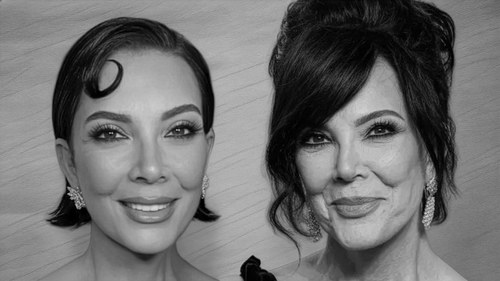
Kris Jenner facelift before and after, greyscale comparison reviewed by Dr. Frank Agullo, MD, FACS, double board-certified plastic surgeon in El Paso, Texas

Last summer, every red carpet, every Vogue Arabia spread, every grainy paparazzi shot of the Bezos wedding ended with the same question. Who did Kris Jenner’s face? The internet lost its mind. One post asking for the doctor’s name racked up tens of thousands of likes. Some called it the best celebrity facelift in a hundred years. The momager looked, depending on the photo, somewhere between thirty-eight and fifty. Then a year passed. Now the same internet that crowned the result is asking why the magic looks like it is wearing off. Stories of “facelift slipping.” Whispers of revision. Comparisons to other women in the same age cohort, like Denise Richards, whose results held while Kris’s seems to be drifting south. I have been watching this story closely. Not because I love celebrity gossip, but because what is unfolding in public, in real time, is the entire arc of a facelift. The honeymoon. The retouch. The first year. The technique that did or did not go deep enough. And what happens when you do a SMAS-based operation on a seventy-year-old face that needed more.

What her surgeon actually did

Kris Jenner’s surgeon is a respected New York plastic surgeon, well trained, well credentialed, and widely reported to perform a hybrid technique, a lateral SMASectomy paired with a deep neck lift. SMASectomy means cutting out a strip of the SMAS, the muscle and tendon layer that sits just under the skin, and stitching the edges back together. SMAS plication is the close cousin, folding that same layer over itself like a hem and tacking it down. Both are SMAS techniques. Both work on the layer of facial anatomy closest to the skin. Neither dissects underneath the SMAS. Neither releases the four retaining ligaments that anchor the face to the skull. This is not the deep plane facelift. It is also not the endoscopic ponytail lift, which I trained to perform at the Ponytail Academy in Pittsburgh and Santa Monica. It is a respectable, well-executed, brand-name version of an older operation. And in a seventy-year-old face, that distinction matters more than people realize.

The honeymoon phase nobody tells you about

Every facelift looks incredible at three months. I mean every single one. Here is why. Three months out, the swelling has not fully resolved. There is still a layer of inflammatory fluid plumping the face. Skin is still tight from the closure. The deep tissues are healing in a position that is, frankly, slightly tighter than where they will eventually settle. Add professional lighting, a glam team, and a heavy hand in retouching, and you have what I call the honeymoon face. The honeymoon face is not the result. It is a preview of the result, dressed up. The real result lives at twelve to eighteen months out, after the swelling has gone, the skin has relaxed, and the tissues have settled into their new home. That is the face you will see in the mirror for the next decade. If the technique was right for the anatomy, the twelve-month face is barely distinguishable from the three-month face. Rested. Younger. Like the patient on a great day. If the technique was wrong for the anatomy, twelve months is when the gap shows up. Volume that was masking a structural issue retreats. Skin that was tight goes lax. The midface, which is heavier than people realize, starts to fall again. And the patient ends up where Kris is now, in the public square, watching strangers debate her face on TikTok.

The midface, the malar bags, and the golf balls

Look at the recent photos with an honest eye and a working knowledge of facial anatomy. The lower face and the neck are still meaningfully better than they were before surgery. That part of the operation worked. The jawline is cleaner. The platysmal bands are quiet. But the midface tells a different story. The cheeks, which were lifted into position briefly by swelling and a tight skin closure, have descended again. The malar bags, the prominent rounded fullness that sits on top of the cheekbones, are now obvious. Two of them. Round, glossy, and impossible to unsee. Some commenters have, less charitably than I would, called them golf balls. This is not some mystery failing. The midface was never fully addressed in the first place, and what we are watching now is exactly how a midface behaves when you do not address it. A lateral SMAS technique tugs on the side of your face. Lovely for the jowl. Useless for the malar fat pad, which is the cushion of fat that gives a cheek its shape instead of leaving you with a literal pouch sitting on top of the cheekbone. The deep plane operation handles this directly. We release the zygomatic ligament, free the malar fat pad, and reposition the whole thing as one composite piece with the rest of the flap. The endoscopic ponytail lift does the same job, just through small openings tucked inside the hairline. Skip the malar release on a face that needed it, and you get exactly this trajectory. The swelling carries you through the honeymoon. Then the swelling leaves, and the cheekbones still are not where they should be.

A seventy-year-old face is not a fifty-year-old face

Skin at seventy is not the skin you had at fifty. The elastin content has dropped, the collagen network is thinner, and the deep ligamentous support that anchors a face to its skull is no longer doing the job it used to. Run the same operation on a fifty-year-old and a seventy-year-old by the same hands and on the same day, and the fifty-year-old will hold the result longer. Every plastic surgeon I have ever trained with knows this. Most of us, out of politeness, do not say it out loud. So I will. At seventy, the technique you pick is more or less the whole game. SMAS-only buys you maybe a year or two of looking the way you did the day after the bandages came off, then a steady drift back toward where you started. The deep plane gives you ten, twelve, sometimes fifteen years. That is not my opinion, that is what the peer-reviewed longitudinal data shows. Which is why the Denise Richards comparison hits where it does. Richards is fifty-five, fifteen years younger than Kris, and her surgeon took her into the deep plane. Younger tissue, deeper operation, more durable result. A year out, she still looks like she did at three months. Kris is seventy, with a SMAS-based operation. The arithmetic was hard before anyone cut a single stitch.

Quick comparison

Aspect Kris Jenner’s facelift (SMAS / lateral SMASectomy) Denise Richards’s facelift (deep plane)
Layer of work SMAS, just under the skin Below the SMAS, releasing the retaining ligaments
Midface release None or limited Yes, true malar repositioning
Skin tension at closure Higher Lower
Patient age at surgery 70 55
Typical longevity 6 to 8 years 10 to 15 years
Honeymoon-to-real-result drift More noticeable Minimal

One more thing about those reveal photos

Let me be the surgeon who says what other surgeons say in the lounge but not on the record. The reveal photos last summer were heavily retouched. I do not say this with any pleasure. I say it because the gap between the polished cover image and the candid Instagram from the same week was too wide to be lighting alone. That kind of editing helps nobody. The patient walks into a setup, because reality always catches up to a retouched photo. The public walks into a setup too, because they sign up for an operation expecting a result the operation was never on its own going to give them. Worst of all, the patient ends up feeling betrayed by an outcome that, honestly, is doing exactly what that technique does at twelve months on a seventy-year-old face. When I do a facelift on you, the photos you see at twelve months are the actual photos. Not filtered. Not retouched. Usually in black and white, because that is how I prefer to show work and because color photography flatters a result you have not earned. What you see is what you have.

Why I trained where I trained

My plastic surgery fellowship was at Mayo Clinic, where they hammer into you the idea that you choose the operation for the anatomy, never the brand for the marketing. From there I went to Pittsburgh for the intermediate Ponytail Academy course, then back out to Santa Monica for the advanced one, because the deep plane and the endoscopic deep plane are the operations that, year over year, actually hold. And I teach as a Clinical Associate Professor at Texas Tech University Health Sciences Center for one simple reason: if I cannot stand in front of a resident and explain why a maneuver works, I do not understand it well enough to perform it on you. I have been a Castle Connolly Top Doctor for thirteen consecutive years. I have published over forty peer-reviewed papers. I have a global following of over 3.5 million across Instagram, TikTok, and Snapchat. None of that matters if the face I deliver does not hold. The face has to hold.

Why choose Dr. Agullo for a facelift in El Paso?

Double board-certified by the American Board of Plastic Surgery and the American Board of Surgery. Fellow of the American College of Surgeons. Mayo Clinic plastic surgery fellowship. Clinical Associate Professor at TTUHSC. Affiliate Professor at UTEP. Ponytail Academy intermediate (Pittsburgh) and advanced (Santa Monica). Castle Connolly Top Doctor for thirteen straight years. Texas Super Doctors Hall of Fame. Aesthetic Everything Top Plastic Surgeon, 2026. Trained in deep plane facelift, endoscopic deep plane (Ponytail Lift), preservation rhinoplasty, supercharged BBL, and rib repositioning for waistline reduction. About sixty percent of my patients fly in from out of town because the operation, not the city, is what they are choosing.

Ready to talk?

If you are thinking about a facelift, the most useful forty-five minutes of your year is a consultation with the surgeon who would actually do it. Bring photos of yourself from ten years ago. Bring the photos that bother you now. Bring the questions you would not ask your dermatologist. I will tell you whether you need a deep plane facelift, an endoscopic ponytail lift, a neck lift only, or to come back in five years. If filler is the right answer for you today, I will tell you that. If you need surgery, I will not pretend you do not. Call (915) 590-7900, text 1-866-814-0038, or book online at agulloplasticsurgery.com. Follow along on social at @RealDrWorldWide on Instagram, TikTok, and Snapchat, @Agullo on X, or @AgulloPlasticSurgery on Facebook. #StayBeautiful
The Facelift You Can’t See: Deep Plane and the Ponytail Lift

Black and white editorial portrait of a woman after a Deep Plane Facelift by Frank Agullo, MD, FACS (Dr. WorldWide), El Paso, Texas.

Every surgeon has a story about the first time they saw a facelift that actually looked good. Mine was at Mayo Clinic during my plastic surgery fellowship. The patient was about a year out. She looked ten years younger. Not pulled, not waxy, not surprised. Rested. I asked my attending how the result held up over time. He said, “If you do it in the deep plane, it holds up longer than anything else we have.”

That line stuck with me. It’s the reason I went to Pittsburgh for the Ponytail Academy’s intermediate course, and then to Santa Monica for the advanced.

What a Deep Plane Facelift actually does

For decades, the standard facelift worked like this: you pulled on the skin, tightened a thin layer underneath called the SMAS, and closed. It gave a result, but not forever. Skin stretches. And patients who came back for a second facelift often noticed the second one felt a little more “done” than the first.

The Deep Plane Facelift doesn’t pull on skin. It dissects underneath the SMAS, releases the four retaining ligaments that anchor the face to the skull (zygomatic, masseteric, mandibular, and platysma), and repositions the whole composite flap as one unit. Skin, SMAS, fat, muscle. All moving together. Nothing is under tension.

That one detail changes everything. Because the tissue isn’t stretched, the face doesn’t look stretched. Because the anatomy is restored instead of pulled, the result lasts. Peer-reviewed data shows Deep Plane Facelift results holding at ten, twelve, and fifteen years.

The quick comparison:

Aspect

Traditional SMAS facelift

Deep Plane Facelift

What moves


Skin and a thin SMAS layer


Skin, SMAS, fat, and muscle together


Ligaments released


No


Yes (all four)


Skin tension


High


Low


Typical longevity


6 to 8 years


10 to 15 years


The “pulled” look


Possible over time


Rare; tissue isn’t stretched


The Ponytail Lift: same philosophy, hidden incisions

The Ponytail Lift is the endoscopic version of the Deep Plane Facelift. Same tissue release, same ligaments, same composite flap. What’s different is the access. Instead of incisions in front of the ears, the work is done through tiny openings hidden inside the hairline, using an endoscope for visualization.

No pre-auricular scar. No earlobe distortion. The incisions heal inside the hair, which means even a patient pulling their hair back into a ponytail (hence the name) doesn’t reveal anything.

It’s not an easier operation. It’s a more demanding one, because you’re working through small access points with indirect visualization. The benefit is that the right patient gets a deep plane result with no visible scar. Which matters.

Who is (and isn’t) a Ponytail Lift candidate?

The right candidate is usually in their forties or fifties, has early-to-moderate midface and jowl descent, has skin with decent elasticity, and cannot accept any trace of a pre-auricular scar. Patients with thick hair can fully hide the hairline incisions, which is ideal.

The wrong candidate is usually a patient with heavier skin laxity or patients in their mid-sixties and beyond. That anatomy does better with a traditional open Deep Plane Facelift, because the skin itself needs to be redraped and excised, not just the deep tissue repositioned.

Part of the consultation is figuring out which version is right for you. If a traditional deep plane fits your face better, that’s what I’ll recommend. If the Ponytail Lift is the better match, we’ll go that route. I’m not attached to one operation. I’m attached to the result.

Why the Ponytail Academy?

I’ve been doing facelifts my whole career. I could have watched a YouTube video, told my patients I do the Ponytail Lift, and called it a day. A lot of surgeons do exactly that. I didn’t.

The Ponytail Academy is the advanced training program built around this technique. It’s small, it’s cadaver-based, and it’s taught by the surgeons who invented the approach. I took the intermediate course in Pittsburgh first, then returned for the advanced course in Santa Monica. Days in the lab dissecting, releasing, and repositioning, with real-time correction from faculty who do this operation every week. That’s how I learned plastic surgery at Mayo. That’s how I wanted to learn this.

My patients deserve the version of the Ponytail Lift taught by the people who wrote it. Not the version taught by someone who read about it.

One more thing about fillers

I love fillers for the right patient. I use them every day. But fillers are a tax. You pay it every six to twelve months, and when you stop paying it, the face goes back to where it was.

A Deep Plane Facelift is an investment. You pay for it once, and it appreciates over the decade that follows. Patients who chase volume loss with filler for years often arrive in my office with a face that looks fuller, not younger. Puffy cheeks, no jawline, weird upper-lip volume. That’s the filler tax, paid too many times.

If fillers are right for you, we’ll use them. If surgery is right for you, we’ll do it right. The goal is always the same. The face you recognize in the mirror. #StayBeautiful.

Why choose Dr. Agullo for a Deep Plane Facelift in El Paso?

Double board-certified (American Board of Plastic Surgery, American Board of Surgery). Fellow of the American College of Surgeons. Mayo Clinic plastic surgery fellowship. Clinical Associate Professor of Plastic Surgery at Texas Tech University Health Sciences Center, where I teach the same techniques I use every day. Affiliate Professor at UTEP. Castle Connolly Top Doctor, thirteen consecutive years. Ponytail Academy, advanced endoscopic deep plane training. Over 3.5 million followers across Instagram, TikTok, and Snapchat, because patients want to see the work before they trust someone with their face.

Ready to talk?

The best way to figure out which operation is right for you is an in-person or virtual consultation. I’ll evaluate your anatomy, walk you through the options honestly, and tell you what I’d recommend if you were my sister. If the answer is “not yet, come back in three years,” I’ll tell you that too.

Call (915) 590-7900, text 1-866-814-0038, or book online at agulloplasticsurgery.com. Follow along on social at @RealDrWorldWide on Instagram, TikTok, and Snapchat, @Agullo on X, or @AgulloPlasticSurgery on Facebook.