You Cannot Unstretch an Ear: What Gauge Repair Actually Rebuilds

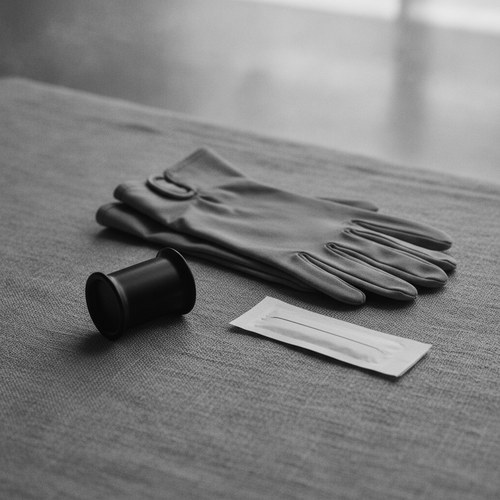
Black and white editorial still life of a black ear gauge plug retired beside fine surgical sutures on a linen surface. Ear gauge repair editorial by Dr. Frank Agullo, MD, FACS.

Half the gauge repair consultations in my office start with a job application on somebody’s phone.

Most of the people who show up for an ear gauge reversal or earlobe repair do so because they’re joining the workforce. Jobs like the military, police, and border patrol require the earlobes to not be gauged. This is usually due to the risk of the earlobes getting caught or torn. I practice in El Paso. Border Patrol hires a few miles from my office. You can guess how often I see this.

A lot of patients are also joining professional jobs and have decided to clean up their look, so they appear more appropriate for their job position. It is rare, but sometimes it is in preparation for weddings or other special events. Grandma has opinions.

Whatever the reason, they almost all arrive with the same wrong assumption. They think I am going to close the hole.

We Do Not Close Gauges. We Rebuild Earlobes.

Here is the part nobody explains at the piercing shop. We really don’t close your gauges. What we do is reconstruct the earlobe with the skin and fatty tissue that’s left after stretching out the gauge.

Essentially, any size gauge can be reconstructed, even if it has been torn. The bigger the gauge, the more the remaining tissue has been thinned and draped into a hanging loop, and the more sculpting it takes to turn that loop back into something that reads as an earlobe.

This is also why gauge repair is different from an earlobe tear repair, which is usually just trimming the edges and bringing the tissues together. With a gauge, we usually discard some of the tissue, and we actually have to reshape the skin into an earlobe. One is a seam. The other is a rebuild.

There is not one standard technique. The repair is planned for each individual case, depending on how much tissue is left, how much skin, and the quality of the skin and tissues. I have never drawn the same plan twice.

The Timeline, From Chair to Uniform

Milestone When
The procedure About 30 minutes, local anesthesia
External sutures out 7 to 10 days
Eligible to join military or law enforcement As early as 7 to 10 days after suture removal
Back to exercise About 2 weeks
Re-piercing possible 4 to 6 weeks
Hard to tell the ear was ever gauged About 3 months

That third row matters most to my recruits. For military and law enforcement applicants, it is usually a requirement that the ears are not gauged, for safety reasons. We treat these patients very often, and they can join the forces as early as seven to ten days after we remove the sutures. If you have a ship date, tell me at the consultation and we will work backward from it.

Yes, You Can Wear Earrings Again

You can re-pierce your ears after a gauge repair. We usually wait at least four to six weeks, and we can do it in the office. We just need an earring stud that we can keep in place for at least a month, and we sterilize it before placing it so the new piercing heals.

A normal stud, through a normal lobe, that you put there on purpose. Full circle.

What It Costs and How It Heals

The cost range usually starts at fifteen hundred dollars, and it depends on how much the ear has been gauged, how much tissue is left, and the complexity of the reconstruction. Like my earlobe tear repair and in-office excisions, this is cash based with one upfront quote, and a photo is usually enough to price it.

It heals very well. Usually, after three months, it would be difficult for anybody to tell that the patient had a gauged ear before. The scars are very difficult to identify or see. If skin texture needs a final polish, laser treatments can refine it, but most patients never need that.

The Part Where I Am Blunt

I don’t think a lot of surgeons in other specialties actually know how to repair gauged ears. It’s really something that plastic surgeons have been trained for, as we take care of a lot of ear deformities and trauma. Congenital ear differences, torn lobes, cancer reconstructions, keloids. The earlobe is small, but it sits next to your face in every conversation you will ever have.

So for a procedure like this, I would look for a board-certified plastic surgeon. I trained at the Mayo Clinic and I teach plastic surgery at Texas Tech. I can tell a closed hole from a rebuilt earlobe across a room. Everyone else can too.

Ready to Talk?

If a gauged ear is in the way of a job or a uniform, send me a photo and we will quote it, usually the same week. Call my office at (915) 590-7900, text the consult line at 1-866-814-0038, or book online. Sutures out in a week. Uniform shortly after. #StayBeautiful

@RealDrWorldWide on Instagram, TikTok, and Snapchat, @Agullo on X, or @AgulloPlasticSurgery on Facebook.


Companion reads: the clinical walk-through on agulloplasticsurgery.com, and the practice overview at swplasticsurgery.com.
The Ozempic Earlobe: What Weight Loss and Heavy Earrings Do to Your Ears

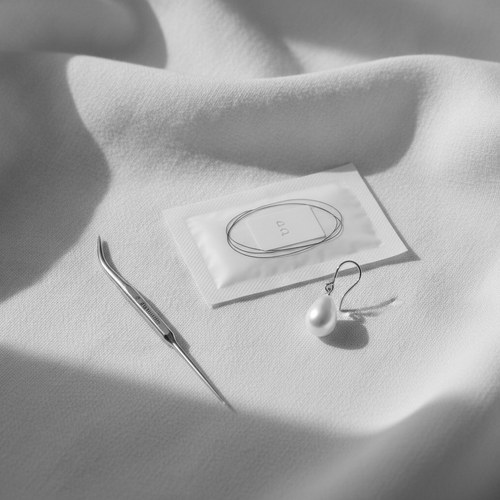
Black and white editorial close-up of a single pearl drop earring resting beside fine suture material on a linen surface. Earlobe repair editorial by Dr. Frank Agullo, MD, FACS.

A bride-to-be sat in my office earlier this year with a problem no one warns you about. She had lost about fifty pounds with Ozempic in a four-month period, and noticed that her earrings didn’t sit the same way anymore. Her earlobe had become empty and wrinkly.

She was young. In her thirties. The weight loss was a win. Her ears did not get the memo.

Nobody thinks about earlobes until theirs stop cooperating, and then they think about them constantly. Wedding photos have a way of accelerating that timeline.

The Earlobe Has a Rough Job

The most common cause of earlobe tears, or elongated piercings that haven’t torn quite yet, is the chronic use of heavy earrings. It’s a gradual stretching that happens over time.

And as we age, we also lose some of the fat and collagen in the earlobes, which decreases the tissue strength, and the stretching or tearing can speed up. Then there is trauma: the earring getting stuck on something and pulling, or a baby pulling on the earring. Every mother of a grabby infant knows exactly the moment I am describing.

The GLP-1 era added a new chapter. Aging earlobes have actually increased in demand, not just because of aging, but also because of the GLP-1s like Ozempic and tirzepatide. Patients lose the good fat in the earlobes, and these become deflated or elongated. Everyone talks about Ozempic face. The earlobes deflate right along with the cheeks.

The Repair Is Simpler Than You Think

The repair itself is rather simple. The first step is to do it in a sterile fashion, so we sterilize the area to decrease the risk of any infection. Then we use local anesthesia, which is infiltrated into the earlobe. This is the part that can sting a little bit, but it’s very quick. After that, the whole area is anesthetized, and you don’t feel anything.

Depending on how big the tear or stretch is, we cut out that area, and then we suture it in a layered fashion, approximating the deep tissue coming all the way up to the superficial skin layer. The procedure usually takes fifteen to thirty minutes. And to keep the ear natural, we rearrange the tissues so there’s no puckering or indentations. That last sentence is where the plastic surgery training earns its keep. Anyone can close a tear. The art is a lobe that looks like nothing ever happened, the same philosophy I bring to my in-office excisions.

A partial tear versus a complete split changes less than people expect. The approach is about the same. The only thing that’s affected is the length of the incision, and whether it goes all the way to the edge or can be repaired within the tear itself.

And a fact that surprises patients: not all tears happen on the earlobe. They can happen anywhere there is a piercing, including the belly button, genitalia, nose, and the helical rim of the ear. We repair those too.

Refilling the Deflated Lobe

For the empty, wrinkly earlobe, we can do various things that involve filling the earlobe back.

Option What it is How long it lasts
Hyaluronic acid filler (Juvederm, Restylane) Injectable gel, done in minutes Temporary, repeat about every year
Lipoderma Donor fat injected into the lobe Longer lasting, what I used for the bride
Your own fat Harvested and injected Long lasting, requires a small harvest
Trim and tuck Surgical reduction of redundant skin Permanent reshaping for elongated lobes

For the bride, we used Lipoderma, one syringe on each earlobe. That filled in the void of the earlobes, plumped the skin, and actually reduced the size of her piercings, so that the earrings were now sitting like they used to. The whole procedure took about thirty minutes or less. She went back to work the next day, and back to the gym in five days. She was very happy overall, and I suspect the wedding photographer never knew.

Maintenance for filler options lives at the med spa at Southwest Plastic Surgery, alongside the laser treatments we use when skin quality needs help too.

Re-Piercing: Yes, You Can

The question every patient asks before I finish the first sentence: when can I wear earrings again?

To re-pierce, we usually wait three to six weeks depending on the area. For ears, it’s usually three weeks, and we can re-pierce right here in the office. We sterilize the earring or stud that you’re going to use, which will need to remain in place for about a month before it can be taken out. Then wear what you want. Maybe rotate the chandelier earrings to special occasions this time.

What It Costs

The cost range usually starts around a thousand dollars, and the final cost depends on the type of anesthesia, the location, and the size of the defect. Like the rest of my minor procedure practice, this is cash based with a single upfront quote, no insurance and no preauthorization. A photo by email is usually enough to quote it.

I trained at the Mayo Clinic and have spent two decades repairing tissue far more complicated than an earlobe. This is one of the smallest operations I do, and one of the most quietly satisfying. Patients hide torn ears behind their hair for years. Fifteen to thirty minutes later, they stop.

Ready to Talk?

If your earlobes are torn, stretched, or deflated, send a photo and we can usually quote the fix without a visit. Call (915) 590-7900, text 1-866-814-0038, or book online. #StayBeautiful

@RealDrWorldWide on Instagram, TikTok, and Snapchat, @Agullo on X, or @AgulloPlasticSurgery on Facebook.


Companion reads: the clinical step-by-step on agulloplasticsurgery.com, and the practice overview with med spa options at swplasticsurgery.com.